Kids’ Art Studio on the Go: How to Protect Furniture & Floors From Paint

KIDS’ ART STUDIO ON THE GO

If you read my post about How to Set up an Art Studio for Kids, you know how important it is for your child to have a creative space of their own. But how can your child continue creating (and using messy art supplies like paint) if she is at her grandparents? Traveling? On vacation or just not home for some other reason?

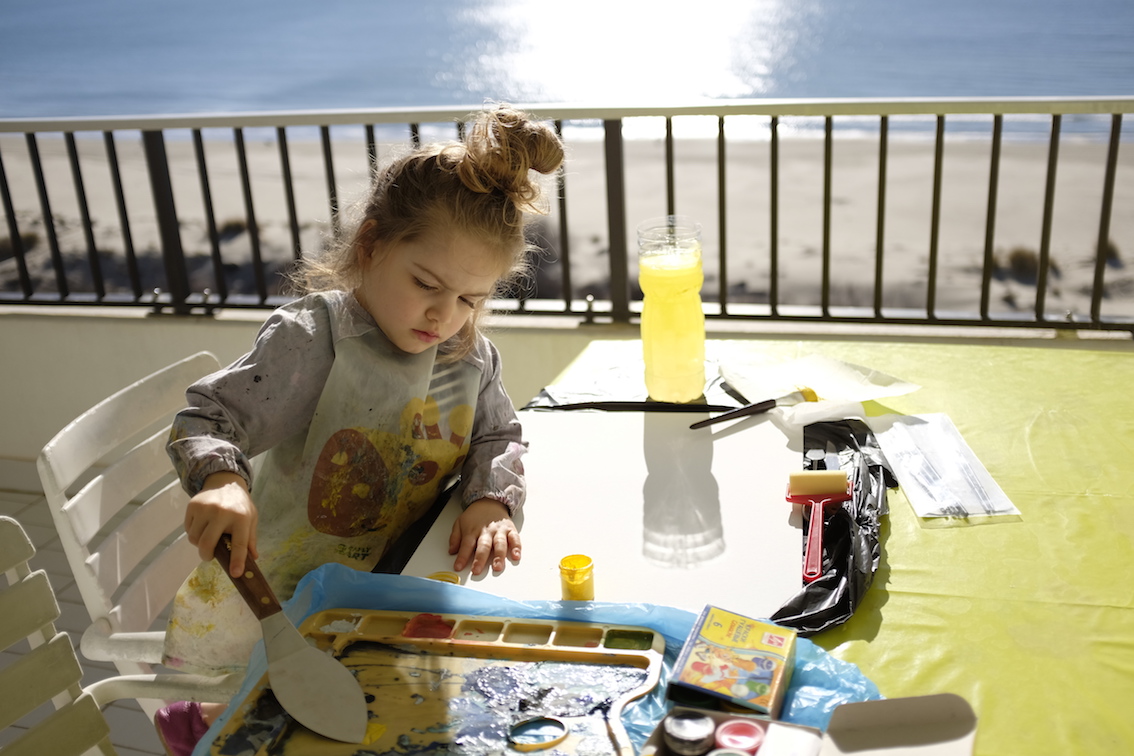
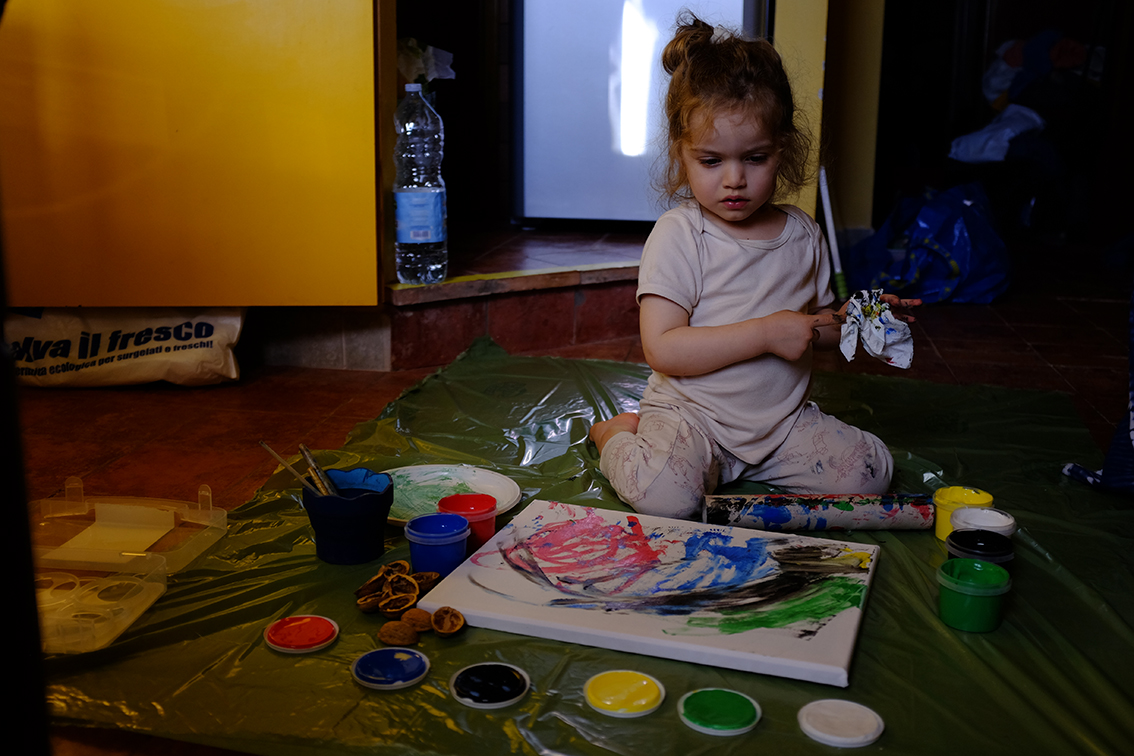
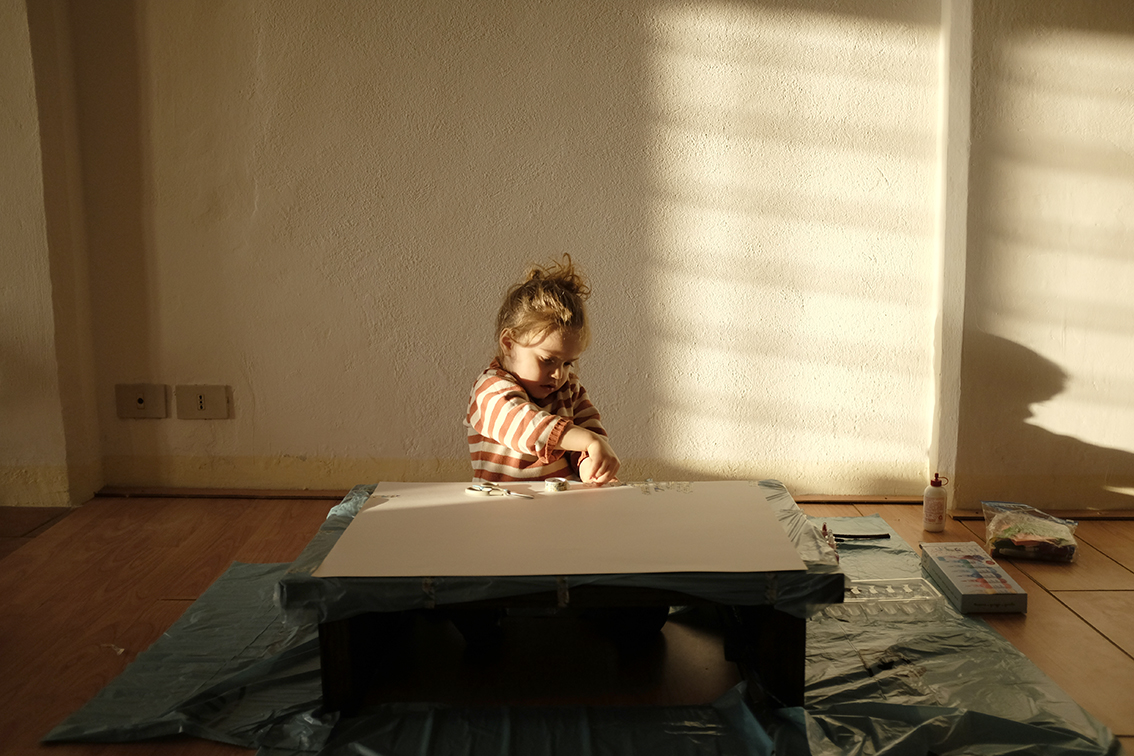
Below are a few studio set-ups from some of our world-wide trips the last few years. The main issue while traveling or staying at people’s houses is that you want to respect the surroundings. In each space we found different things we could use to protect both furniture and floors as well as objects to upcycle for art-making.

HOW TO PROTECT FURNITURE AND FLOORS FROM PAINT

  • Use a tarp or drop cloth. You can easily find them at home improvement shops.HOW TO PROTECT FURNITURE AND FLOORS FROM PAINT
  • A table cloth can be used both on the table or the floor.KIDS ART STUDIO ON THE GO HOW TO PROTECT FURNITURE AND FLOORS FROM PAINT
  • You can also upcycle plastic water bottles for cleaning brushes.KIDS ART STUDIO ON THE GO
  • Old rugs or carpets are a good way to protect the floor.
    KIDS ART STUDIO ON THE GO HOW TO PROTECT FURNITURE AND FLOORS FROM PAINT
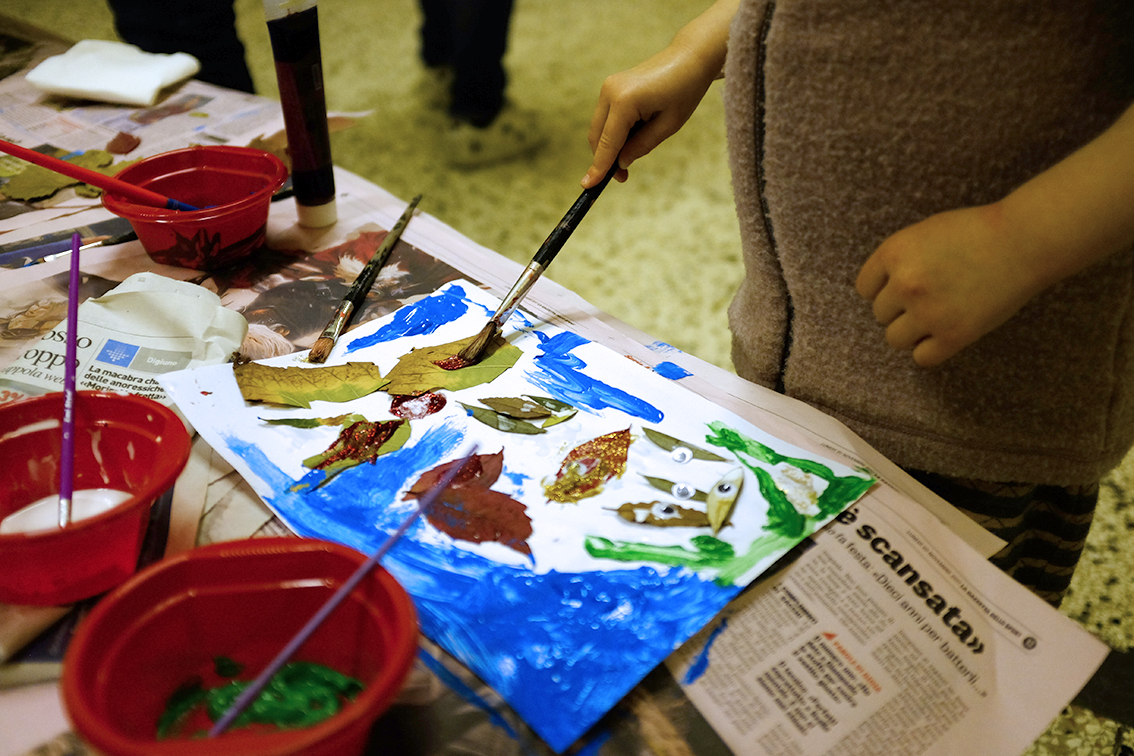
  • Place a pile of newspapers to protect a table and recycle once finished. You can use bowls or paper cups for paint.KIDS ART STUDIO ON THE GO HOW TO PROTECT FURNITURE AND FLOORS FROM PAINT
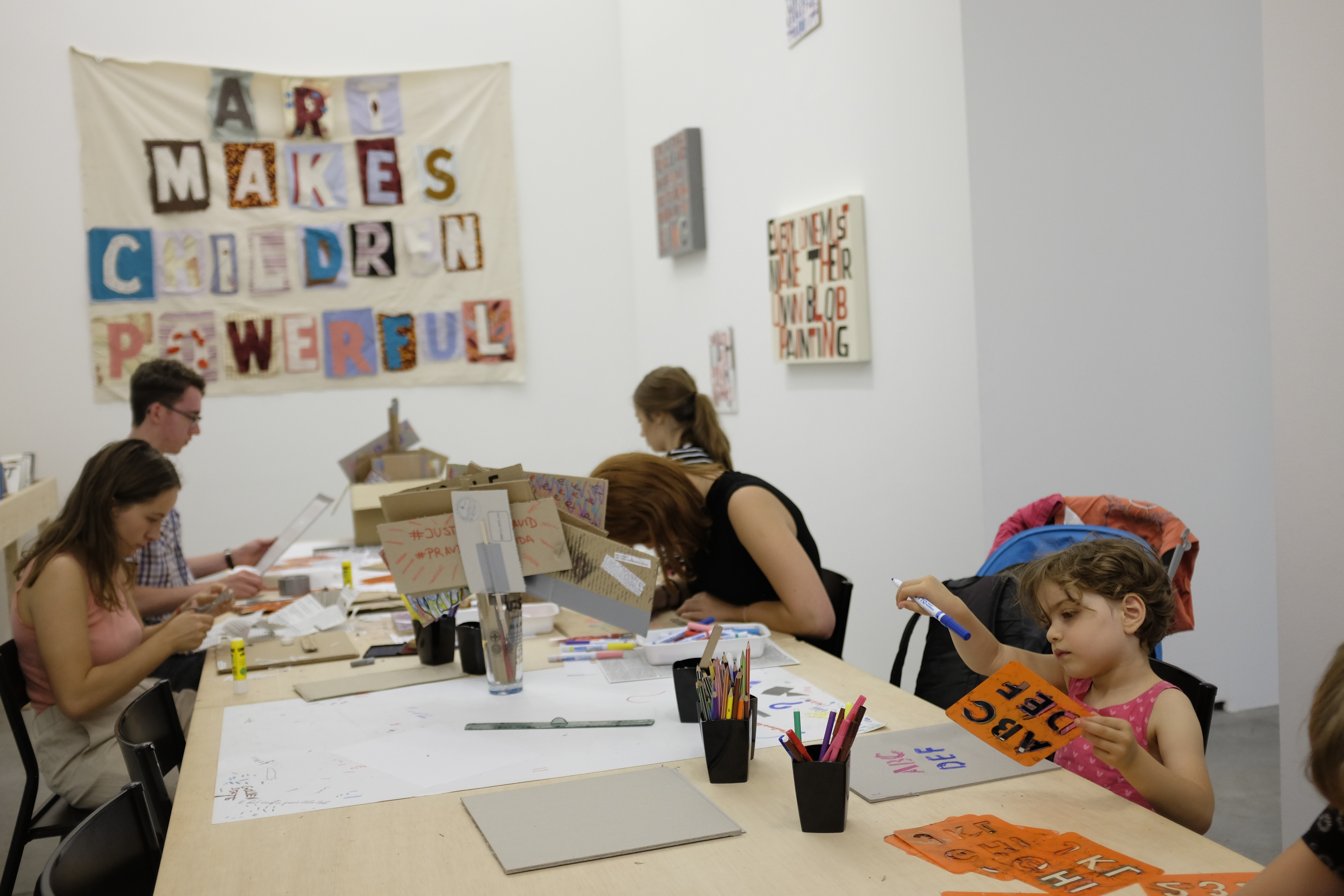
  • If you are traveling in a city, you might be able to find creative spaces at a museum. This way you won’t have to worry about cleaning up a mess and your child will have freedom to experiment. 😉

    POPE.L at La Panacée in Montpellier, France Art Makes Children Powerful
    POPE.L exhibition at La Panacée in Montpellier, France
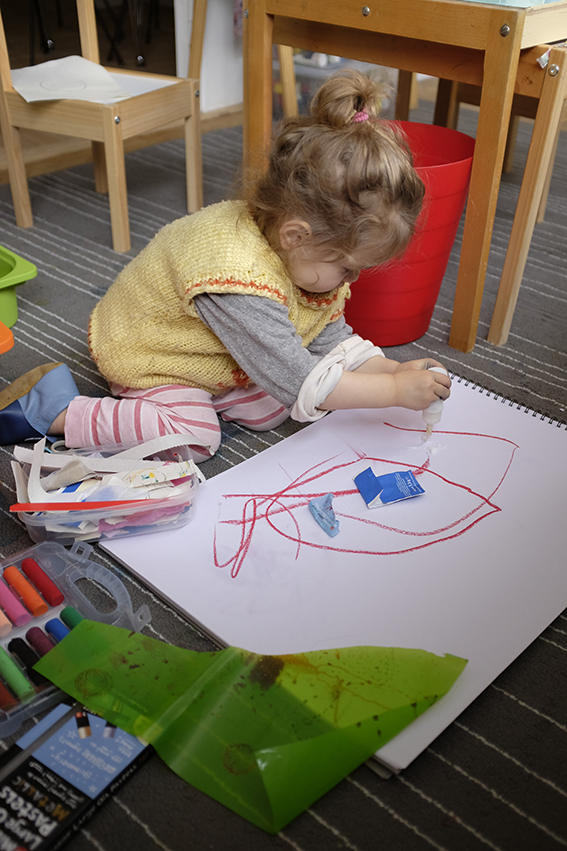
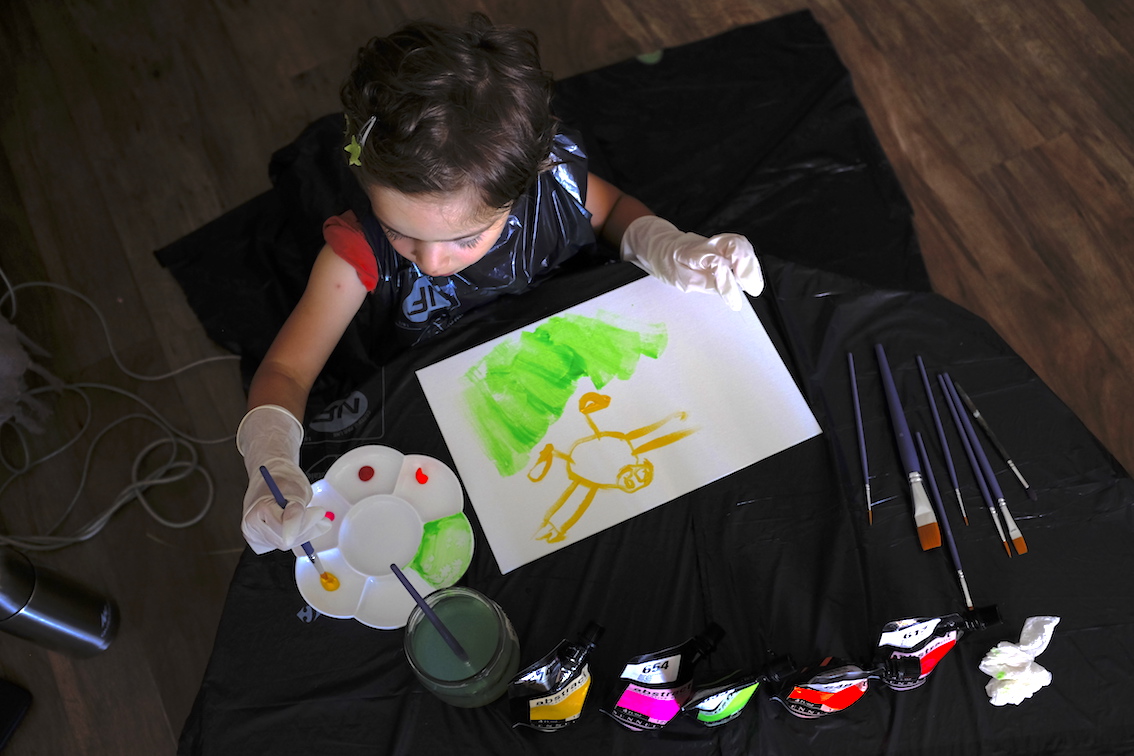
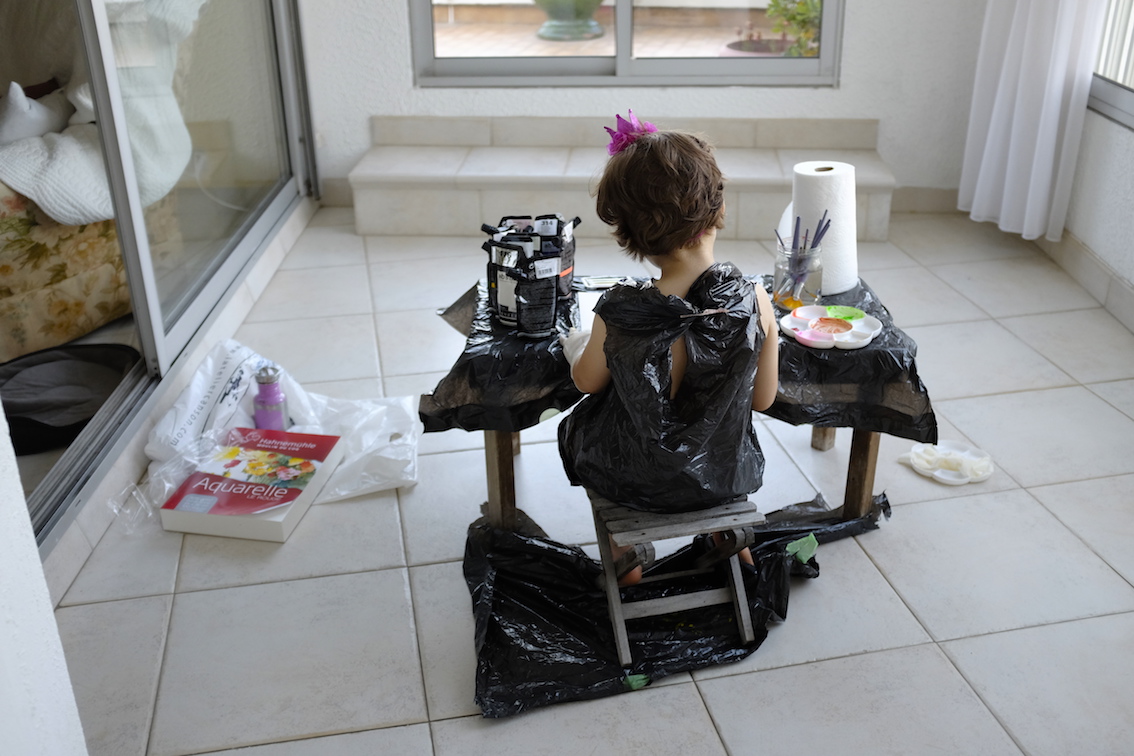
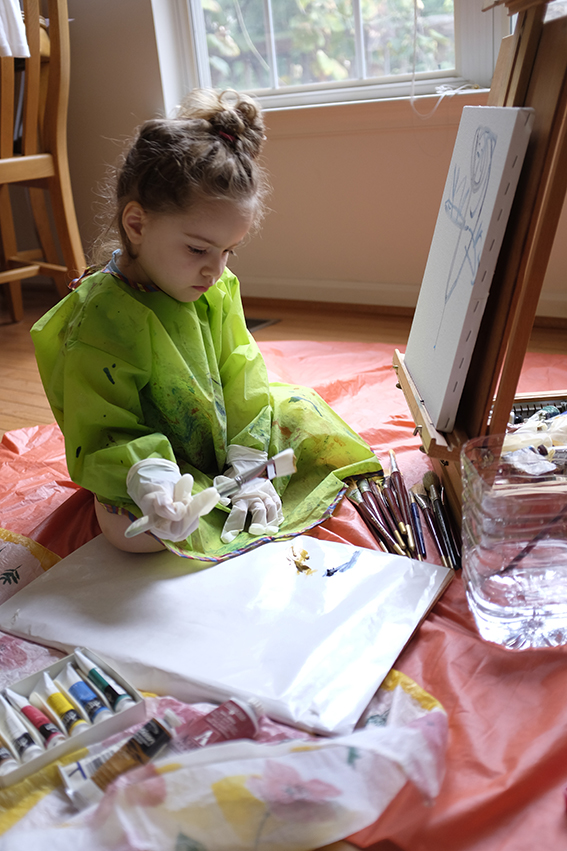
  • Cut trash bags and tape them to the floor. If you don’t have tape, you can weigh them down with art supplies._DSF4275
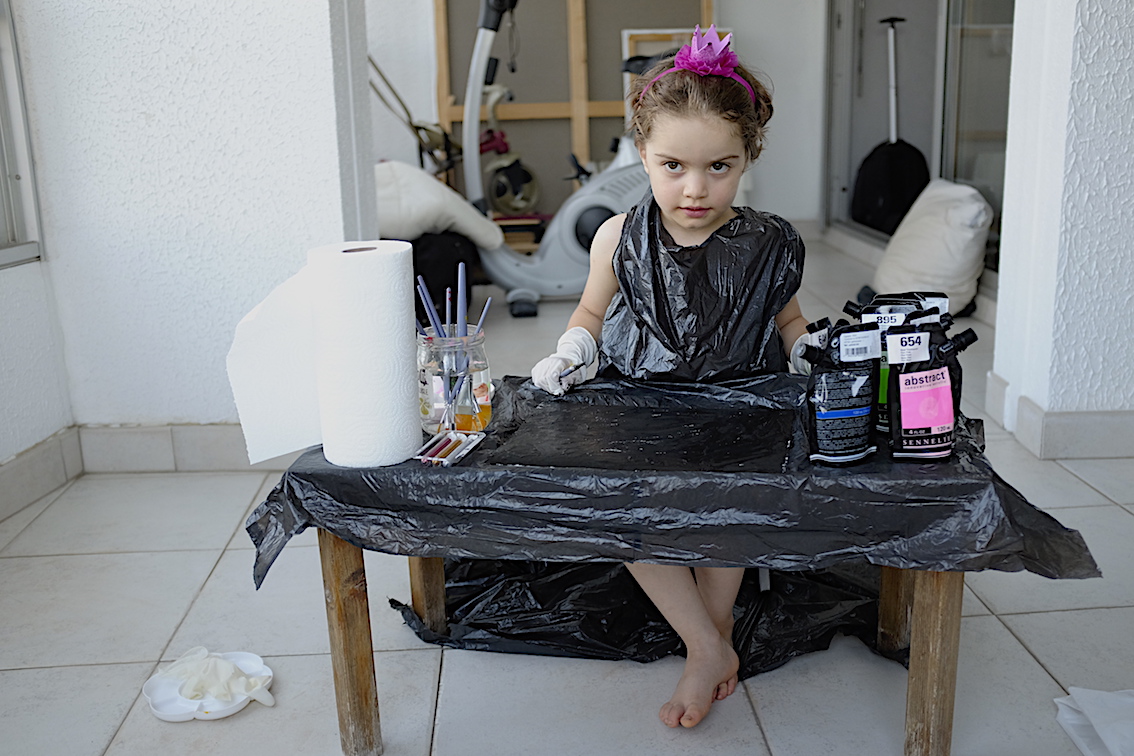
  • We have used trash bags often to protect floors, tables, chairs and even cushions. _DSF3463

_DSF8647

KIDS ART STUDIO ON THE GO HOW TO PROTECT FURNITURE AND FLOORS FROM PAINT

DIY SMOCK

Once I forgot to take Adèle’s smock on a long vacation and there weren’t any art shops around to buy a new one. If you also find yourself in an urgent need of a smock, here is the easiest and quickest solutions:

  1. Fold a (preferably recyclable) trash bag in half, lengthwise.
  2. Make sure the opening is on the bottom.
  3. Cut in a curved line as pictured below. Tip: make the top left cut SMALL. It’s easier to make it bigger later if your child’s head doesn’t fit through.
  4. Open and voila, you have a smock!_DSF8641
  5. Note, if it looks too big on the top, you can tie it behind or tape it._DSF8675

Do you set up a creative space for your kids when away from home? If so, I’d love to see the photos! Tag me on Instagram @Rainy.Day.Sunny.Play and use the #Rainy.Day.Sunny.Play hashtag.


First Haircut Tips

_DSF8455

FIRST HAIRCUT TIPS

A milestone in your child’s life is usually an exciting event, but it can also be scary both for parents and children. In the case of a first haircut, you might feel nostalgic at how quickly your baby has grown. Or your child might feel scared about the unknown experience. You might wonder about the right time to cut your child’s hair for the first time or how to go about it. So here are so tips about making first haircuts special and fun and how to use them as a bonding and learning experience.

FIRST HAIRCUT AGE_DSF8456

Many cultures have traditions or rituals for first haircuts which are often linked to age. But in general, children start to show interest in their own hair between ages 3 and 5 when they cut their own or their doll’s hair.

In our case, we waited for Adèle to show interest as we wanted it to be her decision. Allowing your child to to decide on her own hair style is an empowering experience. It also shows that you trust her and allow her to experiment and discover who she is as an individual.

PREPARE FOR YOUR CHILD’S FIRST HAIRCUT_DSF8466

Do not push or pressure your child into getting a haircut. The main thing to consider as you prepare your child for their first haircut is that she really understand what is going to happen.

Ascertain that your child understands that once her hair is cut, it will take a along time to grow. You can do this by:

  • Talking about it and being excited about it
  • Playing pretend games
  • Allowing your child to cut their doll’s hair
  • Taking your child to a hair salon so that they can see how hair is cut
  • Reading picture books about first haircuts (see my list of recommendations below)

It is also important to understand why your child wants her hair cut as it will allow you to help her figure out the hairstyle she want. Some questions to consider are:

  • Is it because she want to look like someone you know?
  • Like a character in a book?
  • Because she feels hot or uncomfortable?
  • Does she want to show their individuality by looking different?

Finally, plan a memorable experience/day around your child’s first hair cut. Below is an example of how we went about it.

TIPS TO FOLLOW DURING YOUR CHILD’S FIRST HAIR CUT

  • Wash your child’s hair yourself before the appointment so that you won’t have to waste time at the salon. Doing this will make the appointment quicker for your child.
  • Brush your child’s hair yourself first so that the hairdresser doesn’t hurt your child’s hair while combing it. This way the appointment will start on a positive note._DSF8445
  • If you don’t want to use any chemicals, find an eco-friendly salon or let your hairdresser know not to use any products on your child’s hair.
  • If your child needs regular brakes to stretch, make sure your hairdresser is aware beforehand.
  • Make the appointment for a time that best suits your child’s schedule and needs. Pick a time of day where your child is usually not hungry and feels more relaxed._DSF8452
  • Allow your child to pick her own hair style! You can do this both at home and at the salon just before the first haircut._DSF8453
  • You can ask the hairdresser to cut the hair only a little bit and have your child look to see if she likes it before proceeding further. This way the change will be less dramatic and easier to process._DSF8472
  • Some children might be scared of the word “cut” as they might associated it with their body being hurt, so find another word or way of talking about the event._DSF8471
  • Make it a family event to provide support and be a part of this fun experience! It’s also an excellent way to connect with your child as they learn something new. _DSF8475
  • Ask your child if they prefer to face you or the mirror._DSF8477
  • Explain to your child how the hair dryer works beforehand and remind them to cover their ears and close their eyes if then need to._DSF8488
  • Check in with your child to make sure they are satisfied with the experience and address any feelings that arise._DSF8491
  • Bring a small cloth bag or box if you want to preserve your child’s locks as a keepsake._DSF8493

BOOKS ABOUT FIRST HAIRCUTS

***Disclaimer: This post contains affiliate links, and if you decide to purchase anything from suggested links or companies, I may receive a commission. Recommended products are either things I love using or think would be helpful for you. Making your purchase using these affiliate links helps keep this site running, so thank you kindly!First Haircut Picture Books Austin's First Haircut: First Haircut Book (Children's Firsts 1) by G. A. Wadley Hair by Leslie Patricelli Wally Does Not Want a Haircut by Amanda Driscoll

  1. Austin’s First Haircut: First Haircut Book (Children’s Firsts 1) by G. A. Wadley – This book is designed by a hairstylist and the story takes places at a hair salon.
  2. Hair by Leslie Patricelli – A very simple, warm book for toddlers that talks about the first haircut.
  3. Wally Does Not Want a Haircut by Amanda Driscoll – A humorous picture book about a sheep. I like this one for it’s antropomorphic qualities which helps children relate easier.

ADELE’S FIRST HAIRCUT EXPERIENCE

Around the age of 3.5, Adèle started noticing her friends’ new haircuts and talking about her favorite book character’s hair. And then, one day, she asked us to cut her hair short. We were not sure if she knew how short she really wanted it as the haircuts she described would change every month or so. But I noticed that she never liked long hair – neither in person nor in books; so that’s how we knew that she was getting ready for her first haircut. We did not cut her hair right away, however. In fact, we waited for 6 months to make sure she really understood what it all meant. This also gave us enough time to prepare her for the actual day.

To make the experience special, we decided to do it while on a trip to Montpellier, France. I found a hair salon on Google that had the best reviews. It’s called L’esprit libre (free spirit) ) and that seemed like a very appropriate sign to follow. First Haircut L'esprit Libre Montpellier SalonHidden in a 13th century building, the salon’s atmosphere was relaxed, friendly and stylish in a laid-back fashion. I am not affiliated with this salon in any way, but recommend it highly as we had such an amazing experience!

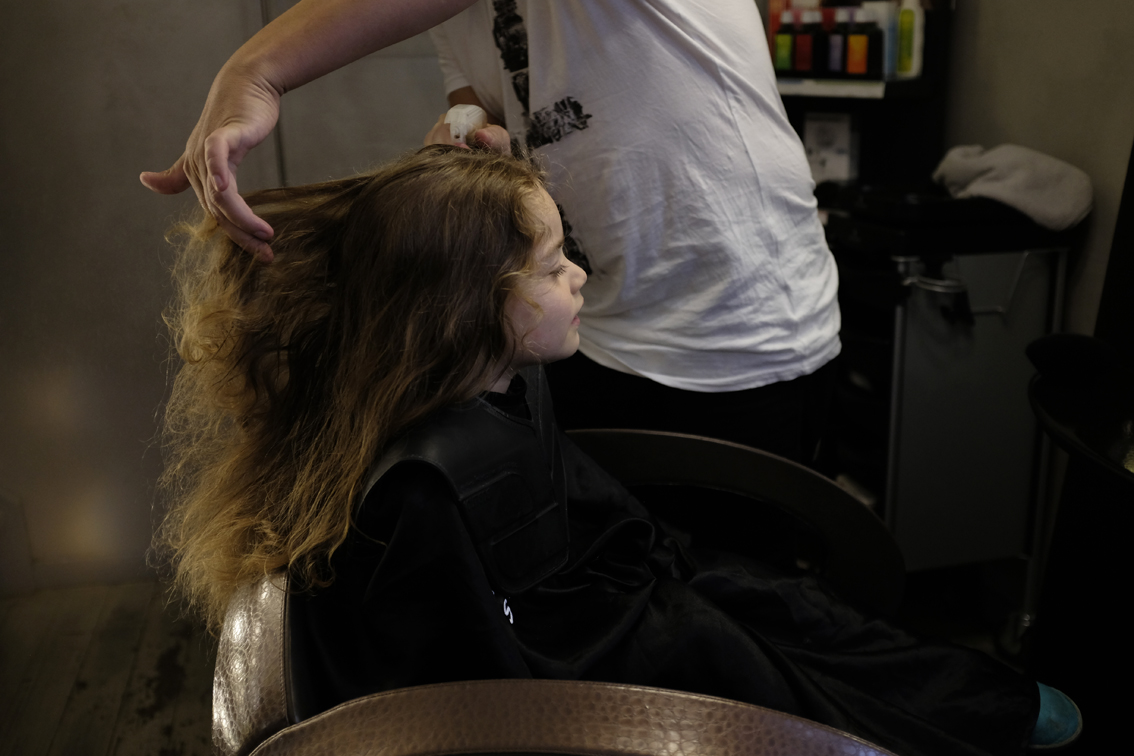
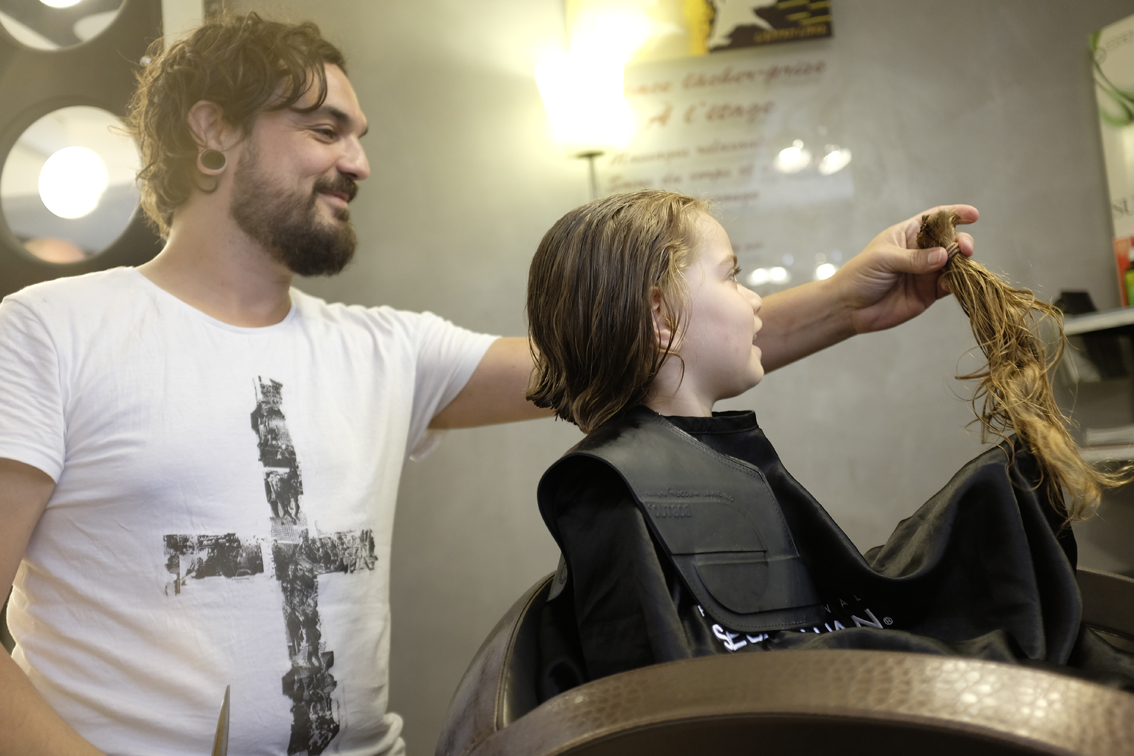
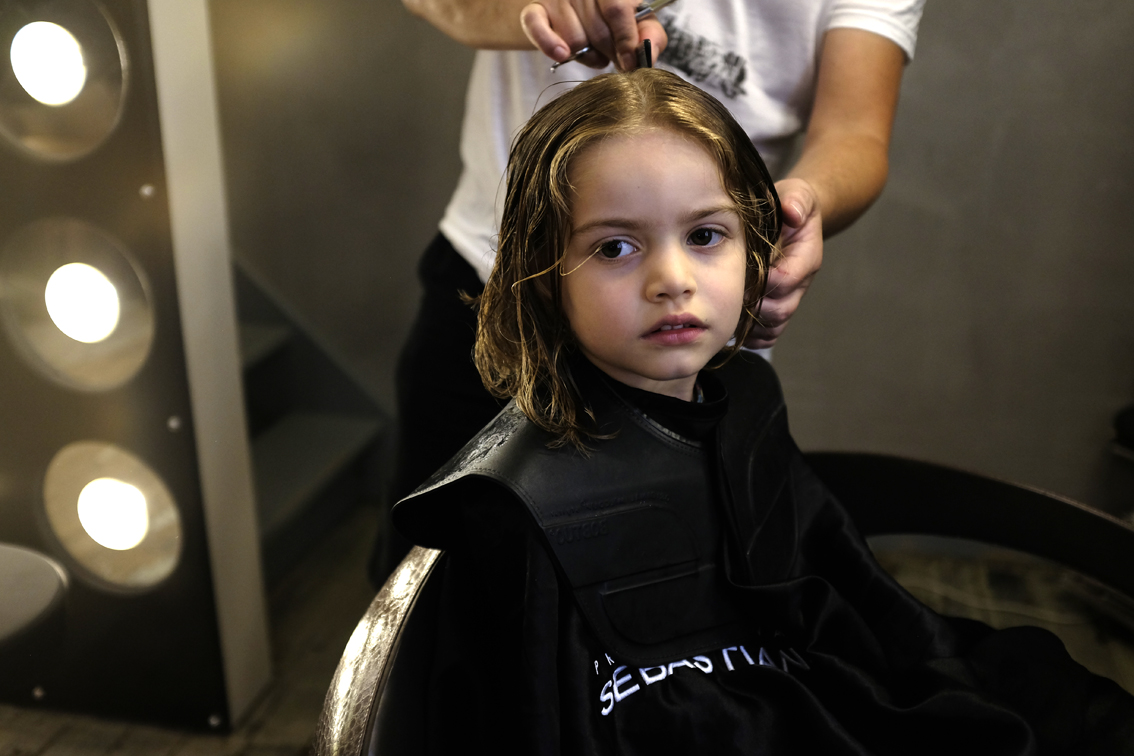
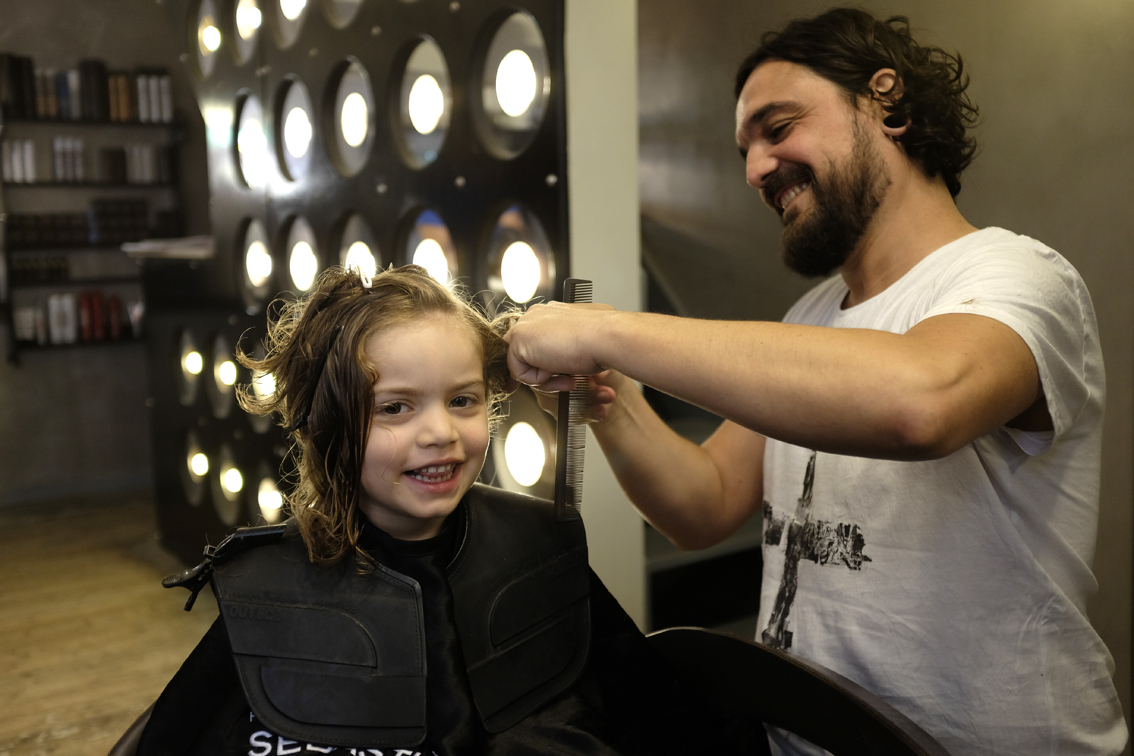
The hairdresser was very attentive to Adèle’s wishes and extremely respectful of her hair. You could sense that he loves his work and making his clients feel beautiful. He followed her instructions exactly and as you can see in all the photos above, she couldn’t be happier with her first haircut!

Do you have any tips for a first haircut that I should add to this post? If so, please let me know below.

Folded Book Art Tutorial for Kids

Folded Book Art Tutorial Kids
FOLDED BOOK ART TUTORIAL FOR KIDS

If you have an old book that is not being used, there is a simple, creative activity that will allow you to transform it into a beautiful sculpture. It’s called Folded Book Art and it will help your child:

  • increase focus
  • improve hand-eye coordination and precision
  • learn some math
  • care for the environment
  • plus, it’s Montessori-friendly

FOLDED BOOK ART TUTORIAL INSTRUCTIONS

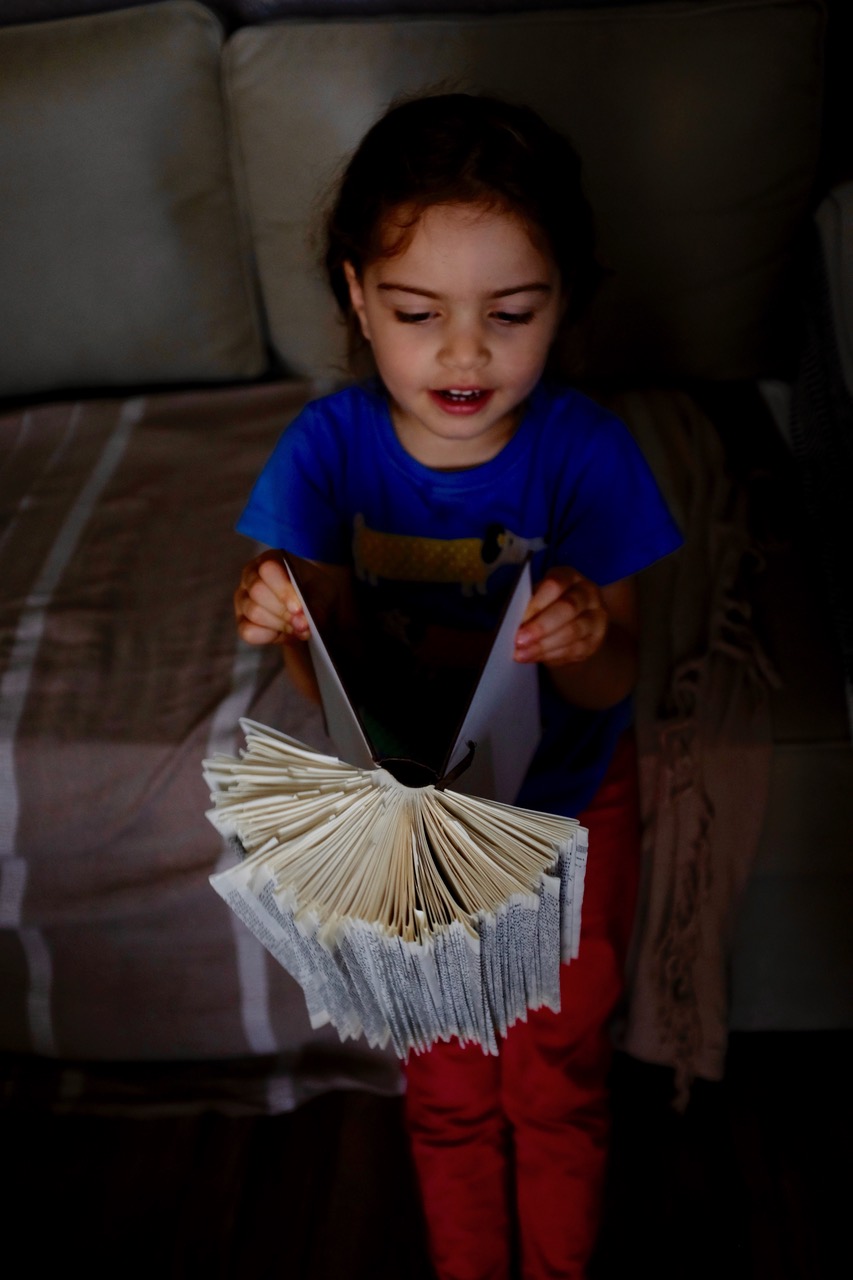
  1. Upcycle / Reuse an old hardcover book with many pages. Hardcover is sturdier for display and easier to use when folding. The book Adèle is using here has over 400 pages.open book folded book art pages tutorial
  2. Instruct your child to fold each page in half.Folded Book Art Tutorial for Kids
  3. Step away or sit on yor hands. 🙂 No, really, do not help fold the pages. Trust that your child will follow through to the last page and guide her along the way. Allow her to take brakes if needed and do not comment on how messy or precise the folds are. If you feel the need to comment you can praise your child on hard work and dedication.Folded Book Art Tutorial for Kids
  4. Because books have numbered pages, it makes it easy for your child to keep track of progress. You can even incorporate math into folded book art by pointing out your child’s progress in ratios. Encourage your child by saying something like: “I see that you already folded 1/3 of the book. That is a lot of work. Continue working and you will be half way done.”Folded Book Art Tutorial for Kids
  5. Invite experimentation with folding, especially if your child enjoys the activity. You an even suggest the use of other art materials once the folding is complete.

    Folded Book Art Tutorial Kids

***Disclaimer: This post contains affiliate links, and if you decide to purchase anything from suggested links or companies, I may receive a commission. Recommended products are either things I love using or think would be helpful for you. Making your purchase using these affiliate links helps keep this site running, so thank you kindly!

That’s it. Simple, yet beautiful, isn’t it? By the way, Adèle saw folded book art like this at a library once and that’s what gave her the idea to make one of her own. Since we KonMari-ed all of our books, we did’t have any at home to upcycle. We found this book at a used book shop while traveling in France. It’s called “The Birth of Passion.” It was the only hard cover book at the shop and I find it to be a very poetic title for a first Folded Book Art project, don’t you? 😉

open book folded book art pages tutorial

Have you tried Folded Book Art? If so, remember that I love seeing your child’s creations, so please tag me on Instagram @Rainy.Day.Sunny.Play !

5 First Steps in Teaching Photography to Your Kid

This week’s guest article is brought to you by Dan Barr – a photographer and the founder of Kids Camera Guide. Those of you who have been reading along know how much I love photography, so I’m very happy to have Dan’s professional advice on how photography can help you connect with your child.

5 FIRST STEPS IN TEACHING PHOTOGRAPHY TO YOUR KID

PIC01

In this stress-filled world, we barely get time to spend with our kids. Teaching your child a skill or an activity which will help them in the future is an excellent way to bond with your child – and also spend quality time while making sure that you increase their confidence and help them become the best version of themselves.

Photography is an excellent skill that you can teach your child. You get to spend quality time with your child and teach them something along with enjoying the time they spend learning photography. Plus, itt helps your child in many ways:

  • It helps them connect with nature.
  • It helps increase their confidence.
  • It helps them make new friends.
  • And it could change in the future from a hobby to a passion and even a profession.

Many questions arise in our mind when we decide to teach our children photography.

  • Where should you start?
  • How can you start?
  • What are the things that you need to keep in mind when you teach your child photography?

Let me share with you the first five steps that you need to use to teach your kid photography.

Before we start, a very important thing to keep in mind is that learning photography is an enjoyable experience for your child. Teaching your child anything new is a fantastic way to bond with your child and you should use this opportunity to do so.

Let’s get started.

1: BUY A CAMERA AND A CAMERA CASE

_DSF8240

Even though the price of a camera has fallen a lot over the past few years, make sure that you buy the most relevant camera for your child. You can decide on either buying a Polaroid camera or a digital camera or even a toy camera.

DSC_0156

The most important thing is that you buy a new camera for your child and not give them your camera to use. When you buy a new camera and give it to your child, the gesture gives them a sense of ownership which they don’t get when they use your camera. You also need to keep in mind that children tend to drop things. So it makes sense that you buy a sturdy camera case in which your child can keep the camera safely so that they don’t accidentally drop it.

2: HOW TO USE THE CAMERACanon coolpix child We love Frugi Organic Clothes

The next step is to teach your child how to use the camera:

  • how to hold it
  • where exactly to place their finger
  • how to balance the camera to ensure that it does not fall but also focus and click good photographs

You can teach them how to use the strap. You can do so by either demonstrating it by using the strap yourself or by putting it on their wrist or around the neck. This is very important to teach your child how to use the camera safely.

If your camera’s lens comes with a cover, then you need to teach your child how to remove the cover before they shoot and how to put it back after they complete the photography session.

Canon coolpix child We love Frugi Organic Clothes Polaroid Pogo PrinterIf you are using a kids Polaroid camera, which I would advise, you need to explain to your child not to touch the photo until the photo is fully processed. The advantage of a Polaroid camera is that your child gets an immediate hard copy of the photograph which gives them an incentive to click more photographs and increases their interest in photography.

3: BASIC CAMERA PARTSCanon coolpix child We love Frugi Organic Clothes

Show your child the parts that are in a camera that they would need to use. Explain the main function and the purpose of each part.

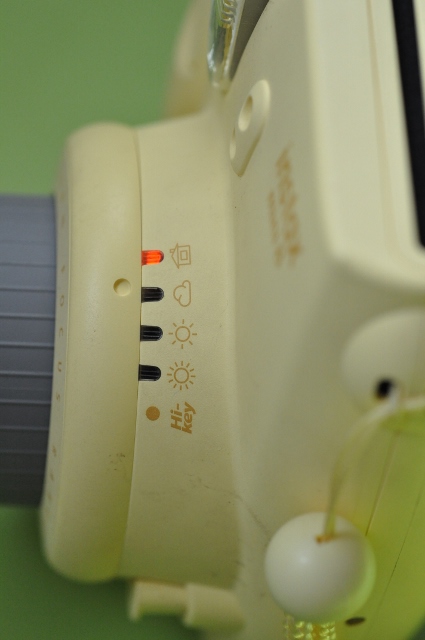
Camera power switch toy lionYou can start with the power switch as that is the easiest. You can then go on to the lens, the shutter release button, the viewfinder, and the main body. Finally, you can explain to them the concept of the mode dial, zoom control, flash and the other control buttons that are on the camera.
DSC_0097 (425x640)

4: STEADYING THE CAMERAPIC2 (600x400)

When your child starts clicking photos, the first photos that they will click generally will come out very blurred as their hands may shake. When they start seeing this, they might get frustrated and disinterested.

If this happens, you can teach them to hold the camera with both hands. You can guide your child to hold the camera close to their body. When the camera is close to the body, it gets the support of the body and the steadiness increases. You can show your child how they can click the photographs by placing their elbows on a flat surface like a table. This also helps if the camera is too heavy for them or it takes time to focus. You can even buy a tripod for your kid so that the camera is steadier.

5: FOCUS ON ONLY ONE SUBJECT_DSC1013 (800x533)
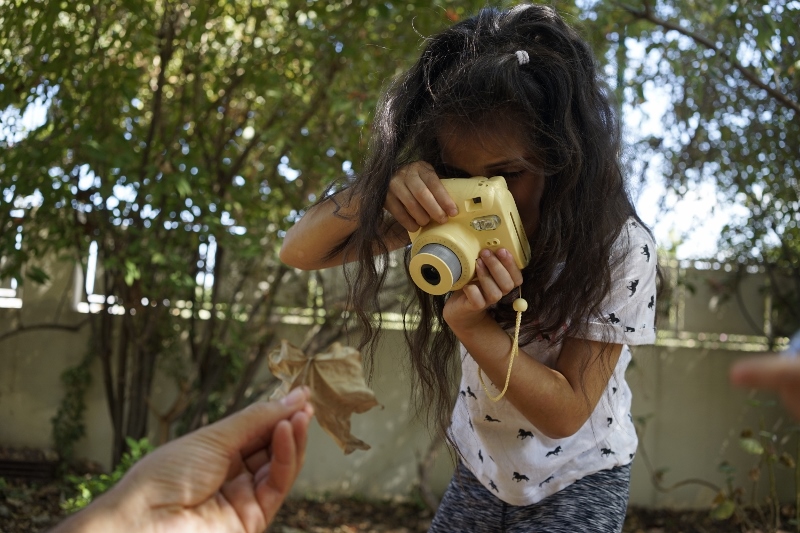
If your child’s attention is low, any small object can distract them. In addition to that, we have the tendency to take in as many objects as possible in one frame. Explain to your child that they can:

  • First look at just one subject.
  • Then fill the frame with that subject.
  • Then consider the shooting angle and the light.
  • Then click the photo. _DSF4664

Conclusion

Teaching your child photography is a very interesting and enriching experience for your child and you. It will help you bond with your child and allow them to explore the world through a lens. Viewing the world through a lens gives your child a very different perspective of their surroundings. I hope you enjoyed this post on the five first steps of teaching photography to your kids.Canon coolpix child We love Frugi Organic Clothes

ABOUT THE AUTHOR

Dan Barr is a photographer, a parent to two girls, and the founder of Kids Camera Guide – a blog which is all about teaching photography to kids and kids cameras. You can visit Dan at his website www.KidsCameraGuide.com or connect with him on Facebook or Pinterest.
Everything You Need to Know About Your Child’s First Pedal Bike – Advice by Cycling Champion, Stuart A Blair

EVERYTHING YOU NEED TO KNOW ABOUT YOUR CHILD’S FIRST PEDAL BIKE

Riding a two wheel pedal bike is one of the most looked-forward to milestones of childhood. But often, this milestone is missed or delayed due to inadequate information or resources.

Stuart A Blair Champion
Photo courtesy of Stuart A Blair

In this post I interviewed Stuart A Blair – South Australian Triathlon, Duathlon, and Aquathlon State Champion!!! Stuart was very generous in providing his expert advice on cycling and I hope you will use his answers as an invaluable resource in selecting your child’s first pedal bike.

Below our interview you will also find 5 easy, creative bike activities, a magical way in which Adèle acquired her first pedal bike, plus some very useful tips for your child’s first pedal bike.

***Disclaimer: This site contains affiliate links, and if you decide to purchase anything from suggested links or companies, I may receive a commission. Recommended products are either things I love using or think would be helpful for you. Making your purchase using these affiliate links helps keep this site running, so thank you kindly!

WHAT TO LOOK FOR AND AVOID WHEN CHOOSING THE FIRST PEDAL BIKE?

  • Look for quality – a first pedal bike must be mechanically sound no matter what age of the learner.
  • Young children must have a bike that will adjust to their rapid growth (examples: an adjustable seat post and handlebar, replaceable wheel sets from solid rubber tires to wheels with inflatable tubes and tires).
  • Be sure that the child’s helmet fits well and does not move around when riding.Nutcase Street Bike Helmet Frugi Organic Clothes

WHAT IS THE EASIEST WAY TO LEARN HOW TO RIDE A PEDAL BIKE?

  • There are two sides of the fence with their use. Old school thought and practice was to simply place the child on a bike and push them in the backyard. Trial and error and the odd tumble but eventually the ‘newbie’ would master the art of riding a bike. I was introduced to the method by my father and after 30 or 40 minutes, I was pedaling a bike without crashing! The newer school of thought is more reserved in their approach ex: tricycle, balance bike, bike with trainer wheels, and ultimately, a bike with no support.
  • Initially, you can remove the pedals from the bike which will allow the child to get the feel of the bike and assist in the development of balance, coordination, and confidence.
  • A flat, quiet street is recommended rather than a park or grassed track as grass will add much drag to the ride which can decrease the child’s momentum during those early attempts.
  • Fun is the key at this stage prior to placing the pedals back on the bike for the first full ride. Check the child’s bike position and ensure that a full revolution of pedaling can be conducted with ease whilst maintaining a hold of your child. With each attempt, allow for less assisted involvement but maintain a vigil at the side of your child in case there is a loss of control or balance.

WHAT ARE THE BENEFITS OF RIDING A BIKE?

Islabikes Cnoc 16 Straw Bike Spokes Decoration Nutcase Street Helmet

Riding a bike augments a child’s sense of:

  1. balance
  2. coordination, and over time, will increase the level of
  3. strength and their
  4. self-confidence and
  5. independence!

CHILD’S PEDAL BIKE MAINTENANCE – HOW SHOULD YOU TAKE CARE OF YOUR FIRST PEDAL BIKE AFTER RAIN?

CHILD'S PEDAL BIKE MAINTENANCE Wiping down bike after rain Islabikes Cnoc 16

  • Maintenance is relatively simple… As soon as the ride is over, hose the bike down using a special bike cleaning formula that you can purchase from the bike shop.
  • Dry the bike and wipe down the chain.
  • Oil the chain and check that all bolts are tight.
  • Of course, look at the tires for any sharp objects that may cause a puncture.

WHAT ARE YOUR TIPS FOR CHILD’S FIRST PEDAL BIKE SAFETY?

Rider safety is the priority. Constant supervision in a relaxed fun environment is the key with plenty of encouragement being offered. Nutcase Street Bike Helmet Frugi Organic Clothes

  • Helmet at all times
  • Bright colored clothing
  • Water bottle during hot and/or long rides
  • Ensure tire pressure is maintained each ride
  • A sound knowledge of rider/road safety rules

WHICH PEDAL BIKE ACCESSORIES DO YOU NEED?

  • Cycling gloves
  • Sunglasses
  • A spare tube
  • Basic tool and puncture kit
  • Tire levers to remove a tire in case of puncture

HOW DO YOU PICK A CHILD’S FIRST PEDAL BIKE SIZE AND TYPE?

The bike frame must not be too big. The simple formula is for one to stand over the top tube of the bike frame, seated, with both feet flat on the ground. A good bike shop will conduct a bike fit at the time of purchase.

DO YOU KNOW OF ANY INSPIRATIONAL CHILDREN’S BOOKS ABOUT BIKING

The Best Bike Ride Ever” by James Proimos and Johanna Wright

The Best Bike Ride Ever James Proimos Johanna Wrightand “Duck on a Bike” by David ShannonDuck on a Bike David Shannon

STUART A BLAIR BIO

Stuart A Blair Tintin Alliance Francaise Adelaide Stuart A Blair represented Australia at Triathlon and Duathlon World Championships and is a South Australian Triathlon, Duathlon, and Aquathlon State Champion. He is also a Keynote speaker at literary events, French festivals, pop culture festivals, and comic conventions around Australia; and  is currently on his National Speaking Tour – Tintin Unmasked. His area of specialization is classic European comic book literature and 1950’s and 60’s television and film. Stuart’s presentations are enjoyed by audiences of all ages!

5 CREATIVE BICYCLE ACTIVITIES

Islabikes Cnoc 16 Straw Bike Spokes Decoration Nutcase Street Helmet

Here are some of our favorite creative bicycle activities. We’ve used these successfully both with kids who love cycling as well as to encourage those who were scared at first.

  1. Decorate your bike with straws, paint or stickers. If you use straws, all you have to do is cut them into shorter pieces so that they are the right length for your bike’s spokes. Then, cut them vertically so that they can just snap onto the spokes.

    Islabikes Cnoc 16 colorful Straw decorations bike spokes

  2. Ride in puddles, especially big ones. For a worry-free ride, dress your child in waterproof clothes.Riding pedal bike through puddle Islabikes Cnoc 16
  3. Draw with wet bike wheels on a dry sidewalk. Alternatively, you can set up a shallow tray of paint and spread out a roll of paper (or paper towels). Then  have your child ride through the tray and directly onto the roll of paper, making a colorful bike track painting.
  4. dawing with wet bike wheels on a dry sidewalkRide on a line. It can be painted lines of the road, or your child can create a trail of leaves to ride on. In the photo below Adèle is riding on a line created by beautiful spring flowers which fell from a tree.Child Deliver mail to neighbors on a bike Islabikes Cnoc 16
  5. Deliver mail to neighbors on a bike. Adèle likes to drop off surprise origami gifts or hand-made “get-well” cards to kids around the neighborhood.Child Deliver mail to neighbors on a bike Islabikes Cnoc 16


ISLABIKE VS WOOM & ISLABIKE VS FROG

On one of our trips, Adèle discovered a book by Marco Campanella called Topo Tip. Oggi è il mio compleanno! (Topo Tip – Today is my Birthday!) In this picture book, a little mouse wishes for a pedal bike which he receives as a surprise gift for his birthday. Topo Tip. Oggi è il mio compleanno! Marco Campanella

Since reading this book, Adèle got obsessed with the same idea. First, she borrowed a pedal bike from a neighbor (who was away for the weekend) and used every available moment to practice riding. Then, she used Creative Visualization daily to feel that she already had the bike. If you read my articles about gifts, you probably know that we prefer experiences over things, so getting a bike for her birthday was not something we wanted to do. But she was so determined and showed so much genuine interest in cycling, that we found a way to make her wish come true without compromising our parenting values.

Islabikes Cnoc 16 Illustration

After weeks of research and speaking with professionals, we decided to get Adèle Islabikes Cnoc 16 bike. I am not affiliated with Islabikes in any way, but we love this bike so much, I just had to write about it!

First of all, we also considered Woom and Frog bikes, but while they are equally excellent options, both were too big for Adèle. Islabikes was the only one that fit just right and came in the color she wanted. Also, Islabikes has AMAZING customer support. I even called them on the phone a handful of times, and each time was greeted by very friendly and helpful people.

The bikes we wanted seemed out of our price range, BUT after much research and consideration, we decided to invest in an Islabikes Cnoc 16 for the following reasons:

  • Bikes which are well-designed sell at a high price secondhand.
  • Bikes which are well-designed last longer and can therefore be passed on to younger siblings.
  • Bikes which are well-designed are more ergonomic and safer.
  • Bikes which are well-designed go along with both Montessori education philosophy as well as KonMari way of living. We strive to only buy things that “spark joy” and that are beautiful in order to invite more beauty and joy into life.

WHY ARE ISLABIKES GOOD?Islabikes Cnoc 16 Propstand Nutcase Street Helmet

  1. When the bike arrived, my jaw opened wide. It looks absolutely beautiful. When people see it, they comment about how it looks like a smaller version of an adult racing bike. The seat is comfortable and looks like it’s made from exquisite leather. There is a lot of attention to details like accents of color on the inside part of the wheels, for example. Everything looks so well crafted and you can tell that love and care was taken into building and assembling each piece of this bike.
  2. The bike came assembled with the exception of pedals. We had to make a few minor adjustments, but it was all extremely easy and well illustrated with the instructions and stickers. The only extra accessory we purchased was a prop stand (kickstand), and the bike arrived with it attached as well.Islabikes Cnoc 16 Propstand Assembling Kid Bike
  3. This bikes is one of the lightest you can find on the market. The lighter the bike, the easier it is for a child to ride it and to pick it up when it falls. I wanted a light bike also for myself – in case I’d have to carry it or push it up the hill.
  4. Islabikes Cnoc 16 has an extraordinary break system. The hand breaks are not only easy for your child to press, but they make the bike stop immediately. This gives your child extra confidence.
  5. Islabikes Cnoc 16 is very ergonomic and Adèle is very comfortable riding it.
  6. It’s extremely easy to learn how to ride! EVERY SINGLE CHILD who tried Adèle‘s bike rode it either immediately or within 15 minutes and then ran to take stabilizers off their own bikes! 😉

TIPS FOR YOUR CHILD’S FIRST PEDAL BIKE

  • When teaching how to ride, put the palms of your hands against your child’s upper arms. Don’t hold them, but instead allow your child to balance against your palms.
  • Until your child is very comfortable riding, do not add any extra accessories like mudguards, baskets, etc. We decided not to get any mud guards at all because Adèle always wears waterproof clothes when riding anyway. If your child’s bike comes with extras, remove them to make the bike as light as possible.

Is there anything else you think I should add to this article? If so, please let me know. Also, remember to bookmark this post or save it to Pinterest to encourage your child’s interest in cycling.5 CREATIVE BICYCLE ACTIVITIES


EASY Solar System Activities for Toddlers & Preschoolers

EASY Solar System Activities for Toddlers & PreschoolersI saw this video installation at the Rubin Museum of Art in New York City years ago and it made me realize how mind boggling the concept and vastness of space really is.  It is difficult enough for an adult to comprehend. So, how do you explain it to a small child without resorting to watching films?


For the last two years I have been doing research, searching for creative, simple ways of explaining the solar system to toddlers and preschoolers. What I have discovered is that there is a lot of information out there for school-aged kids, but very little for toddlers and preschoolers. This, of course, is developmentally understandable as most children don’t ask deep questions about space until they are in school.

However, for those of you who have small kids who ask insightful questions about our solar system and beyond, you are in the right place. And if your kids are not asking the questions yet, then bookmark this post or save it to Pinterest to encourage your child’s interest of our solar system when they are ready.

EASY SOLAR SYSTEM ACTIVITIES FOR TODDLERS AND PRESCHOOLERS

  • Start by getting away from light pollution so that your child can look up at the sky and marvel at the stars and planets. When Adèle was 2, we took her to Uluru, in the middle of Australian bush. This is where we saw the Milky Way Galaxy for the first time. But you don’t have to travel this far to see stars. No matter where you are, I am sure you can find places near you where there is less artificial light. Milkey Way Galaxy Uluru
  • Use an apple (held by its stem) and a flashlight to explain how Earth rotates around its axis. This way you can easily illustrate what night and day really mean. When we moved from Australia to Georgia, I used this simple activity often to illustrate the time difference between these two countries and explain to Adèle why we couldn’t call family and friends at certain times of the day.Earthy Night Day Roating around axis
  • You can pretend you are the sun and have your child (Earth) walk around you while you spin in one place. You can also do this with a bike as your child rides around you. A word of caution – it might make you feel a bit dizzy. 🙂
  • Sing or read Twinkle, Twinkle, Little Star.Twinkle, Twinkle, Little Star by Mandy Foot
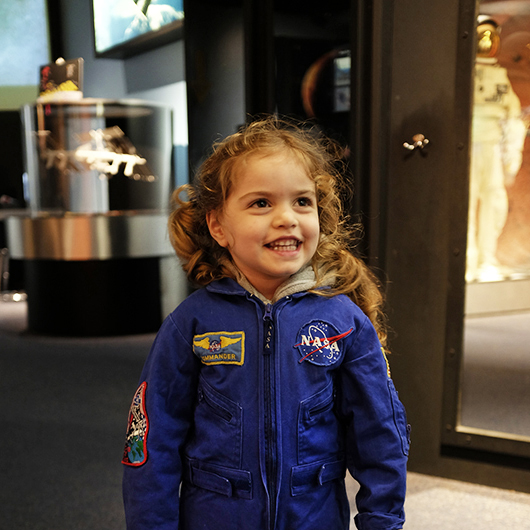
  • Play a dress up game by wearing clothes that resemble planet colors or play astronaut pretend dress-up games. NASA CHILD astronaut costume baltimore science museum
  • Use thick paper, glue and buttons of different sizes/colors to make a solar system collage in relief.
  • Take your child to an observatory or a planetarium. Many offer mini lectures on constellations and the solar system. The first time we took Adèle, she learned how we are all stardust. This idea is so poetic, and at the same time an easy way to connect your child to the universe. We have also used this concept to discuss death-related questions.Planetarium Constellations Solar System Moon Baltimore Science Museum

***Disclaimer: This site contains affiliate links, and if you decide to purchase anything from suggested links or companies, I may receive a commission. Recommended products are either things I love using or think would be helpful for you. Making your purchase using these affiliate links helps keep this site running, so thank you kindly!

SOLAR SYSTEM TOYS FOR TODDLERS AND PRESCHOOLERS

SolarSystem

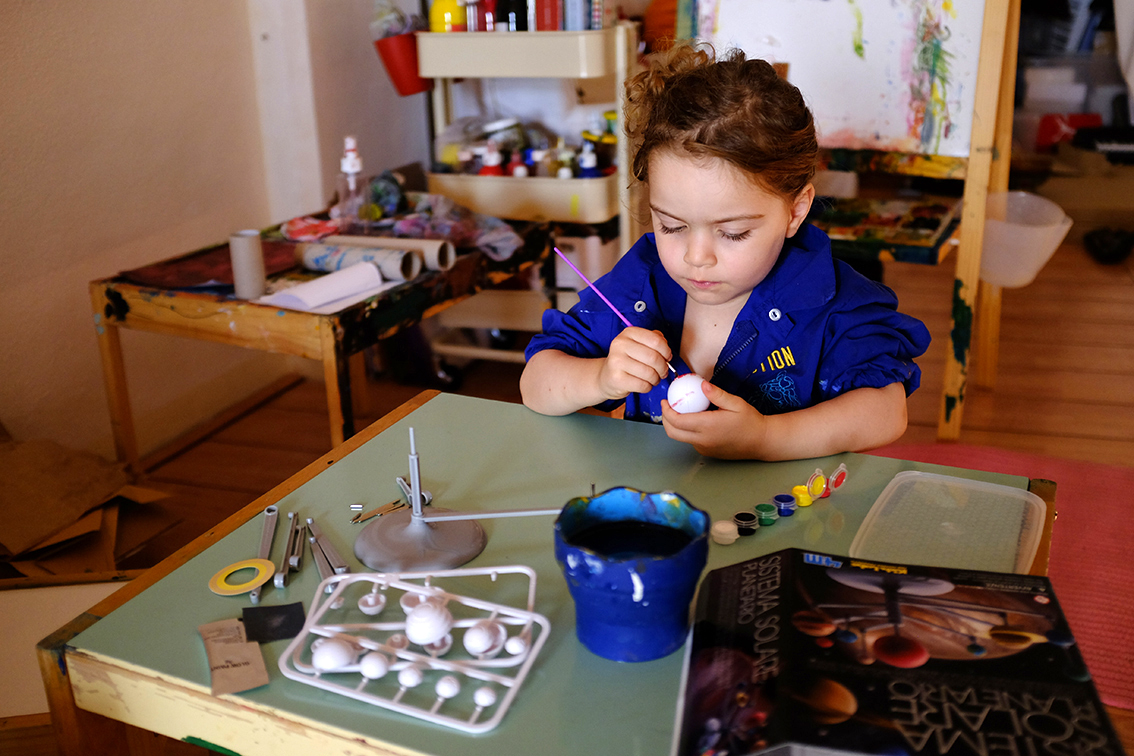
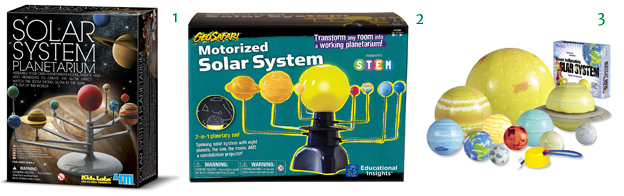
  1. 4M Solar System Planetarium – Eight  is the recommended age for this one, but Adèle was very happy to assemble it at three with some help. The Solar System Planetarium rotates and is a good way to introduce the solar system. Once your child paints the planets, they can add glow-in-the-dark paint (included) to them! I wish the Solar System Planetarium also came with Pluto. But it is still a toy worth getting since it encourages creativity, allows you to connect with your child and helps them learn something in a fun way. Because your child paints each planet, they spend a lot of time learning about them individually. For this reason, it’s a hands-on learning opportunity which is excellent both for STEM and Montessori education.
  2. Motorized Solar System – We rarely buy electronic toys, but this one is worth it if you want to project constellations as well.
  3. Giant Inflatable Solar System – Kids love balls. These ones come with a pump and can even be washed. Great for kinesthetic learners! Great for active play. Great for classrooms and group play. Plus, kids of any age can use them, and adults too, of course! You will have a lot of fun bonding with your child and learning together. This toy gets extra points for encouraging physical activity in both kids and adults! 😉

Do you have favorite solar system activities for toddlers or preschoolers? If so, please leave a comment below to share with me and our fellow readers.


SAFE Art-making: Non-toxic, Natural & Organic Art Supplies for Kids

NON-TOXIC, NATURAL & ORGANIC ART SUPPLIES FOR KIDS Painted HandsNON-TOXIC, NATURAL & ORGANIC ART SUPPLIES FOR KIDS

Many popular art supplies contain toxic materials such as chemical solvents, rubber cement, PVC, paraffin wax, toxic varnishes and many others. Since children’s immune systems are more sensitive, exposing them to such toxic chemicals (especially for prolonged periods of time) is unhealthy.

Luckily, there are many alternatives. Below is the ultimate list of non-toxic, natural anorganic art supplies listed by categories.

Also, before you scroll down, I made a gift for YOU. As you probably already know, art supplies are parents’ favorite gifts because they are CONSUMABLE and encourage CREATIVITY. So here is a FREE Must-have Art Supplies & Materials for Kids Checklist printable you can download to help you with your birthday and holiday gift shopping.

***Disclaimer: This post contains affiliate links, and if you decide to purchase anything from suggested links or companies, I may receive a commission. Recommended products are either things I love using or think would be helpful for you. Making your purchase using these affiliate links helps keep this site running, so thank you kindly!

BEST ORGANIC CRAYONS

Crayons

  1. Honeysticks 100% Pure Beeswax Crayons – These are made in New Zealand from non-toxic, natural beeswax. They make them in three sizes chunky (perfect for little toddler/baby hands), long (to last a long time) and thin (more like the regular crayons). You can even wipe them off surfaces with a damp cloth. They also smell of real honey and are therefor a very unique object which appeals to multiple senses (honey smell, waxy touch, colourful sight, sound on paper). They are not cheap, but for all the above-mentioned reasons a great investment nevertheless. A box will last a very long time!
  2. Wee Can Too Organic Veggie Crayons – Not very vibrant because they are made from edible, food grade, organic ingredients. However, they are the best, worry-free product for babies to experiment with. 
  3. Eco-kids Eco-Crayons – No sharpening required and they are hard to break. These crayons are made from mineral pigments and natural wax and are designed to look like sea rocks.
  4. Eco-Crayon Sticks – Made from beeswax and soy wax.
  5. Azafran Organic Crayons – One of the least expensive organic crayons you can find.
  6. Crayon Rocks – Very original and fun, they are made in USA using natural pigments and American soy wax. These crayons can be used to help children strengthen their tripod grip muscles in preparation for writing. Due to their unique design, crayon rocks can be used by children with disabilities and developmental/ motor control disorders. They allow the child to make large/wide strokes and the colours are very bright. The recommended age for these are 3+ because they are small and can cause a choking hazard, so take note.

NATURAL PAINTS FOR LITTLE ARTISTS

Here are the safest paints you can find. And you know the best part? – They come in a limited color palette. You might think that not having many color choices is “bad.” But in fact, having a limited color palette will allow your child to learn how to mix colors easily and more efficiently. Limiting the color palette will also allow for less “muddy”-looking artwork and is a great way to introduce various color mixing games.

SAFE PAINT FOR BABIES TO PLAY WITH

All Natural & Organic non-GMO EDIBLE Finger Painting Kit for Baby & Children DYE-Free Eco Kids Finger Paint Set

  1. All Natural & Organic non-GMO EDIBLE Finger Painting Kit for Baby & Children
  2. Eco Kids Finger Paint Set

ECO-FRIENDLY PAINTS FOR TODDLERS, PRESCHOOLERS & YOUNG CHILDREN

eco-friendly washable paint kits Earth Paint Kit GLOB All Natural Paint Kits Wee Can Too Original Natural Finger paint 'Tottle Set

  1. Earth Paint Kit – made with natural earth pigments, organic corn starch and tree sap, they are easily washable with water.
  2. Glob All Natural Paint Kits – These are powders that you mix with water. They are made from fruits, vegetables, flowers, spices and wash off in a way food does.
  3. Wee Can Too Original Natural Finger paint ‘Tottle Set” – Made from gluten free, organic vegetable powders, these paints are edible so safe for babies and toddlers.

ECO-FRIENDLY PAINTS FOR OLDER KIDS AND ADULTS

Natural Earth – The Complete Eco-friendly Artist Oil Paint Kit – As an art student, I used to use very toxic oil paint colors and products like turpentine. I just didn’t know any better, but when I found out how dangerous those products really were, I started to use gloves. But while I was protecting my skin, I was still inhaling the odors and my health at the time was not great.

When I became pregnant, I had to stop painting all together because I could not find any materials that were safe enough during pregnancy. I’m so happy now that I discovered Natural Earth Paint products and can even introduce Adèle to oil painting!Natural Earth - The Complete Eco-friendly Artist Oil Paint Kit

ORGANIC & SAFE PLAYDOUGH

Organic and Safe Playdough Eco-Kids Eco-Dough Wee Can Too Organic Veggie Mix and Go Dough The Creative Whale's Marshmallow Clay

  1. Eco-Kids Eco-Dough
  2. Wee Can Too Organic Veggie Mix and Go Dough
  3. The Creative Whale’s Marshmallow Clay

And to go with your playdough – check out this awesome ALEX Toys Artist Studio wooden playdough tool set! ALEX Toys Artist Studio Wooden Dough Tools Set 12 Piece Playdough Tools

MARKERS SAFE FOR SKIN

Markers Mod Paint Sticks NaturePlay Triangular Natural Grip Dry Erase Markers okoNORM easy baby felt tip pens

  1. Mod Paint Sticks – Solid Tempera Paint Markers for all ages, 12 vibrant colors, non-toxic and washable
  2. NaturePlay Triangular Natural Grip Dry Erase Markers – 6 Colors with an eraser
  3. okoNORM Easy Baby Felt Tip Pens 10 Colors – These color change markers are magical. Check out our mindfulness activity using these markers here.

COLOR PENCILS

Recycled Natural Non-toxic Color Pencils Faber-Castell Eco-Pencils Lyra Waldorf Giant Colored Pencils Tombow Recycled Colored Pencils

  1. Faber Castell Grip Colored EcoPencils – 24 non-toxic, acid-free, triangular shaped color pencils for an easier grip. These pencils have grip dots which means that a) your child’s pencils will not roll off the table and b) they are easier to hold.
  2. LYRA Waldorf Giant Colored Pencils – 12 unlacquered, triangular shaped color pencils. I got Adèle these pencils when she was one so that I didn’t have to worry about her putting something toxic in the mouth while drawing. Since these are made of natural wood and so big, they are great long-term investment. Also, due to their color, design and natural qualities, they are perfect for Waldorf-style classrooms and families.
  3. Tombow Recycled Colored Pencils – 24 pencils made from recycled American wood. They come in a metal storage box.

MESS-FREE ART SUPPLIES: MAGNETIC DRAWING BOARDS – ETCH-A-SKETCH

Magnetic Drawings Boards (like the classic Etch-a-Sketch) allow your child to practice drawing and writing. They can also be used for creative games and help develop hand-eye coordination. I have not yet found any wooden ones on the market, but the plastic ones are made of non-toxic materials. This, however, does NOT mean that they can be chewed on/placed in the mouth – so, make sure that your child is past that developmental stage before playing with one.

Here are some of the best Magnetic Drawing Boards that you can find. Smaller ones are excellent for trips or family outings. (Adèle was lucky to get her first one on a long-distance flight and has been playing with it every since). Larger ones are excellent for older kids, especially for practicing writing or creative art games.

BATTOP Big Size Kids Drawing Board Magnetic Drawing Board Mini Travel Doodle Etch A Sketch - Classic Fisher-Price Slim Doodle Pro NextX Magnetic Drawing Board Write and Learn Creative Toy Magnetic Doodle Drawing Board For Kids Magnetic Drawing Board SGILE Magnetic Drawing Board SGILE 13X17” Magna Doodle Sketch Erasable Pad

  1. BATTOP Big Size Kids Drawing Board
  2. Magnetic Drawing Board Mini Travel Doodle
  3. Etch A Sketch – Classic
  4. Fisher-Price Slim Doodle Pro
  5. NextX Magnetic Drawing Board Write and Learn Creative Toy
  6. Magnetic Doodle Drawing Board For Kids
  7. Magnetic Drawing Board
  8. SGILE Magnetic Drawing Board
  9. SGILE 13X17” Magna Doodle Sketch Erasable Pad

MISC ORGANIC & NATURAL ART SUPPLIES FOR CHILDRENOrganic School Glue by Tessa Bunny's Prang Hygieia Chalk Pacon Tru-Ray Construction Paper Westcott KleenEarth Recycled Kids Scissors With Microban Protection okoNORM Easy Aqua Pens 10 Colors Aquadoodle Classic Melissa & Doug Rainbow Stamp Pad - 6 Washable Inks Fabula Organic Pencils Buddha Board

  1. Organic School Glue by Tessa Bunny’s
  2. Prang Hygieia Chalk
  3. Pacon Tru-Ray Construction Paper
  4. Westcott KleenEarth Recycled Kids Scissors With Microban Protection – Made from stainless steel and 70% recycled plastic
  5. okoNORM Easy Aqua Pens 10 Colors – Can be used with a brush to create watercolor effects!
  6. Aquadoodle – Draw N Doodle – Classic Mat with BONUS Pen and Cap – Aquadoodle makes images appear with only a bit of water using a pen (included) for hours of mess-free creativity and fun.
  7. Melissa & Doug Rainbow Stamp Pad – 6 Washable Inks – (Awaiting information from the manufacturer and using them with gloves for the time being. They do wash off clothes and the colors are bright.)
  8. Fabula Organic Pencils — This is one of the BEST INVENTIONS OF OUR TIME! These pencils are recycled from flowers, coffee and tea. And you know the best part? They turn into plants when you are done using them. They actually grow!! I am not affiliated with Fabula in any way, but their product is just too fabulous not to talk about!
  9. Also, check out my article about creative mindfulness activities and how to use a  Buddha Board (another mess-free artistic tool) to stop tantrums and improve sleep.

CHILD SIZE DISPOSABLE GLOVES

If your child is old enough to use professional art materials or you want them to use toxic materials safely, then consider getting disposable, waterproof gloves. We have tested many so far and most can be used by 4+ year olds, although they are really designed for larger hands. I have not been able to find anything smaller, so if you are aware of any gloves that would suit toddler hands, please let me know.

Glovies Multipurpose LATEX-FREE DISPOSABLE Gloves for Kids Bubble Glove: Best Kids Nitrile Gloves Hygloss Products, Inc. Latex Gloves for Kids

  1. Glovies Multipurpose LATEX-FREE DISPOSABLE Gloves for Kids – 50, latex free, powder free
  2. Hygloss Products, Inc. Latex Gloves for Kids – 100, latex, powdered, assorted colors
  3. Bubble Glove: Best Kids Nitrile Gloves – 50, latex free, powder free, fragrance-free

Are there any natural, organic or eco-friendly at supplies you are aware of that I should test and review?

Also, would you like to give the gift of art? If so, here is a FREE printable Must-have Art Supplies and Materials for Kids Checklist. You can use it to make your own art basket gifts or as a reference when creating your child’s art studio.Non-toxic, Natural Organic Art Supplies for Kids

Simple, Beautiful, Handmade Paperweights Even a Baby can Make

HOW TO MAKE SIMPLE, BEAUTIFUL, HANDMADE PAPERWEIGHTS

Salt Playdough Rolling Pin ChildThis is 100% Adèle’s idea which she stumbled upon while playing. One day she asked me to help her make playdough. We mixed the following ingredients together:

  • 1 cup flour
  • 1/4 cup salt
  • 1 tbsp olive oil
  • water until the paste became dough-like and non-sticky

***Disclaimer: This post contains affiliate links, and if you decide to purchase anything from suggested links or companies, I may receive a commission. Recommended products are either things I love using or think would be helpful for you. Making your purchase using these affiliate links helps keep this site running, so thank you kindly!

Once the dough was made, she dripped some of her organic paints (you can also use organic food coloring) into it and started to knit the dough to make it a certain color and shape. Just allow your child to experiment and make whatever they feel like. I’m sure they will surprise you! 😉
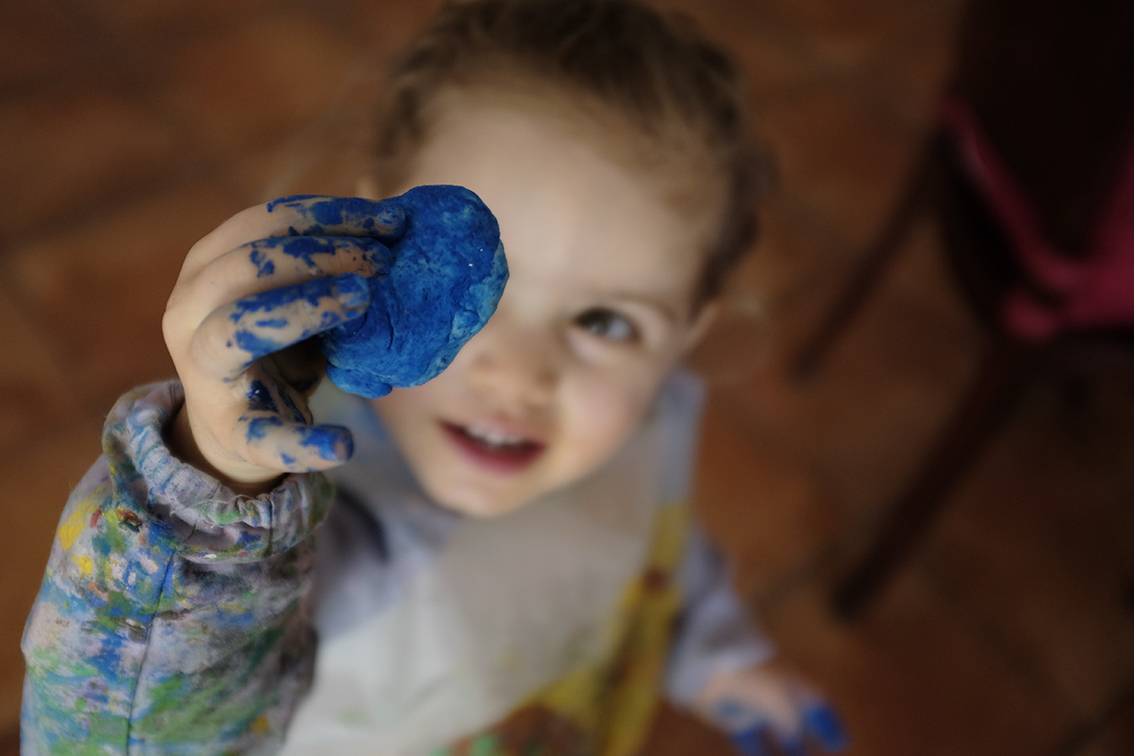
Normally we’d bake the dough to make it harder, but we did not have an oven available at the time. Then, she saw there was sun up on the window sill and said they could dry there instead of the oven. I told her that they would probably not dry hard, but she insisted. Well, I was wrong. They DID  dry and are quite hard! If you prefer to bake your child’s creations to make them a bit more “permanent,” though, then add 1 cup of salt instead.

Easy, simple, fun. THAT’S IT!DIY paper weight PlaydoughDid you try Adèle’s recipe? How did it work out for you? Remember to tag me on Instagram as @Rainy.Day.Sunny.Play and use the #Rainy.Day.Sunny.Play hashtag. We love seeing your creations!


Sunshine Blogger Award: Most Inspirational Parenting Blogs

Kids looking at zoo map Clealand Wildlife Park South AustraliaSUNSHINE BLOGGER AWARD: Most Inspirational Parenting Blogs

The Sunshine Blogger Award is a peer recognition award that connects bloggers who have inspirational sites. I only launched Rainy Day Sunny Play six months ago, so receiving a nomination for the award from Ashley at Happy Homeschool Mum was such a wonderful surprise! I feel humbled and grateful, but also motivated to know that people are connecting with what I write about.

SUNSHINE BLOGGER AWARD RULES

THANK THE BLOGGER WHO NOMINATED YOU IN A BLOG POST AND LINK BACK TO THEIR BLOG.

THANK YOU AGAIN SO MUCH, Happy Homeschool Mum!

***Disclaimer: This post contains affiliate links, and if you decide to purchase anything from suggested links or companies, I may receive a commission. Recommended products are either things I love using or think would be helpful for you. Making your purchase using these affiliate links helps keep this site running, so thank you kindly!

ANSWER THE 11 QUESTIONS THE BLOGGER ASKED YOU.

  1. Who is your favorite Author? Paulo Coelho because he inspired me to always “follow the signs.”boy makes soap bubbles, soap bubble explodes, red cape child superhero, alchemist
  2. What are words you live your life by? – “This, too, shall pass.” and “Carpe Diem.”
  3. What advice do you have for busy mothers (or parents) to stay healthy? – Prioritize your health and well-being (both physical and mental).
  4. What is something you are passionate about? – Connecting with like-minded people, Holistic Education, Art-making,  Natural Parenting and Traveling.
  5. How do you cope with stress? – Mindfulness, Meditation, Creative Activities and Walks in Nature.
  6. What is one thing in the world you would change? – EDUCATION!
  7. Who is the most influential person in your life? – Adèle 🙂
  8. What is your favorite recipe? – Hot chocolate and here is the recipe:

    Ingredients:

    * Milk of your choice

    * Raw Cacao

    * Nut Butter of your choice

    * Cinnamon, Cardamon, Clove (optional)

    Recipe Instructions

    * Mix everything but raw cacao together and heat until very warm, but NOT boiling.

    * Stir in raw cacao.

    * Enjoy 🙂


  9. What is your favorite quote? – “The real voyage of discovery consists not in seeing new sights, but in looking with new eyes.” – Marcel Proust.
  10. What is your favorite piece of parenting advice that works? – Do not use screens for entertainment and you will see a dramatic improvement in all areas of your parenting and life!
  11. Do you have a favorite parenting book? Parenting Books How To Raise An Amazing Child the Montessori Way by Tim Seldin Hold On to Your Kids: Why Parents Need to Matter More Than Peers - Dr. Gabor Mate  Understanding the Human Being: The Importance of the First Three Years of Life by Silvana Quattrocchi Montanaro

My husband also really likes Be Prepared by Gary Greenberg and Jeannie Hayden for its humor and simplicity. It definitely helped him feel more prepared for the new role of parenthood.Be Prepared  Gary Greenberg

NOMINATE 11+ NEW BLOGS TO RECEIVE THE AWARD.

  1. Kylie at www.HowWeMontessori.com – Kylie’s site is the complete, go-to, world-wide Montessori resource. It was the first parenting blog I started following while pregnant and it’s the site that inspired me to start blogging! I love how it’s structured by age so that you can always easily find age-appropriate Montessori resources. And it also saves so much time because Kylie finds the best Montessori-friendly products to choose from.
  2. Susan at www.MomsStrollerReviews.com – Susan gave me invaluable advice about blogging before I even got started. She is a stroller (pram) expert, so check out her page if you are looking for one!
  3. Lacey at www.naturallymodernlife.com – I took Lacey blogging crash course which got my blog up and running. So, if not for her help, you would not be reading this now! Among other things, Lacey blogs about zero-waste living and her site is full of beautiful photography.
  4. Jessica at www.CollectMakeExplore.com – Jessica blogs about all the different creative ways in which you can connect with nature.
  5. Jean at www.ArtfulParent.com – This blog is full of simple art & craft ideas for the entire family.
  6. Kelly at www.KellyMom.comTHE bible for ALL breastfeeding questions. I have referred to this site on multitudes of occasions throughout my breastfeeding journey and it has allowed me to continue breastfeeding even through most challenging situation. For that, I am eternally grateful.
  7. Kate at www.KateSurfs.com – This blog is about Aware Parenting and Kate is also an expert on Elimination Communication!
  8. Anna at www.TheImaginationTree.com – Anna is a fellow early childhood educator and shares creative craft activities for kids of all ages.
  9. Heather at www.MommyPotamus.com – This site is my favorite blog for resources on natural beauty and health, DIY natural products and recipes.
  10. Meri at www.MeriCherry.com – Another great reference blog for art and craft projects.
  11. Micaela at www.MindfulMomma.com – Micaela blogs about non-toxic beauty products, natural living and healthy food.
  12. Pragya at www.TheArtTiffin.co.uk – Pragya writes about creativity, mental health and vegan, eco-friendly art products. She also sells Art Tiffin Box subscriptions to inspire creativity.

WRITE 11 NEW QUESTIONS FOR YOUR NOMINEES.

        1. What is your favorite creative activity with kids?
        2. Who do you look up to / who inspires you and why?
        3. What is your favorite place in the world?
        4. What are you most proud of in your life?
        5. What was the biggest struggle you have overcome?
        6. What does your ideal school look like?
        7. What is your greatest parenting challenge?
        8. If you could travel anywhere right now, where would you go?
        9. How Much time do you spend outdoors on daily basis?
        10. When and how did you decide to start a blog?
        11. Why do you continue to blog?

LIST THE RULES AND DISPLAY THE SUNSHINE BLOGGER AWARD LOGO ON YOUR POST AND/OR YOUR BLOG.

I can’t wait to read the answers from my favorite bloggers and hope they’ll enjoy reading their blogs as much as I do! Thank you again, Happy Homeschool Mum, for nominating Rainy Day Sunny Play for the Sunshine Blogger Award!

The Sunshine Blogger Award Logo

Sunshine Blogger Award Most Inspirational Parenting Blogs

Help Your Pre-Schooler be Themselves Through Fashion!

EDUCATIONAL FASHION DESIGN ACTIVITIES FOR KIDS

Your children wear clothes from the day they are born, so it’s important to discuss fashion with them as soon as they are developmentally ready. Here are some simple, educational ways in which you can start incorporating fashion into your child’s daily lives:

***Disclaimer: This post contains affiliate links, and if you decide to purchase anything from suggested links or companies, I may receive a commission. Recommended products are either things I love using or think would be helpful for you. Making your purchase using these affiliate links helps keep this site running, so thank you kindly!

  • Start by allowing your child to pick their own clothes by offering them two options to chose from. This way, you won’t have to fight over clothes and it encourages their independence as well.
  • Include kids in the process of buying clothes. It helps them develop their style and be themselves.
  • Teach them how to take care of their clothes. Show them how to load the washing machine, how to hang washed laundry and how to fold and put away dry clothes. We use the KonMari method for folding and organizing clothes in drawers according to colors.
  • Play dress-up games. Children love scarves. Challenge them to make outfits using one. If you don’t have one, you’ll fancy these Djeco Silk Painting Playsets. They come with real silk scarves which you paint. The outlines are designed to keep the paint inside the lines. Djeco Silk Painting- Japanese Playset Djeco Silk Painting - Butterflies Playset Djeco Silk Painting- Peacock Playset Silk Scarves Kid Activity
  1. Djeco Silk Painting- Japanese Playset
  2. Djeco Silk Painting – Butterflies Playset
  3. Djeco Silk Painting- Peacock Playset
  • Have your child paint or draw on shoes, scarves or clothes they can wear. Alternatively, this company can print your child’s artwork onto clothes.

T-SHIRT ART DESIGN ACTIVITY INSTRUCTIONS

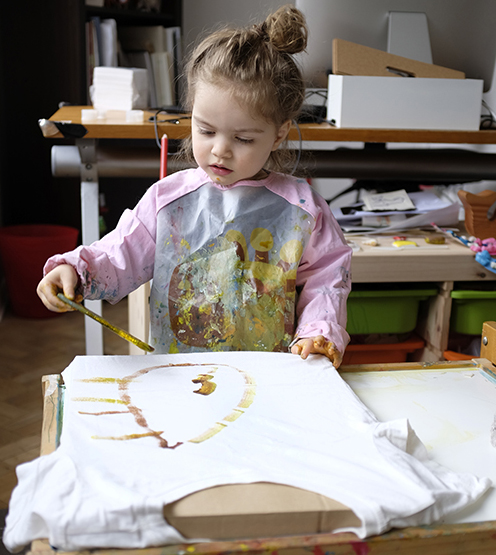
Toddler painting tshirt T-SHIRT ART DESIGN Activity Instructions

  • Put cardboard inside a white T-shirt as pictured. This way color will not bleed through to the back.
  • If your child wants to paint/draw on the back as well, make sure they wait for the pigments to dry before turning everything over.
  • Use any non-toxic paint or markers you already have – you don’t need to buy anything specific, but whatever you have must be permanent – otherwise it will wash off. If your child is using pigments that are not safe, I suggest they wear child size gloves.
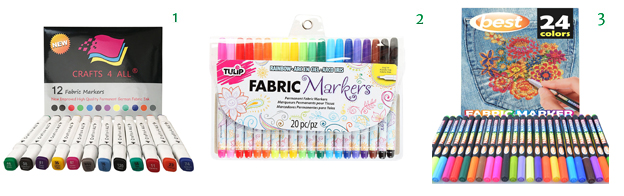
  • If you are looking for fabric markers and paints, then here are some child-safe products which inspire us:

Fabric Markers 12 Pack Fabric Markers 20 Pack Fabric Markers 24 Pack

  1. Fabric Markers 12 Pack
  2. Fabric Markers 20 Pack
  3. Fabric Markers 24 PackParty Dimensional Fabric Paint 20 Pack Scribbles 3D Fabric Paint 20 Pack Fabric Paint 3D for Glass, Canvas, Fabrics, Wood, etc. 24 Pack
  1. Party Dimensional Fabric Paint 20 Pack
  2. Scribbles 3D Fabric Paint 20 Pack
  3. Fabric Paint 3D for Glass, Canvas, Fabrics, Wood, etc. 24 Pack
  • I suggest using a new T-shirt intended for this activity (not one that your child already owns). I gave Adèle one of my white tees because the paint could not be washed off and I also wanted to wear her creation. (Had she painted on her own clothes, there would have been big emotions related to impermanence which I wanted to avoid.) She was happy to see me wear her art, so that was an extra bonus.original tshirt design painted gold glitterHere is a long-sleeve shirt that Adèle designed for her grandma. For this one she used the Fabric Markers 12 Pack.

Fabric Markers 12 Pack child Designing shirt kid drawing using fabric markersFabric Markers 12 Pack child Designing shirt kid drawing using fabric markers

Has your preschooler tried drawing or painting on clothes or shoes? If so, remember to tag me on Instagram as @Rainy.Day.Sunny.Play and use the #Rainy.Day.Sunny.Play hashtag. We love seeing your creations!

Design a site like this with WordPress.com
Get started