Kids love circuses, but some circus’s practices are unethical (read my story below). So how can you incorporate circus games into your child’s play in a positive, educational way? Here are 5 activities you can do with your child right now :
Discuss animal rights using age-appropriate language.
Practice juggling using age appropriate materials (read below).
Clown around.
Dress up.
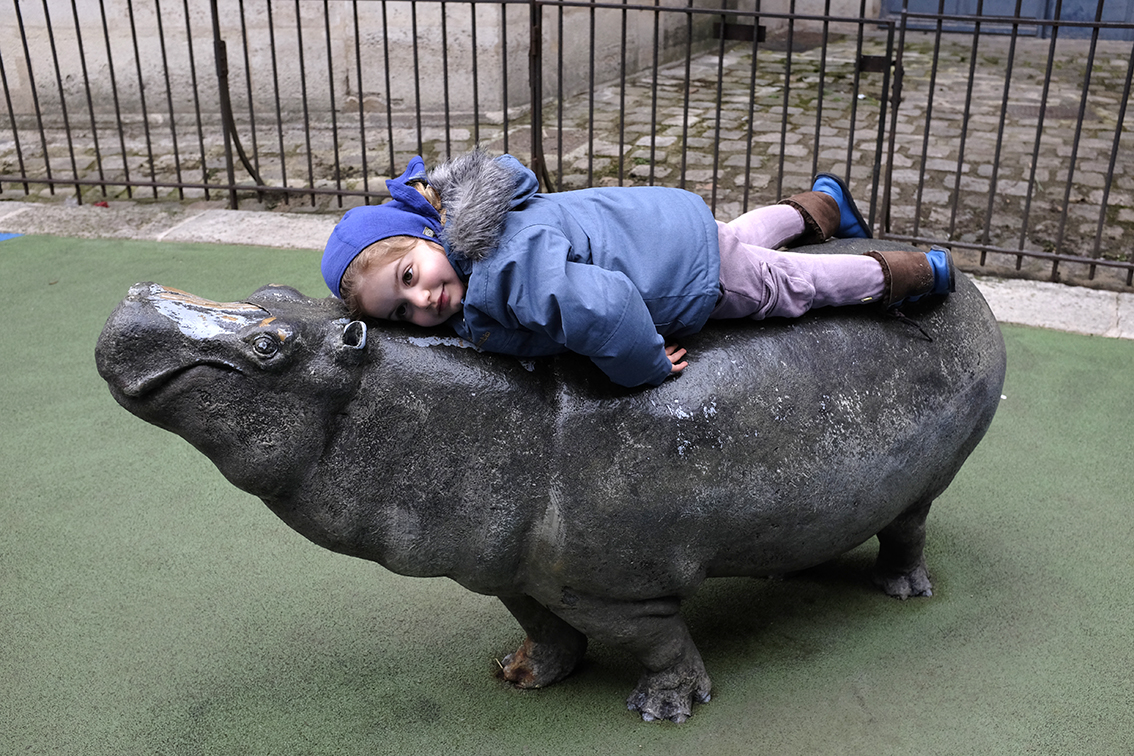
Encourage tumbling / acrobatics / gymnastics. (Examples: standing on one leg, balancing on the curb, etc.)(For those who are wondering, the boots Adèle is wearing are made by MyMayu.)
To expose your children to circus activities, check if you have circus schools around where you live. We are lucky to have a few around us which offer different circus classes for kids! It’s a creative way to sensitize children to circus fun and encourage them to try new physical activities such as jumping on trampolines or walking on wire.
EDUCATIONAL CIRCUS TOYS
***Disclaimer: This post contains affiliate links, and if you decide to purchase anything from suggested links or companies, I may receive a commission. Recommended products are either things I love using or think would be helpful for you. Making your purchase using these affiliate links helps keep this site running, so thank you kindly!Since she loves animals so much, my husband brought Adèle this beautiful Janod Story Box Circus as a gift from Paris. At first didn’t play with it much and we thought it was because she didn’t know what a circus was. So when the first circus came in town, we bought tickets without even a second thought.
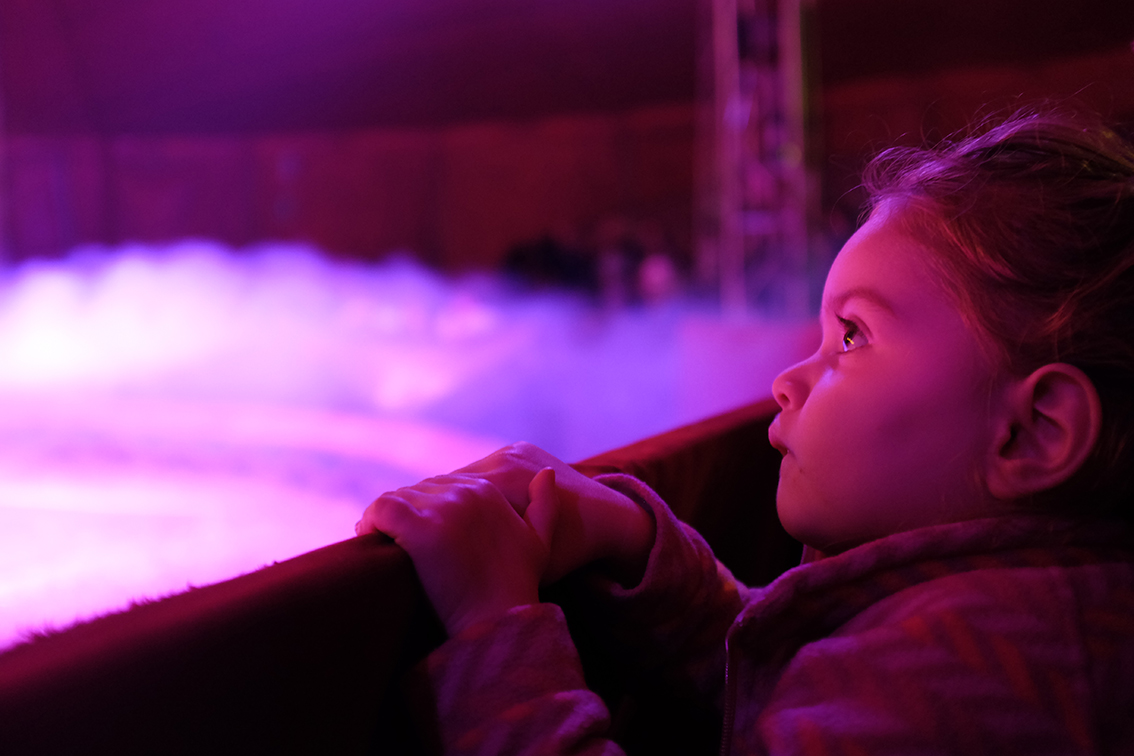
The show was in Tbilisi, Republic of Georgia in an authentic circus tent building just like the one in her game. I still don’t know which country the circus show came from, but it was the most traumatizing circus experience I have ever had because it was obvious that the animals were NOT treated well.
We are a family that rescues animals so seeing old, captured, wild, bleeding animals on stage doing tricks and not being able to do anything about it was very difficult.
Adèle didn’t understand what was really happening so was not affected by the experience in a negative way. In fact, she was really impressed by “flying men” and even tried to do her own acrobatic tricks at home. She still talks about all the animals she saw and how magical that was for her. And she also plays with her circus game now all the time.
I am telling you this story because any type of circus game that you will find will have animals in it. Animals that smile, animals that do cute things. And while I normally wouldn’t support such toys, they do provide an opportunity to teach your kids a few things such as:
animals rights – They can spark conversations about animals, about what a circus is or what it should be.
history – Kids need to learn about the way circuses were back in the day (or, like in our case, still are in developing and third world countries).
creativity – Children like seeing images of animals doing funny or strange things and that develops their imagination.
movement – Circus games provide opportunities for original movement activities.
DIY CIRCUS TOYS
You can make a simple balancing toy using a plank of wood and a wooden cylinder.
You can also make stilts using old cans and some rope:
Janod MultiKub Circus Stacker with Figures – A unique stacking circus toy with 5 wooden characters. The stacking cubes are light as they are made of cardboard. Great for babies and toddlers, but characters can also be used by older kids for imaginary play, so this game is a good investment for that reason.
Janod Kubkid Circus Blocks – Block games are excellent pre-puzzle introductory games for toddlers. Each side of the cube has a different image, so there are 6 circus-inspired illustrations that your child can assemble.
Djeco Circus Observation Puzzle – 35 pieces puzzle that comes with a poster. Adèle likes this one a lot because the poster makes it easier to learn how to assemble puzzles. The border around it makes it a bit more challenging and it also serves as a “spot a character” game, so you actually get two games in one!
Janod 54pc. Circus Puzzle – 54 piece puzzle that comes with its own carrying case. The case has a handle. Beautifully designed for neat storage and very Montessori-friendly for this reason.
Janod Story Box Circus – A wooden game that comes in a sturdy cardboard box designed as a circus tent. The box itself can be used as part of the game. You can see Adèle playing with hers in the photos above. It’s excellent for imaginary play. The pieces can be used for balancing and work quite well. Some characters can even ride on the horse which is a huge plus!
Janod Story Express Circus – This one is the same set as above, but with more characters and an original twist to traditional train sets!
1 X Red Floor Circus Tent Indoor Children Play House Outdoor Kids Castle by POCO DIVO or you can find a similar one at IKEA. This tent will last for years because kids love hiding inside, making a house of their own, etc. It folds flat, takes very little storage space when folded and is easy to assemble. We placed Adèle’s baby mattress inside for extra comfort and she has taken naps inside when she was little.
Juggling Combo Pack – 3 soft balls and 3 silk scarves. The scarves are great for beginners as they are light and easier to catch than the balls. The set comes with instructions. The scarves are perfect for travel and easy to pack when going out. I usually pack them for plane rides as their are practically weightless and so versatile. You can even practice magic with them!
Meeple Circus – A circus inspired game for all ages. For a more physical circus activity, check out this Camden Rose Wood Circus Toss Game. It’s great for reinforcing gross motor skills and coordination and is a fun kinesthetic activity. Older children can also play with hula hoops. Also, for indoor balancing fun, try IKEA Balancing Bench which is surprisingly sturdy.
CIRCUS BOOKS
The Man Who Walked Between the Towers by Mordicai Gerstein – A beautiful, inspirational book for older kids about the adventures of tightrope walker, Pilippe Petit who walked between the World Trade Center Towers in NYC. This book even won the Caldecott Medal and is an excellent edition to any library!
Creativity – The Perfect Crime by Philippe Petit – this one is an autobiography written by the man himself and is for adults. I include it here because his story is so incredible and is all about creativity and following your passions.
Circus today is so much more than just animals (examples: Cirque du Soleil, Cirque plume, etc.). In fact, in some countries animal circuses are banned all together. I am still looking for a circus game that represent the modern circus. If you find one, please let me know!
Books about books are fun for everyone. They are great for kids who already love reading as it spark their imagination even more. AND, they are excellent at igniting love of books in kids who don’t otherwise read much. On my list I also included books that can be used as a replacement for screen-time because they are designed specifically for that. I also reviewed books that are just brilliant as an object – books that you’d want to own even as an adult. So, without further adieu, here are our top 6 favorite books about books for you to enjoy!
6 CREATIVE BOOKS ABOUT BOOKS FOR CHILDREN
Even though Bologna Children’s Book Fair is not open to children (it’s a fair for professionals in the field), Adèle was lucky enough to spend a few hours there. She was amazed and happy to see so many books and loved the pop-up book exhibition.
***Disclaimer: This post contains affiliate links, and if you decide to purchase anything from suggested links or companies, I may receive a commission. Recommended products are either things I love using or think would be helpful for you. Making your purchase using these affiliate links helps keep this site running, so thank you kindly!
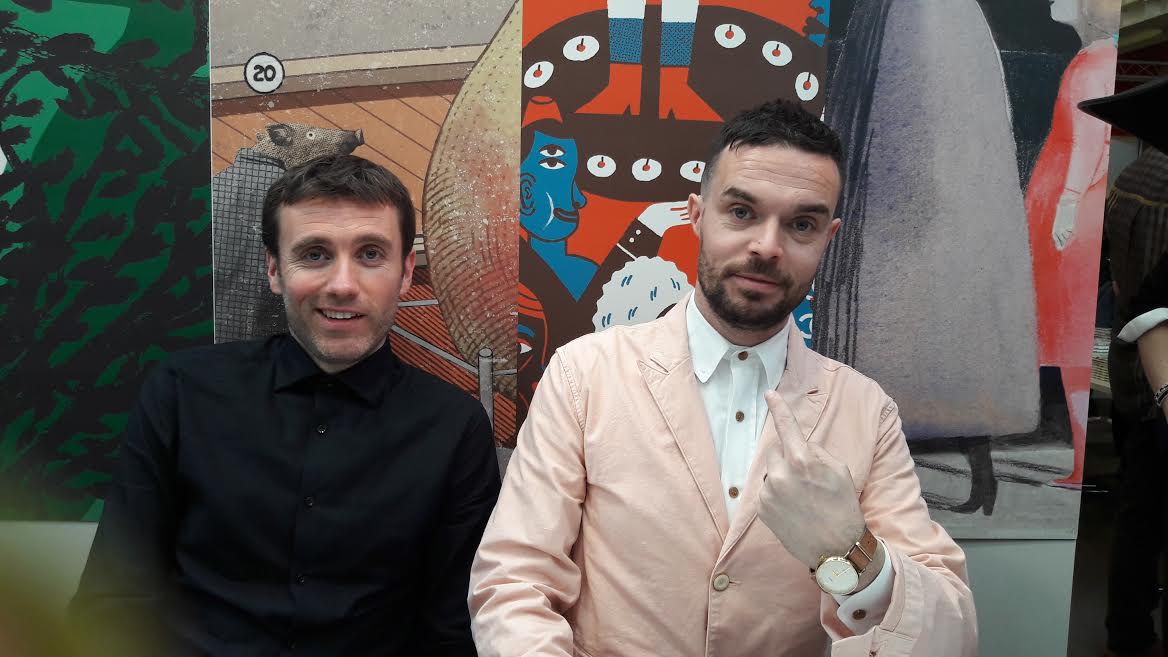
I even managed to get her a signed copy of Oliver Jeffers’ and Sam Winston’s award winning A Child of Books. Since Adèle couldn’t be present for the signing and because she wanted to know what Oliver Jeffers looks like, I asked someone to take a photo of him. In case you are wondering too, here he is with Sam Winston to his right.
A Child of Books takes us on a journey of loving books while paying homage to classic literature for children. It is accessible to all ages and uses text as a graphic element. This helps in bringing us along on the journey of reading. A beautiful book to read over and over again and perfect as a gift for children small and big.
If you love reading and love books as an object, here are a couple more books about books which we love to read often:
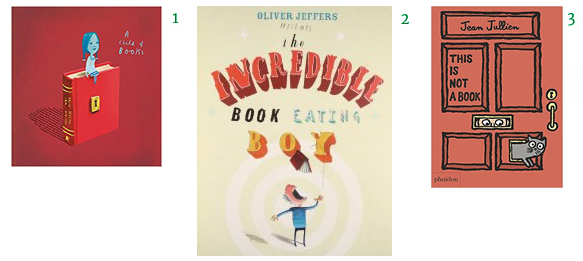
A Child of Books by Oliver Jeffers and Sam Winston (read descriptions above).
The Incredible Book Eating Boy by Oliver Jeffers – This one is creative and funny. It’s about Henry who loves eating books and getting smarter. With an original twist and a perfect ending, it is sure to delight. Every time I read it to Adèle, she comes up with more and more inventive questions, so I think the book has done its job over and over again.
This Is Not A Book by Jean Jullien – This book re-imagines what a book is and makes it something playful and fun. It almost become an interactive art piece where your child, while reading it, forgets that it’s a book. It challenges you to look at things in a different way and to be more creative. A fun object, a fun book.
The Red Book by Barbara Lehman- A storytelling adventure for older children, this book is a Caldencott Honor winner and excellent for igniting your child’s imagination.
The Fantastic Flying Books of Mr. Morris Lessmore by William Joyce and Joe Bluhm – While this wondrous books talks about the power of the book, I only recommend it for older children as it does mention death.
It’s a Book by Lane Smith- A funny book about books in the digital age. This is the book if you want to help your child look at a book instead of the screen. 😉
Are there any other books about books you like which I should add to this list?
HOW TO TEACH YOUR KIDS ABOUT WILDLIFE CONSERVATION
You probably heard about the death of Sudan, the LAST male northern white rhinoceros. Or that giraffes are now on the endangered species list. But what you probably didn’t know is that, every year, at least 10,000 species become extinct! So how can we teach our kids to take a better care of the planet than we are doing right now?There are a myriad of ways to expose children to the ideas of wildlife protection and here are just a few suggestions:
Actively engage your child in activities outdoors. (See the list of activities below).
Buy local food and engage your child in the process of buying it. Go to local markets and talk to farmers. Let your child touch and pick seasonal food.
Model empathy and compassion. For example – do NOT kill insects. If you really must kill a mosquito or a redback spider in front of a small child, then “catch it” instead. Most insects are harmless and should be caught and released. Also, when walking, point out ants and other small creatures and show your child how to walk around them as not to hurt them!
You can explain how animals are taken from their homes and sold to circuses or zoos. Avoid mentioning animal death until your child is emotionally ready (read below).
When age appropriate, Discuss threats to animals and their environment (deforestation / habitat destruction and human impact on the environment, for example).
Invite your child to brainstorm solutions for how they can create positive change now.
Discuss conservation topics with friends.
Do not litter and pick up plastic bags and other trash whenever possible.
Teach children how to preserve life by rescuing animals. (Read our animal rescue stories below).
Offer books that talk about wildlife conservation. (Check out our favorites below).
WHY YOU SHOULD NOT MENTION ANIMAL DEATH AROUND CHILDREN
Most kids under 3 do not understand the idea of irreversibility (death) and, honestly, there is absolutely NO need talk to any child about dying animals, poaching, killing, guns, etc. until they are developmentally ready for these conversations – usually around 11 or 12 years of age. Of course each child is different, but don’t destroy your kid’s innocence too early. They will have plenty of time to learn these things as they grow anyway.
Talking about things that are not developmentally appropriate, will not only desensitize the child, but create anxiety because children do not have enough emotional intelligence to process that information. Plus, it takes them out of the present moment and childhood should really all be about “now.” Let them enjoy the innocence for as long as they can.
ACTIVITIES TO TEACH CHILDREN THE IMPORTANT OF WILDLIFE CONSERVATION
Watch insects and teach your kids how NOT to hurt them. Small children usually don’t have good control over their movements so it’s important to model proper insect handling and empathy to them. For example, when Adèle was 3 she asked “to feel ants.” I explained that animals usually do not like it when we touch them, but instead we should allow animals to approach us, if they so choose. So, she put a finger on the ground and ants came to touch her instead. She said they felt as soft as a plush toy. I had to remind her frequently not to wiggle too much as not to hurt the ants, but she was watching and playing and talking with them for a very long time. She says they are her friends!
Adèle made a tunnel for ants to go under.
Watch birds.
Watching pigeons at a park in Bologna, Italy
Look for slugs, snails and worms, especially after the rain.
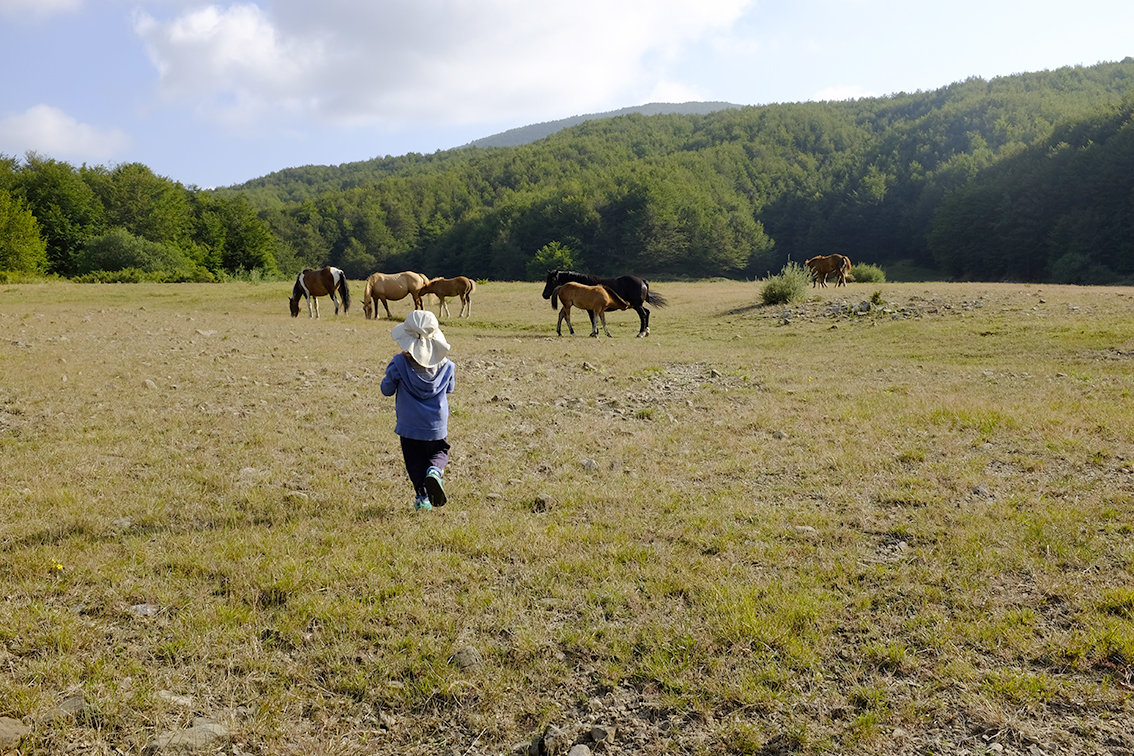
If you don’t live near nature, take trips to see animals in the wild.
Watching a wild horse nursing a foal!
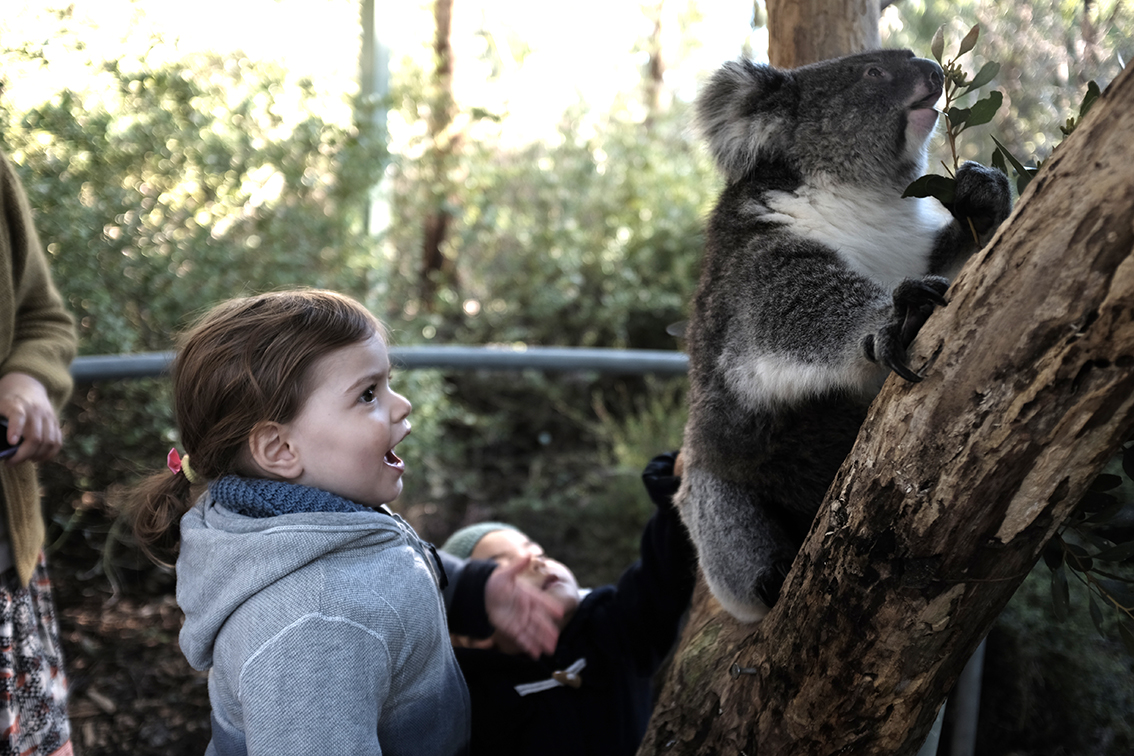
Many zoos offer wildlife conservation programs for kids which are designed to raise their awareness about the environment. Many even have up-close and personal encounters with endangered animals.
Feeding a Giraffe at the Adelaide Zoo in South Australia
Watching a Koala eat eucalyptus leaves at the Cleland Wildlife Park in South Australia
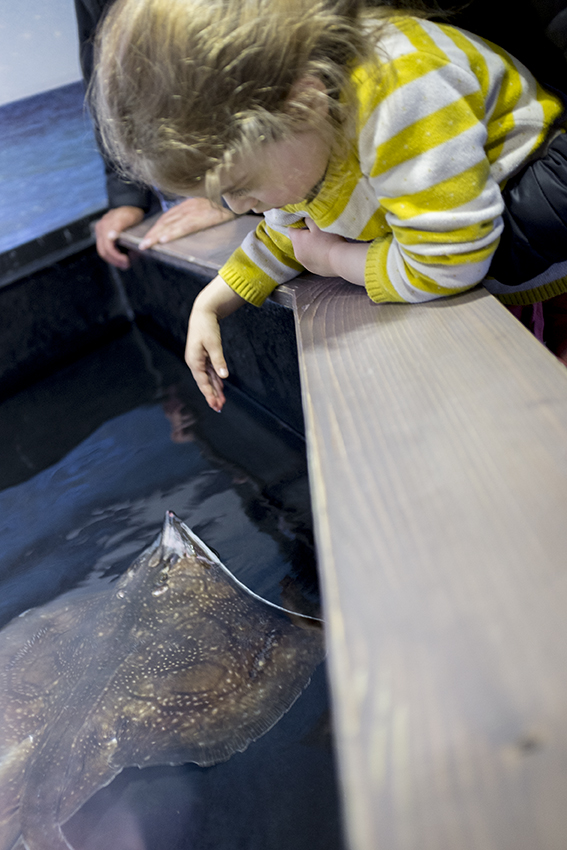
Aquariums also often offer educational experiences.
Adèle touching a very friendly ray at the Aquarium in Montpellier, France
Check your organic produce for mysterious visitors. We found this one in the fridge! Read it’s rescue story below. 😉
We found a snail on our kale! (Kale came from a farmer’s market).
Take your child to petting zoos.
Farms are also a great place to sensitize your child to animals. Many have baby animals that can be petted.
Feeding a bunny at the petting zoo in Tbilisi, Georgia
Petting a bunny at the petting zoo in Tbilisi, Georgia
Offer pony, horseback or camel riding lessons. This way your child will learn about the behavior of animals as well as how to take care of them.
Riding a poney at the Le Petit Paradis De Vendargues in France
RESCUE ANIMALS no matter how small they are. In the last year alone we saved 5 so far. You can read about all our rescue missions of the year below!
***Disclaimer: This post contains affiliate links, and if you decide to purchase anything from suggested links or companies, I may receive a commission. Recommended products are either things I love using or think would be helpful for you. Making your purchase using these affiliate links helps keep this site running, so thank you kindly!
BOOKS THAT WILL INSPIRE KIDS TO BE NATURALISTS, CONSERVATIONISTS OR ENVIRONMENTAL ACTIVISTS
I love the following books for their strong female protagonist. As a positive role models, Jane Goodall empowers little girls and boys alike to protect nature. All three of these books recount her awe-inspiring biography and life with chimps. Adèle now says she is also “a watcher,” so mission accomplished. 😉 (For those who are curious, in this photo she is using a brand of French binoculars similar to Kids Binoculars, but there are others that are appropriate for different ages that I reviewed below.)
I am Jane Goodall (Ordinary People Change the World) by Brad Meltzer and Christopher Eliopoulos – This book is illustrated with speech bubble and, thus, has a comic-book like feel. Written in first person for elementary school-aged children, it really captures poignant moments in Jane’s life’s adventures. The message of this book is that “we can accomplish anything by working together.” There is one part that mentions how women should not be alone in the forest, but you can always skip over that while reading to avoid reinforcing gender stereotypes. Otherwise, it’s a very thorough, well written book that will definitely appeal to young readers.
The Watcher: Jane Goodall’s Life with the Chimps by Jeanette Winter – This book is for preschoolers and elementary aged-school children. It covers all the highlight’s of Jane’s life and introduces the concepts of wildlife conservation without going too much into details like the above-mentioned book. There is a scene with guns and poachers and I usually do NOT read the part that talks about “killing” chimps. If your child asks what the guns are, you can say they are tools to capture animals. There is really no need to go into details unless the child keeps on pressing for more and more information. With this said, it’s one of Adèle’s favorite books and describing Jane as a “watcher” is very inspiring for young children. It will help your child relate to the character and inspire them to also watch creatures around them.
Me . . . Jane buy Patrick McDonnell – The text in this books is more simple and only focuses on the story of Jane Goodall’s childhood. Stylistically, the illustrations are also geared towards smaller children and it is designed as a bedtime story. I recommend this one for preschoolers.
The following books are wordless picture books that open up the conversation about ecology.
Bee & Me by Alison Jay- A girl becomes friends with a bee and they go on a journey together. Along the way they help children realize how they can contribute to conservation.
Dov’è l’elefante (Where is the elephant?) by Barroux – A simple question encourages the child to find the elephant and his two friends and also serves to raise awareness for the respect for the environment. Inspired by deforestation of the Brazilian rain forest, this simple yet powerful story is not to miss.
Dove’è la stella marina? by Barroux – Same concept and illustration style as above, but about marine pollution. The child looks for the star fish, the jellyfish and the clown fish as the ocean gets dirtier and dirtier with all the garbage humans put inside. Luckily, nature finds a way to fight back.
Life in the Ocean: The Story of Oceanographer Sylvia Earle by Claire A. Nivola – I’d also like to recommend this book because a) it has a very strong female role model who followed her childhood passions to explore and protect the oceans and b) it is based on a true person’s journey.
Educational Insights GeoSafari Jr. Kidnoculars – these ones do NOT need to be focused so are perfect for toddlers and small children. All your child needs to do is just look through them! Simple, fun and shock proof!
EvoCrest Binoculars for Kids – Shockproof and also designed specifically for kids. They have the same high resolution as the first set I mentioned above.
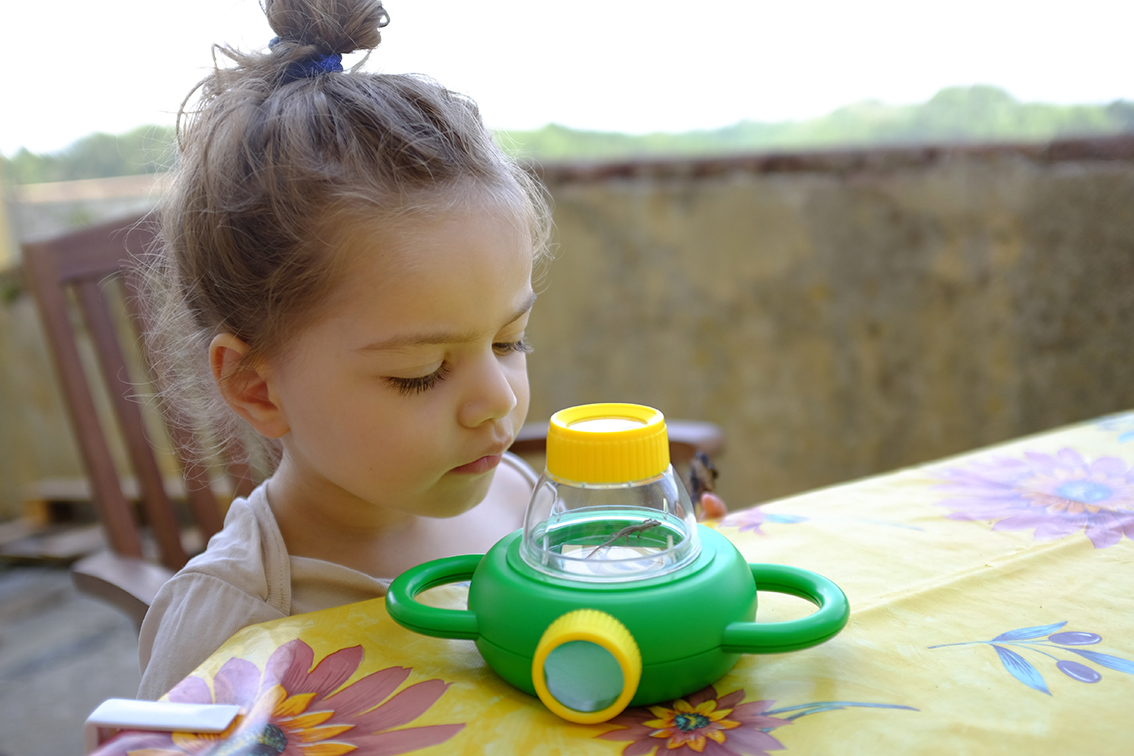
And here is another fun toy Adèle likes. It’s a Edu-Toys Two Way Bug Viewer, 4x, 6x, but as you can see in the photo above, she was even lucky enough to fit a small gecko inside! It has two lenses (top and side) to watch from and is easy for little hands to hold and use.
Sometimes she uses the top part of the lens by itself by putting it against a plant or over bugs, as in the photo above. This way she doesn’t need to catch anything and uses it more like a magnifying glass.
WHAT RESCUING ANIMALS WILL TEACH YOUR CHILD
Empathy – Ability to feel someone else’s emotions
Compassion – Empathy plus a desire to help
Nutrition – Often, to save them, you will need to research what to feed rescued animals.
Habitat – When releasing an animal back into the wild, you will need to learn where, when and how to do it.
Identifying animals
How to take care of another being
Here are a few animals we rescued over the last year and their stories. I hope they will inspire you to be aware as you walk or drive outside.
SUSHI
We found this adorable kitten at one of the busiest roundabouts in the center of Tbilisi, Georgia and had no choice but to take it with us. Luckily (and not by accident), there were at least 3 pet shops across the street so we immediately took Sushi there and asked if we could leave him. They said that they already had enough cats and that you can’t just drop off lost animals like that at a shop, nor at the vet’s (a big shock for us as that’s what we used to do in Australia). So we had him checked and treated for lice. He was too small to have rabies shots but seemed in excellent health. A vet later confirmed that indeed, he was in perfect health and that it looked like someone had dropped him off at the roundabout on purpose. He knew how to use a litter box and once well fed, became a very active, lively kitten. We had Sushi for 10 days before I managed to find a loving forever home for him. We were all very sad and had a big cry after he left, but with our nomadic lifestyle there was no way for us to keep him. We do keep in touch with his owner, though, and get occasional photos.
Adèle showing Sushi her drawing
Things we learned from kitten rescue
Adèle learned how to scrunch up paper and make a toy for the kitten.
She learned how cats eat, pee and poo – that helped with her own potty learning.
We also taught her about anticipated cat behavior so that she wouldn’t get scratched. This was important because, being a street cat, we did not know if it had rabies and had to wait for 10 days to find out. This taught her to be gentle and careful around animals.
FIG FROG
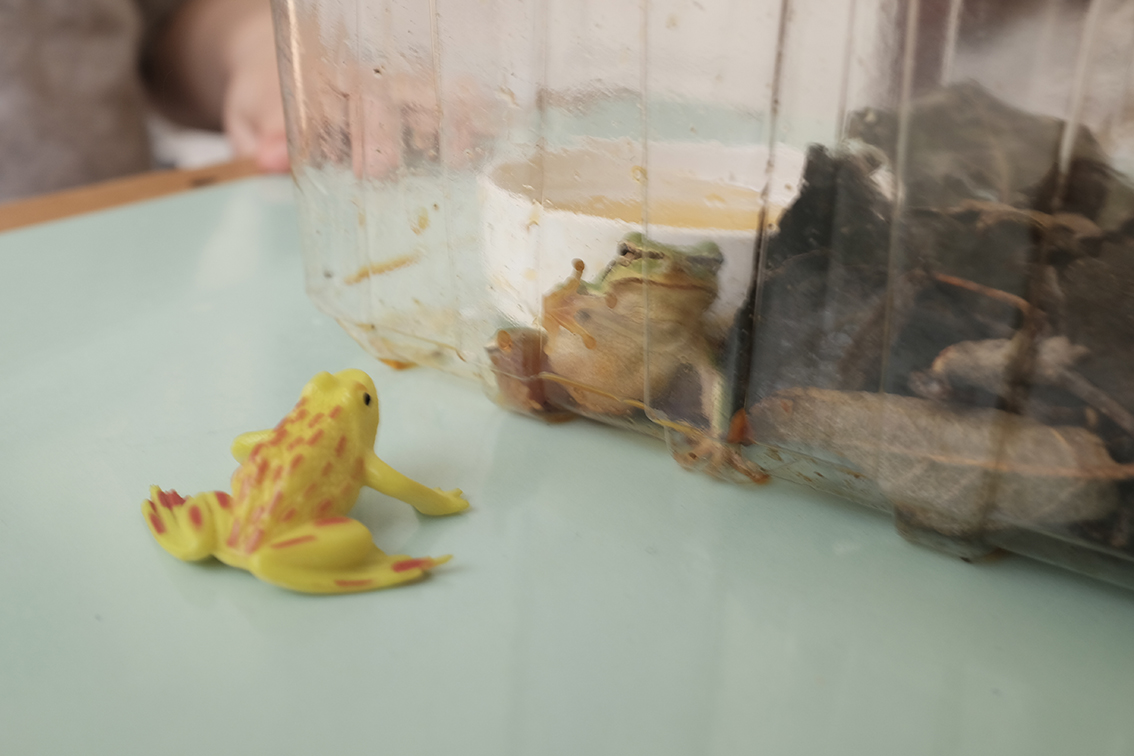
One evening, my husband found fig frog in food at an organic shop, once again in Tbilisi, Georgia. It was also in the middle of the city center, so the only option was to take it home. The shop keeper gave him this plastic box and we put some holes in it so that it could breath. We put some leaves inside and a bit of water as well. Adèle introduced it to her toy frog so that it could keep him company overnight. We lived right under a mountain, but it was too late to go there, so we had to wait until the morning to release the frog. When we woke up in the morning, the plastic box was covered with very gross yellowish substance.
I think the frog was not very happy being trapped inside for this long. So, we hiked up the mountain to look for a stream. Here is a photo of Fig Frog jumping off the box to find a new home. Follow Adèle’s finger in the photo to find him at the edge of the box, about to leap into the water.
Things we learned from frog rescue
Release the frogs into the wild as soon as possible so that they can jump around!
If you cannot release the frog right away, find some insects to feed it.
MERLY
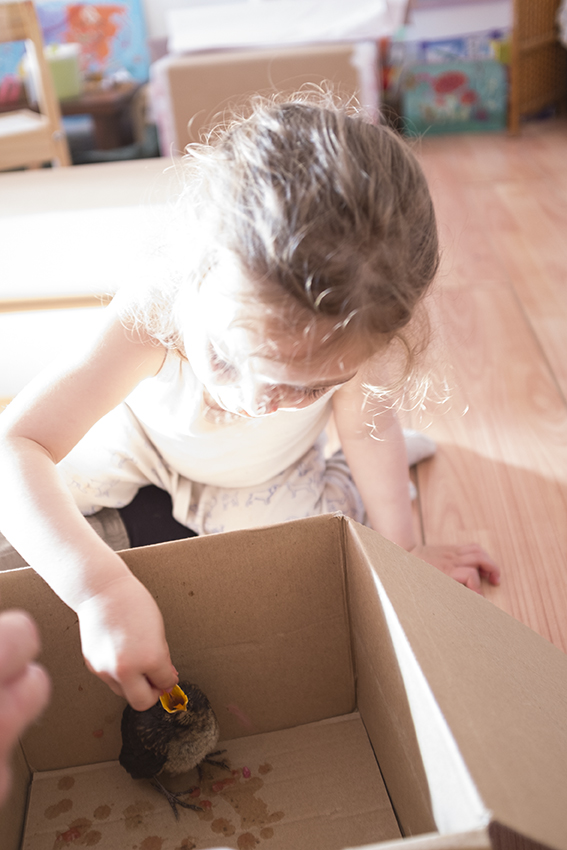
I saw a baby blackbird as we were driving in Italy and asked to stop the car. It had fallen from a nest and the trees were very high, so there was no way we could put it back. Luckily, there were no cars on the road so we stopped and caught it in a scarf. It was a baby blackbird that fell out of the nest and we took it home. After doing some research online, it turned out that blackbirds like to eat meat and watermelon so that’s what we fed it. The next day we drove him to a bird rescue Aviary in Livorno. It was a big drive for Adèle, but we were happy that the vet found Merly in good health. They took him in and placed him into a bird nursery. There, it was taught how to fly and was released back into the wild a month later!!
Adèle feeding blackbird ground meet
Things we learned from bird rescue
Make sure you know what to feed the bird – identify the species to feed it correctly. The vet told us that had we not fed it properly, it might not have survived at all! And had we not picked him up from the road, it would have been eaten by a cat or a wild animal. Life expectancy of a baby bird fallen from a tree is very short.
Place a bird in a box. If it can fly, then make holes in a closed box.
Catch birds with cloth, scarves, sweaters.
CRICK-CROCK HERRISON
This adorable hedgehog was crossing a road at night and seemed lost, so we took him in for the night. Luckily, one of my former student’s knows a lot about hedgehogs and I reached out to her for advice. She said that it seemed healthy and could be released back into the wild, so we did that the next morning. But I did not sleep a wink during the night! It is THE noisiest animal in the world! I had to sleep at the other side of the house and still heard it making noises all night. It didn’t like being in a box and wanted to escape.
Things we learned from hedgehog rescue
Hedgehogs are nocturnal animals and are EXTREMELY NOISY AT NIGHT!
Their spikes are a bit soft, so they can be petted gently.
SNAILY
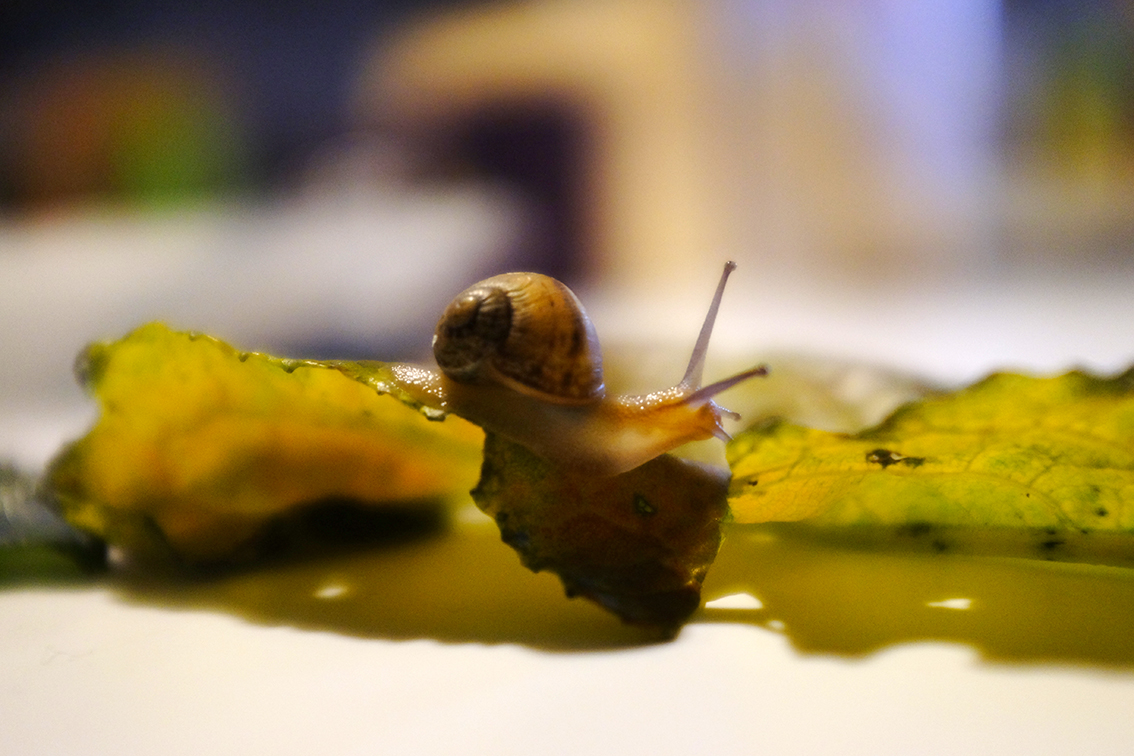
I found Snaily on our kale as I took it out of the refrigerator! It was happy to be out of the cold and was not scared at all.
On one of our walks, Adèle once noticed that some snails had made houses in arrow loops of castle walls. (This is where archers used to fired arrows from). So she suggested that we take Snaily there so that it can live with his new friends. When we returned the next day, it was not there anymore. But once in a while we see a snail in the loopholes and she thinks it might be Snaily. 😉
Sound blocks a wonderful sensory toy. Not only are they great for babies, but toddlers love them as well.
They help with shape and color recognition.
They encourage hand and eye coordination.
Sound blocks are excellent for improving visual perception.
They help develop the senses of touch, hearing and vision.
Sound blocks can also be used with sunlight to create colorful shadows!
It’s a versatile toy that can even be used for beginner stacking and building.
We also love sound blocks because they look so beautiful on a window sill.
Even though she is older now, Adèle still enjoys playing with her sound blocks. Here are some for you to consider as well:
***Disclaimer: This post contains affiliate links, and if you decide to purchase anything from suggested links or companies, I may receive a commission. Recommended products are either things I love using or think would be helpful for you. Making your purchase using these affiliate links helps keep this site running, so thank you kindly!
Wonderworld Rainbow Sound Blocks Whenever possible, we try to buy natural, non-toxic, organic things. When Adèle was a baby, this was even more true as she was putting everything in the mouth. I chose these sounds blocks for her because they are made from environmentally friendly wood, use non-toxic paints, dyes, and lacquers and do not contain formaldehyde glue. After two years of use, despite being thrown and tossed around, they do not even have a scratch on them. Each piece is of a different transparent color and they are fun to look through. It’s a great tool to teach shapes and colors. Each piece makes a different sound and can be used as rattles as well. The box creates an extra interesting challenge because the child has to figure out how to lift it and how to drop the pieces back inside. It might seem useless, but I think it’s a great addition which helps teach toddlers how to put things back in their place. Furthermore, it also serves as a stacking and building toy. There aren’t enough pieces to make something big, but definitely enough as a first building set. An all around great educational toy which will last. It’s also perfect for Montessori families.
Exciting Rainbow Blocks 16 wooden blocks with colored windows and sand, beads, water and sparkles inside.
Wonderworld First Sound Blocks Hollow wood with beads inside which make different sounds and are great for stacking and building. These blocks are made from Environmentally Friendly Rubberwood, use Non-Toxic Paints, Dyes & Lacquers and do not contain Formaldehyde Glue.
HABA Discovery Blocks 6 blocks with different surfaces and sounds. In comparison with other ones, they are not as versatile.
Wonderworld Wonder Sensory Blocks Like other Wonderworld sound blocks, these are also made from durable, Environmentally Friendly Rubberwood, use Non-Toxic Paints, Dyes & Lacquers and do not contain Formaldehyde Glue. The blocks have different textures inside. A nice addition is that they come with a mirror which is especially great for babies. They are also diamond shape which make stacking and building more challenging and interesting. Transparent colors will help your child learn about color “mixing.”
Guidecraft Rainbow Blocks Set 10 blocks made from rubberwood. These ones do not make sounds, but would be a good addition to Guidecraft sound block sets #6 or #9.
Guidecraft Rainbow Blocks Set30 pieces made from rubberwood. These ones do not make sounds, but would also be a good addition to Guidecraft sound block sets #6 or #9.
WHY IS IT IMPORTANT TO ALLOW KIDS TO USE REAL KNIFES?
Knives must be used under adult supervision, butdon’t let YOUR fear drive your child out of the kitchen!
Using real utensils builds confidence.
It also helps with independence.
It allows children to feel trusted and gives them a sense of responsibility.
Using real knives helps develop fine motor skills.
And it makes the child feel a sense of belonging.
Plus, they get to learn how to make REAL food, real way.
And it’s an invaluable skill they can carry with them to adulthood.
3 year old Adèle eating a fruit and acai salad she made for herself.
TIPS FOR CHOOSING A KNIFE FOR YOUR CHILD
Buy stainless steel or silver. Wood and plastic will breed bacteria. Real silver is an ideal option as it is a natural disinfectant, but stainless steel is cheaper.
Look for knives where the blade goes all the way through the handle. (If it stops at the handle, there is a greater risk of it breaking in half. Furthermore, bacteria will accumulate at the joints.)
Make sure it’s small enough for your child to hold.
Make sure it’s not too sharp but still cuts food.
Model how to cut over and over again.
Teach your child how to hold the knife safely.
Teach them where the knife should be placed on the table.
Show your child how fun cutting and cooking can be.
Start early – as soon as they show interest.
Allow your child to experiment cutting foods with different textures. Let them make their own stacks this way – your toddlers will love that. Here are some examples: strawberries and apple, tomato and cucumber, avocado and celery. Have them cut bananas and dip the pieces in coconut shreds or coconut flour. YUM! :p
Be brave and have fun together! 🙂
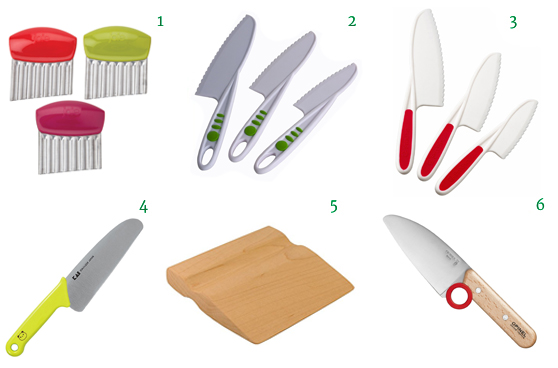
KNIVES DESIGNED FOR CHILDREN
***Disclaimer: This post contains affiliate links, and if you decide to purchase anything from suggested links or companies, I may receive a commission. Recommended products are either things I love using or think would be helpful for you. Making your purchase using these affiliate links helps keep this site running, so thank you kindly!
Joie Fruit And Vegetable Wavy Chopper Knife Stainless Steel Blade – I used to work as a knife saleswoman so, naturally, since Adèle could hold cutlery, I always gave her a real knife to hold. She was eating by herself using a spoon from 9 months so by the time she was a bit over one, Adèle started learning how to cut. The first knife she used was a small stainless steel one for eating. It cut food but not the skin. However, for cooking I got her a Joie Fruit And Vegetable Wavy Chopper Knife Stainless Steel Blade (Colors may vary). Not only is it fun because it makes waves, it also offers a different way of cutting things (pushing down with both hands/arms). For some kids this is much easier than the conventional back and forth sawing motion. It also allows them to utilize upper body muscles.
StarPack Nylon Kitchen Knife Set (3 Piece)– If you want your child to test out a knife, you can purchase these RISK FREE. They come in three different sizes and are a good value for the price.
Maple Wood Food Chopper – An eco-friendly, safe, wooden knife that even babies can use. In general, however, wood is not hygienic as food particles get inside the pores and mold can also form over time. Therefore, these knives have to be well taken care of and will not last as long as the stainless steel ones.
Because Adèle loves cooking and keeps on saying that she is a “baby chef,” when we traveled to Paris a few months ago I bought her an OPINEL LE PETIT CHEF KNIFE AND FINGERS GUARD set plus Opinel Le Petit Chef Children’s Peeler with Finger Guard as well. Both the knife and the peeler have rings which help position the fingers so that the hand does not slip so easily onto the blade. All three items can be found as a complete set (Opinel Le Petit Chef Set – Guard, Knife and Peeler) as well and are designed to help your child learn how to cook safely. If your children already have knives but you are still worried about their fingers, you can get Opinel Le Petit Chef Childs Knife Finger Guard (they come in different colors). Please note, however, that no matter how safe knives are, they must still be used under adult supervision.
I am so honored and excited to present to you this week’s article. It contains an interview with the UNBELIEVABLE master origami artist and a pioneer in this field, Dr. Rober J. Lang!
Created: 2002 Medium: One uncut square of Thai unryu paper Dimensions: 7″ Artists: Robert J. Lang Composition: KNL Dragon, Opus 132 Photo courtesy of the artist
Origami is the art of folding paper which originated in Japan in the 17th century. In Japanese, “ori” means “fold” and “kami” means “paper,” so traditional origami does not involve gluing nor cutting. It is an art form that not only encourages creativity, but is accessible for free – all you need to get started is some scrap paper.
Koi, Opus 425, Medium: One uncut square, Artist: Robert J. Lang, Photo courtesy of the artist
Adèle has been practicing origami since she was two (see below) and that is how we discovered Dr. Lang‘s AMAZING work. We are currently using one of his books for practice and I hope that his art will also inspire you to start folding.
***Disclaimer: This site contains affiliate links, and if you decide to purchase anything from suggested links or companies, I may receive a commission. Recommended products are either things I love using or think would be helpful for you. Making your purchase using these affiliate links helps keep this site running, so thank you kindly!
White Rhinoceros, Opus 714, Medium: One uncut square of Japanese paper, Artist: Robert J. Lang – Photo courtesy of the artist
What Experts Are Saying About Origami: Q&A With the INCREDIBLE Origami Master, Dr. Robert J. Lang
A former physicist, engineer, and R&D manager, Dr. Robert J. Lang is one of the most renown contemporary origami artists. Through his work, Dr. Lang explores the links of origami to math, science and technology and has authored 17 books on the subject. His incredibly realistic work (see videos and photos below) has been exhibited at museums world-wide and has awarded him many high distinctions.
Q. Can you briefly describe who you are?
I’m Robert J. Lang, an origami artist and consultant, living in Alamo, California.
Q. I read that you were introduced to origami at 6 years of age. Do you remember this experience, and if so, what/who inspired you to continue?
I don’t remember the precise moment, but I remember that it was a book of crafts that had instructions for a few traditional origami designs. The thing that attracted me was that all I needed was paper (which was essentially free) and my hands, nothing more.
Dr. Robert J. Lang, Origami Artist – Photo courtesy of the artist
Q. What specific skills can origami teach kids?
It’s good for hand-eye coordination and is good practice for visualizing things in 3D. But I don’t really look at origami for its utility in teaching skills. I think that folding for the joy of creation should be sufficient reason to pursue it.
Q. What is a good age to introduce origami to children?
There is no minimum age. When a child expresses interest, she or he is ready.
Baby, Opus 272, Medium: One uncut square, Artist: Robert J. Lang – Photo courtesy of the artist
Q. Do you think origami should be taught in schools?
Yes, as one of many arts (e.g., music).
Q. Are you aware of any scientific studies that link effects of origami practice on brain development?
I’ve not seen anything specifically linked to brain development. There are some studies of origami’s utility in education, which have been presented at the OSME conferences and in the associated series of books.
African Elephant, Opus 322, Medium: One uncut square of water-colour paper, Artist: Robert J. Lang – Photo courtesy of the artist
Q. How did your origami practice turn from craft to art? When did you start inventing your own models?
I started designing my own origami at around age 10 or 11. I don’t really see a bright line between “craft” and “art”, so I can’t really say how it turned from one to the other.
Q. For you, is origami about the process or the final product?
Sometimes one, sometimes the other, sometimes both.
Q. How do you approach / handle mistakes? Can they be fixed, or do you throw out / recycle the paper?
“Mistakes” are always an opportunity to learn something new. If a mistake is not going to alter the finished fold—for example, I make a stray crease that shouldn’t be there, but will end up hidden in the interior of the figure—I keep on folding. When I’m done with a sheet of paper, I throw it out, but that means it ends up in recycling.
Alamo Stallion, Opus 384, One uncut square of Origamido paper, Artist: Robert J. Lang – Photo courtesy of the artist
Q. I noticed that you use thick paper with one or two colours (not ones with patterns or illustrations that I have seen in stores). Which paper would you recommend for someone who is just starting out?
I use many different papers, each suited to its particular project. There is no one best paper. I describe several types of paper (and folding media) here: http://www.langorigami.com/article/paper
Q. Which model would you recommend that a beginner start with?
I wouldn’t recommend a specific model. Rather, I’d recommend that a beginner start with a good beginner-level book. Books by Michael LaFosse and Nick Robinson are particularly good. I also recommend the videos by Sara Adams, found at http://happyfolding.com.
A very nice thing about origami is that the VAST majority of origami books and publications are kid-friendly in subject matter; probably because many, many origami practitioners are kids.
Q. Sometimes I find these diagrams quite challenging. Do you have advice for deciphering them?
It always good to start with easy things, and then slowly work your way up. It’s also helpful to study the keys to the various symbols, but again, start with simple things, then work upward.
Anna’s Hummingbird, Opus 466 Honeysuckle Blossom, Opus 468, Medium: (Bird) One uncut square of backcoated Origamido paper, (plant) Korean hanji and wire, Artist: Robert J. Lang – Photo courtesy of the artist
One of the great things about origami is that the diagrams convey so much information that it’s often not necessary to read the words; so origami practitioners very often buy and fold from foreign books, even when they can’t read the language, because the diagrams themselves are sufficient. I remember meeting a young man at an origami convention who was 5 years old; he hadn’t learned to read yet, but he could fold everything in John Montroll’s books (which are Intermediate to Complex in difficulty), working solely from the diagrams.
Q. In your TED video, you said that “origami revolves around crease patters.” Is there a minimum amount of creases that one needs to make in order to call something origami?
Different people have their own definition of “origami” (which, as a term, is only about 100 years old). My personal definition is “an art form in which folding is the primary means of creating the shape.” There’s no numerical number of folds; even a single fold could be origami. (In fact, artist Paul Jackson has an entire series of “one-crease origami.”)
Q. I heard that your inspirations come from wildlife. What is your favourite origami wildlife model?
It varies over time, but right now, there’s a cactus that I’m rather fond of.
Cactus, Opus 680, Medium: One uncut square of Echizen kozo (back-coated duo), Artist: Robert J. Lang – Photo courtesy of the artist
Q. You also mentioned that you “solve problems” with origami. This description sounds like math. Could you talk about this connection and what it means to you?
I use math to design origami, both for artistic purposes, and also to solve technological problems using folding.
Curved Square Weave, Opus 665, Medium: One uncut square of camphor wood veneer laminate, Artist: Robert J. Lang – Photo courtesy of the artist
Q. I noticed that origami practitioners seem to be predominantly male. Have you found this to be true?
No. In fact, in Japan, for many years, origami was primarily considered to be an activity for women. What you’re seeing is that perhaps the highly visible origami artists are predominantly male. I suspect this is more due to cultural reasons; consider that most of the highly visible chefs are male, despite the fact that (probably) most people who cook are female. Fortunately, we have world-class origami artists like Beth Johnson, Kate Lukasheva, Dasa Serovna, and more, who are role models for girls and women to be more visible in their origami art.
Q. You worked for NASA and used origami principles for objects in space. How do you see future origami applications in real life?
I expect that they’ll continue.
Mary Anne’s Butterfly, Opus 733, Medium: One uncut square of duo Origamido paper, Artist: Robert J. Lang – Photo courtesy of the artist
Q. Thank you kindly and warmly.
You’re welcome!
HOW WE ORIGAMI
As mentioned above, I introduced Adèle to origami when she was 2 years old. We were migrating from Australia to Europe and I wanted a light, yet versatile toy for our 24+ hour long journey. The idea was that I’d fold different models for her and we’d use them as toys on the plane. Instead, she started folding (paper, restaurant napkins, clothes, etc.) and has been doing it every day ever since. After a year of daily practice, she was able to fold 3D tulips like this one…
Origami tulip made by 3 year old Adèle using paper she painted herself
…and after another 6 months, started invented her own, original origami designs like this rocket ship and lotus:
Origami Rocket – Original Design by 3 year old Adèle
Origami Lotus – Original Design by 3 year old Adèle
In order to help her with this passion, I have been teaching myself origami. It’s been an enlightening experience so far and we’ve both learned a lot along the way.
WHAT YOUR CHILD CAN LEARN FROM A SINGLE SHEET OF PAPER
Personally, I use origami as a mindfulness art activity, but here are a few ways in which origami can help your child:
Following diagrams / instructions from start to finish provides a sense of accomplishment. Regular origami practice improves confidence. This, in turn, has a positive affect on your child’s well-being.
Practicing folding reinforces concentration, focus and patience.
Origami can be used as a therapeutic, mindfulness or relaxation practice.
Folding helps develop fine motor skills.
You can use origami to teach math principles. It can also be used as a STEM activity.
Origami makes a beautiful, personal gift. Wherever we go, Adèle spread love with origami by giving her creations to people she encounters (cafe waiters, flight attendants, librarians, friends, family, etc.)
Adèle made this origami dog for a friend.
Great-great-grandmother loves her origami heart with wings <3.
Folding a sheet of paper to make a recognizable form stimulates creativity.
Creating something from a simple piece of paper is magical and fun.
ORIGAMI MATERIALS FOR BEGINNERS
I have found Djeco sets to be particularly helpful in teaching her the basics. We’ve tried them all and this is why we loved them:
Each set comes with a small instructional booklet.
Instructions are wordless, but very easy to understand.
Each set includes paper which has fun, child-friendly designs.
Each piece of paper has crease lines PRINTED on reverse. These lines have numbers on them. This is awesome in two ways. First, kids who are learning how to count can use this activity to reinforce math skills. And the second reason is that having printed lines allows little ones to practice folding “on the line.” This, in turn, helps them make more precise folds and prepares them for more complex origami.
Each set comes with fun stickers to add to the designs (eyes, whiskers, pilots, tongues, etc.).
Origami Zoo Kit: Make a Complete Zoo of Origami Animals! – This is the very first set that I got for our long flight. It was not easy to fold, so it’s more suitable for intermediate-level folders. It comes with a book which contains beautiful photos and detailed instructions for 15 origami models. 40 papers are included, each printed with patters that relate to specific animals and birds. In addition, there rare almost 100 stickers (animal eyes, noses, etc.) and a fold-out, large map of a zoo on which your child can place their folded animals to play with. Overall, it’s a fun set that your child can enjoy for a long time.
My First Origami Kit – Similar to the above-mentioned kit, this one also comes with a book, but contains more papers, more stickers and more projects. The models are a little easier to make than the Origami Zoo kit, but are still more suited for older kits.
Origami 365 – You can make 12 models with this kit, but it comes with enough paper to make one origami every day of the year. A creative way to encourage origami-making on daily bases.
ORIGAMI PAPERS FOR BEGINNERS
Here are some of the papers we like to use. These papers don’t hold form and details as well as professional origami papers, but are perfect for practice, especially when just starting out.
Once Adèle mastered the above-mentioned sets, she started using Origami Papers by Djeco. This set contains 100 sheets as it comes with interesting patters and a small instructional booklet. After a few weeks of use, we needed A LOT more paper, so for now, we usually get her pre-printed sheets of 500 or more squares.
500 maxi origamis – These come in packs of 500 or 1040 and we purchase them every time we travel to France. So, for my French readers – you can also find these in big bookshops like Sauramps.
Origami Paper 500 Sheets – Premium quality, 6-inch Square Sheets, 20 vivid colors, same color on both sides, 100 design e-Book included
As something a little different, also check out Origami Games which provides hands-on fun for Kids! It includes 22 cooperative and competitive games and 21 foldable pieces.
ORIGAMI BOOKS FOR KIDS
You can make a DIY origami Display Book by printing out interesting diagrams you find online. But I prefer to support artist that put so much hard work in making origami accessible to others. So, here are some of my book suggestions for beginner origami books for kids:
Easy Origami by John Montroll – 30 Simple project, great for beginners.
Origami Magic by Florence Temko – Another excellent book for beginners.
Origami Zoo: An Amazing Collection of Folded Paper Animals by Dr. Robert J. Lang – This books is out of print, but you can find it used online. The publisher describes it best: “As children’s toys or decorations, the fun and artistic projects in Origami Zoo is a perfect do-it-yourself paper folding crafts book for aspiring artists.”
HAPPY FOLDING! ❤
Has your child tried origami? If so, remember to tag me on Instagram as @Rainy.Day.Sunny.Play and use the #Rainy.Day.Sunny.Play hashtag. We love seeing your creations!
Hi friends, I’m so excited to bring you a new guest post this week! It’s written by Jessica with whom we have so many things in common. She is also an artist, a former Art Professor and loves photography and the outdoors. Her blog www.collectmakeexplore.com is centred around nature-based play and creativity and is a true inspiration to me! In the following article Jessica talks about how being outdoors sparks creativity in both her and her children and shows how you can connect with your kids through drawing in nature.
GET OUTSIDE, GET MOVING, GET DRAWING
Imagine if the world was your canvas. It can be… when you draw outdoors. Ditch the paper and drawing can become an action-packed adventure. While my little ones and I love drawing indoors too (on paper), drawing outside takes mark making to a entirely different place, both literally and figuratively. As an artist mom / nature-rich childhood advocate, drawing seems to find it’s way into a lot of our outdoor adventures even when we don’t necessarily plan on it.
There is an intrinsic value present in drawing with kids. But don’t mistake that for drawing for kids. If kids are left to draw what they want and how they want, then creating a regular practice of drawing will allow them an invaluable outlet for self-expression. I often times draw alongside my kids, but never for them. You want them to explore and express without feeling they have to draw the “right” way. Drawing outside, while moving their bodies, allows for creative freedom, all the benefits of physical activity, and a healthy dose of Richard Louv’s highly toted, Vitamin N. Sounds like a win to me.
SIMPLE OUTDOOR DRAWING IDEAS FOR ALL SEASONS…
– Sidewalk Chalk
– “Graffiti” Art
– Interactive Sand Art
– Snow Tracks
– Beach Watercolors
– Discarded Lines
SIDEWALK CHALK
A classic way to start making your mark outdoors, sidewalk chalk is unlimited fun. In this particular case, I used the prompt of Kandinsky circles and started drawing. The kids followed suit and were quickly coloring in right behind me. LOVE the large scale energy of these!
While often times, a wide open sidewalk or driveway is invitation enough, you can also randomly discuss the weather and it may lead to some interesting drawings as well. We had seen a rainbow on one of our recent hikes and had been having some summer storms as of late, so “rainbow rain” drawings were the result here.
“GRAFFITI” ART
Again, pick up the chalk, but this time take it off the sidewalk and onto vertical surfaces. Watch that you are not defacing public property in a place that will get you in trouble. But… if you are up for it a little chalk on an old bridge, your back fence, or a tree in your yard may lead to some creative adventures. It washes off, so no long-term damage, and it gives a real breadth of space to the drawing process.
INTERACTIVE SAND ART
Drawing with sticks in the sand, whether it be the ball field or the beach, is a wonderful way to make marks. It is such a freeing process to draw with alternative materials. It also provokes interaction with the drawing process and drawings themselves in really fun ways. We have drawn mazes, train tracks, race tracks, spirals and more on our sandy adventures. So naturally games branch off from the drawings and the whole thing turns into the most amazing interactive art! This works especially well a day or so after it rains, as the sand is saturated but not soggy… perfect for drawing.
SNOW TRACKS
Snow, could there be a better natural blank canvas? We’ve used sticked to trace lines down the drive and around the block. Larger sticks work best so they can walk and have them drag along behind them. Simple but so much fun to document space and with long lines. Often in our case one child draws the line while the other plays follow the leader (or line) as we go. Of course dragging feet along works well too and can be quite entertaining for little ones. They love to look back and see that their bodies have created a mark across the land by simply moving!
BEACH WATERCOLORS
Painting lines with the elements is such a tactile way to experience art and create a strong nature connection at the same time. The immediacy of dipping a paint brush in the waves to activate the paint is hard to describe. As a challenge last year the kids and I got outside for seven days straight to play, no matter what the weather. To move beyond our regular walk in the winter woods, we headed to the beach every day that week. On the day pictured here we had our watercolors and paintbrushes in tow.
DISCARDED LINES
And last but not least, before you recycle that old sheet of cardboard or those scraps of wood, throw them on the grass for an outdoor drawing session. Drawing outside frees up the need to control the mess. Kids can move about with markers and paint with a lot less prep. If you have large surfaces to draw on all the better. Here we had the good fortune of attending an outdoor kids space with a lot of materials readily available, but very easy to throw together in your own backyard.
Hope this inspires you to get outside, get drawing, and get moving with those kiddos of yours. Would love to hear about it if you do!
Crayons are probably the most used art materials for kids, but are they safe?
The answer is NO! Mainstream crayons are full of harmful products like paraffin wax (petroleum), plastic (glitter), chemical pigments and even carcinogens like phthalates (fragrances), lead and asbestos (in 2015)! Asbestos is deadly both if ingested and inhaled (even in very small amounts) so obviously not something to have around children. Lead can lead to lead poisoning and the destruction of the nervous system. Like asbestos, even small amounts of exposure can cause this type of harm. In the last three years, both asbestos and lead were found in mainstream crayons! In addition, because children’s skin is so much more sensitive and absorbs what it touches quicker, all chemical substances are to be avoided as they can accumulate in their bodies faster. Certain chemicals and fragrances can also give children allergies, digestive issues, etc.Some people might say that we come in contact with so many harmful chemicals on daily basis, why bother with crayons? But the truth is that it’s chemicals in all these little things which accumulate – and if we can limit the exposure by choosing the right products, then we can help our children live healthier lives.
So, what are the healthy, natural alternatives to crayons?
DIY CRAYONS
Making crayons yourself is a fun, educational activity. It’s ideal for school aged kids, but preschoolers can also participate in indirect ways. Making crayons involves melting hot wax and requires working quickly, so little ones can help you assemble all the ingredients and pick out the pigment. And of course, once the crayons are dry and cool, they’ll be the first to test them out. 😉 Here is how we make ours:
Materials
***Disclaimer: This post contains affiliate links, and if you decide to purchase anything from suggested links or companies, I may receive a commission. Recommended products are either things I love using or think would be helpful for you. Making your purchase using these affiliate links helps keep this site running, so thank you kindly!
Try household spices like turmeric powder for yellow.
Experiment with color – you can adjust it by adding less/more pigment.
If you use activated charcoal for your teeth, try some to make black crayons.
To clean the pot, wipe it while the wax is still hot.
Don’t get discouraged if it doesn’t work the first time. Ours didn’t, but Adèle still loved making them. Regardless of the results, your child will learn the process of making crayons and that in itself is a very unique educational experience.
As an alternative to DIY crayons, here is also a list of our favourite non-toxic ready-made crayons. We often get these as gifts as they can be used by kids of all ages and encourage creativity.
SAFE CRAYONS
Honeysticks 100% Pure Beeswax Crayons – 12 pack toddler crayons, 8 Pack Thin Crayons or 6 Pack Long Crayons – These last for what seems like forever. We have the 12 pack and it 3 years they look almost new. It might seem like a big investment, but one pack will last you for years, so in the long run it’s very economical. Not to mention that these are the safest crayons on the marker. They are hand-made from beeswax in New Zealand and smell of honey. The colours work well and are bright enough. None of our crayons are broken nor chipped, so that should say something about the quality. Highly, highly recommended!
Wee Can Too Organic Veggie Crayons – Made from plant based materials, these crayons are made with soy waxes and are dairy and wheat free.
Eco-Crayon Sticks – 20 pack – Made with a mixture of beeswax and soy wax
Eco-kids Eco-Crayons – 5 pack – These are shaped like rocks and are good for learning the “tripod grip.”
Crayon Rocks – 32 Pack but also available as a 16 pack and a 8 pack – Soy wax crayons will help your child “pinch” in order to draw, encouraging the “tripod grip.” They are a great learning tool for children who have difficulties holding pens/pencils.
BOOKS ABOUT CRAYONS
If you are going to have a “crayon day,” then a good way to wrap things up is with a fun book about crayons. Adèle just loves Drew Daywalt award-winning books. These books are written for both kids and adults and have funny subtexts which I really appreciate as a reader. Adèle also enjoys Oliver Jeffers’ child-like illustrations.
Music is a vibration that is felt. So the best way for children to learn, is to expose them to music in various ways. Here are some simple things you can do right now to help your child experience music:Drum
Expose them to different musical genres (not just Pop). Every day, pick a different one and note which one(s) they are drawn to. There are enough music genres, styles and sub-genres out there for you to experience different ones every day for over a year (if not more). You can download your FREE, printable Music Genres and Styles Monthly Checklist. I designed it with major genres and styles in mind to make sure your child experiences an array of sounds throughout the month!
Make up songs together. Make up silly ones to laugh together. Make up songs for transitioning from one activity to another or to help with tasks that your child has difficulties with. We make up songs for brushing teeth and packing away toys, for example.
Play calming music when your child is distressed or overtired. Just search for “relaxation music” on YouTube and you’ll find lots of options. Listening to such music will sooth your child and help regulate emotions and moods. Babies respond well to lullabies for this reason. If you can’t remember any from your childhood, you can check out nursery rhyme books from a library. I also made a list of our favorites below.
Dance to music – a great way to learn about beats and rhythm.
If you have a museum nearby which features instruments or interactive musical play, then it could be a fun way to engage your child as well.
Alternately, you can go to a music shop to try out real instruments.
NURSERY RHYME BOOKS
***Disclaimer: This post contains affiliate links, and if you decide to purchase anything from suggested links or companies, I may receive a commission. Recommended products are either things I love using or think would be helpful for you. Making your purchase using these affiliate links helps keep this site running, so thank you kindly!Wee Sing Bible Songs (Wee Sing) CD and Book Edition
101 Nursery Rhymes Books & Sing-Along Songs for Kids
My Wonderful Nursery Rhyme Collection
Wee Sing Bible Songs (Wee Sing) CD and Book Edition – Classical style illustrations with music notes that you can actually play. You can purchase it with or without a CD. It’s one of the more long-lasting books I’ve found because it can be used from birth until your child starts playing a musical instrument.
Hape Happy Wooden Grand Piano – I should add here that we have always had a real keyboard available for Adèle to try from the time she was on her tummy. It was placed on the floor so she could crawl to it as she got older.
Adèle has taken a keen interest in my parent’s Soviet record collection. The beautiful thing about record players is that your child can see how music is made. For this reason, they are an excellent object for STEM education. Here is how to to pick one for your child:
Price – You probably wouldn’t want to give something very expensive as a “toy.”
Soundquality – It’s important that the record play produces good sounds so that your child’s ears can get used to quality music.
Easeof Use – Look for record plays that are easy to use and don’t have too many add-ons.
Durability – Record players are fragile, so in the hands of a child they become even more so. Pick one that will last through all the mistakes your child will make when turning it on/off.
Portability – How heavy/light it is and is it portable?
ION Audio Vinyl Motion Deluxe – As you can see in the photos, this is the one we have. It has a handle and Adèle can easily carry it. The battery is rechargeable (USB) and lasts a long time. Sometimes we connect it to external speakers, but even the built-in ones produce a good quality sound.
Crosley CR8005D-BK Cruiser Deluxe – This one is also a suit-case style, portable record player. It comes with a bluetooth, though, for wireless sound streaming.
ION Audio Max LP – Made of natural wood, This ION record player can convert your records to digital music. It does not have a handle and the cover is fragile, so I recommend this for older kids.
If you don’t want to invest in a record player but have a CD player accessible for your child, then Putumayo World Music: Vocal CDs are a good choice for a similar learning experience. Another option is a music box. Here are a few to consider:
Childrens Picture Books About Music Boom Bah! by Phil Cummings and Nina Rycroft Toot! Toot!: Guess the Instrument! (What’s That Noise?) by Child’s Play and Cocoretto Zin! Zin! Zin! A Violin by Lloyd Moss and Marjorie Priceman is a Caldecott Honor Muddy: The Story of Blues Legend Muddy Waters by Michael Mahin and Evan Turk I Love Music: My First Sound Book by Marion Billet Mon petit Beethoven Mon petit Chopin Mon petit Mozart Mon petit Bach Mon petit Vivaldi by Severine Cordier Mes premiers airs de Jazz by Aurelie Guillerey T’choupi joue de la musique (French Edition) by Thierry Courtin
Boom Bah! by Phil Cummings and Nina Rycroft is one of Adèle’s favourites. It uses onomatopoeic text in rhyme, so it’s easy to remember and sing along to. It also encourages kids to make their own musical instruments using household items such as pats and pots.
Zin! Zin! Zin! A Violin by Lloyd Moss and Marjorie Priceman is a Caldecott Honor book! Using rhyme, it introduces young readers to orchestra instruments and can also be used as an atypical counting book! We also appreciate the fact that the dynamic illustrations depict musicians of different races and genders. A must for a kid’s library and a great book to gift to others.
Muddy: The Story of Blues Legend Muddy Waters by Michael Mahin and Evan Turk – A multi-award winning book will inspire creative, rebellious spirits to listen to their inner voice. The refrain of this book is that Muddy “was never good at doing what he was told,” but through struggle and determination he created something unique. The illustrations are made on a black background and “glow” at night. Another excellent book for a child’s library collection.
I Love Music: My First Sound Book by Marion Billet – This book has built-in buttons that make sounds of different instruments on every page.
The following books are published in French, but even if you don’t speak the language, they are worth having. Each one tells the story of famous classical composers and comes with buttons on each page which play their most famous melodies. Some even have songs (in French), so your children can get exposed to another languages – a definite plus for growing brains!
Mes premiers airs de Jazz by Aurelie Guillerey – This one is similar to the above-mentioned books, but all about Jazz!
T’choupi joue de la musique (French Edition) by Thierry Courtin – T’choupi is a character that small kids are very drawn to. In this book T’choupi plays different musical instruments as your child presses the buttons to hear the sounds.
What are your kids’ favourite musical books and instruments? Are there any I should add to this list?
Is your child taking interest in photography? Do you want them to leave your phone alone? Then, they are probably ready for their own camera.
I have been taking photos of Adèle every day since she was born. So when she started to take interest in what I was doing (around the age of 1 1/2), I decided to get her a child-friendly camera.
WHAT TO LOOK FOR IN A CHILD-FRIENDLY PHOTO CAMERA
A camera without games, effects or other add-on options. I just wanted a basic camera to teach a child the basic principles of photography. In this digital age, this is more difficult to find than you think.
A durable and shock resistant camera that will not break easily. This is very important because toddlers drop things more than we do and many also like to throw objects.
A camera which a child could hold easily and that doesn’t slip out of little hands.
A shutter button that is easy for a child to press. (Note, most small handheld cameras have shutter release buttons which child’s short fingers cannot reach).
I didn’t care much about the quality. Why? Because photo resolution/quality is not what’s important in photography. The important thing is the idea and what one is able to create with this medium. Someone might have a very expensive camera which can take high resolution images and create very uninteresting work. And another person might have a cheap point and shoot or a pinhole camera and make amazing photographs. As a photography professor I have always put the emphasis on the creative act, not on the resolution of the images. And for children resolution is definitely unimportant. For them, just the act of taking a photograph is magical. The act of taking a photograph and looking back at it is magical. The act of having it printed out is magical. I wanted to introduce Adèle to this magic with a simple camera.
Price.
(***Disclaimer: This post contains affiliate links, and if you decide to purchase anything from suggested links or companies, I may receive a commission. Recommended products are either things I love using or think would be helpful for you. Making your purchase using these affiliate links helps keep this site running, so thank you kindly!)
So, with all of these in mind, I spoke with my parent-photographer colleagues. After a lot conversations and research, I decided to invest in the Fisher-Price Kid-Tough Digital Camera. Years later, Adèle is still happy to use it. It’s simple. It turns off on its own, thus saves battery life. (In 2 years, we only replaced batteries once). It is easy to hold because it has a dual handle grip. The shutter button is easy to reach and press for little hands. It has a 2-eye view finder which makes it easy for toddlers to look through! The resolution is not great but the photos have this lovely hazy, artistic feel to them. Adèle doesn’t mind at all. This camera has fallen many times (it does not come with a strap for safety reasons), but it works perfectly as it is extremely durable. This camera has a storage capacity of 500 photos and Adèle has not reached the limit after 2 years of use. I was able to download photos on my MAC through a USB connection. It’s simple to use – no shutter speed/aperture to adjust, so perfect as an introductory camera.
If you are looking for a better quality camera with a higher image resolution, then you can upgrade to a Fisher Price Kid Tough Digital Camera. It has Flash memory for storing up to 500 pictures and a USB Cable for computer connection. For our purposes, the price difference was not worth it, but you can always look for a used one online.
If I were to upgrade even more, then I would consider theVTech Kidizoom DUO Camera. This is a very child friendly digital camera. It has good photo quality. It has all the qualities mentioned above, however has many extras like games video, stickers, frames. The good thing is that those extras can be disabled! I am not too fond of the Optimization features (it makes the camera choose the best shot) as I think it’s better for the child to make their own editing decisions. The voice recorder seems superfluous as well. But as a former animation professor, I do like having the stop frame animation function (for older kids) as I can see it being used in many educational ways. Also, it is possible to buy microSDHC for this camera to expand its memory.
3 BEST PHOTO CAMERAS FOR TODDLERS AND CHILDREN
To summarize, here is the price breakdown and the main features:
Also, check out my blog post about Photo Activities which has suggestions for kids of all ages!
Do you have a kid-friendly camera that you like? Is there one that I left off my list? Please let me know as I am always looking for new kid-friendly photo equipment to try. And for creative photo-related activities, check out my blog post here.

 CIRCUS-RELATED ACTIVITIES FOR KIDS

 (For those who are wondering, the boots Adèle is wearing are made by MyMayu.)

 Since she loves animals so much, my husband brought Adèle this beautiful Janod Story Box Circus


es this one a lot because the poster makes it easier to learn how to assemble puzzles. The border around it makes it a bit more challenging and it also serves as a “spot a character” game, so you actually get two games in one!
 es this one a lot because the poster makes it easier to learn how to assemble puzzles. The border around it makes it a bit more challenging and it also serves as a “spot a character” game, so you actually get two games in one!

– This one is the same set as above, but with more characters and an original twist to traditional train sets!
or you can find a similar one at IKEA. This tent will last for years because kids love hiding inside, making a house of their own, etc. It folds flat, takes very little storage space when folded and is easy to assemble. We placed Adèle’s baby mattress inside for extra comfort and she has taken naps inside when she was little.
– 3 soft balls and 3 silk scarves. The scarves are great for beginners as they are light and easier to catch than the balls. The set comes with instructions. The scarves are perfect for travel and easy to pack when going out. I usually pack them for plane rides as their are practically weightless and so versatile. You can even practice magic with them!
– A circus inspired game for all ages.
 For a more physical circus activity, check out this Camden Rose Wood Circus Toss Game
. It’s great for reinforcing gross motor skills and coordination and is a fun kinesthetic activity. Older children can also play with hula hoops. Also, for indoor balancing fun, try IKEA Balancing Bench which is surprisingly sturdy.

 – This one is the same set as above, but with more characters and an original twist to traditional train sets!
 or you can find a similar one at
  – 3 soft balls and 3 silk scarves. The scarves are great for beginners as they are light and easier to catch than the balls. The set comes with instructions. The scarves are perfect for travel and easy to pack when going out. I usually pack them for plane rides as their are practically weightless and so versatile. You can even practice magic with them!
 – A circus inspired game for all ages.
  . It’s great for reinforcing gross motor skills and coordination and is a fun kinesthetic activity. Older children can also play with hula hoops. Also, for indoor balancing fun, try
  CIRCUS BOOKS
 CIRCUS BOOKS
by Mordicai Gerstein – A beautiful, inspirational book for older kids about the adventures of tightrope walker, Pilippe Petit
who walked between the World Trade Center Towers in NYC. This book even won the Caldecott Medal and is an excellent edition to any library!


by Philippe Petit – this one is an autobiography written by the man himself and is for adults. I include it here because his story is so incredible and is all about creativity and following your passions.
 by Mordicai Gerstein – A beautiful, inspirational book for older kids about the adventures of tightrope walker,
  who walked between the World Trade Center Towers in NYC. This book even won the Caldecott Medal and is an excellent edition to any library!
 by Philippe Petit – this one is an autobiography written by the man himself and is for adults. I include it here because his story is so incredible and is all about creativity and following your passions.


 takes us on a journey of loving books while paying homage to classic literature for children. It is accessible to all ages and uses text as a graphic element. This helps in bringing us along on the journey of reading. A beautiful book to read over and over again and perfect as a gift for children small and big.
 by Oliver Jeffers – This one is creative and funny. It’s about Henry who loves eating books and getting smarter. With an original twist and a perfect ending, it is sure to delight. Every time I read it to Adèle, she comes up with more and more inventive questions, so I think the book has done its job over and over again.
 by Jean Jullien – This book re-imagines what a book is and makes it something playful and fun. It almost become an interactive art piece where your child, while reading it, forgets that it’s a book. It challenges you to look at things in a different way and to be more creative. A fun object, a fun book.
 by Barbara Lehman- A storytelling adventure for older children, this book is a Caldencott Honor winner and excellent for igniting your child’s imagination.
 by William Joyce and Joe Bluhm – While this wondrous books talks about the power of the book, I only recommend it for older children as it does mention death.
 by Lane Smith- A funny book about books in the digital age. This is the book if you want to help your child look at a book instead of the screen. 😉
 HOW TO TEACH YOUR KIDS ABOUT WILDLIFE CONSERVATION
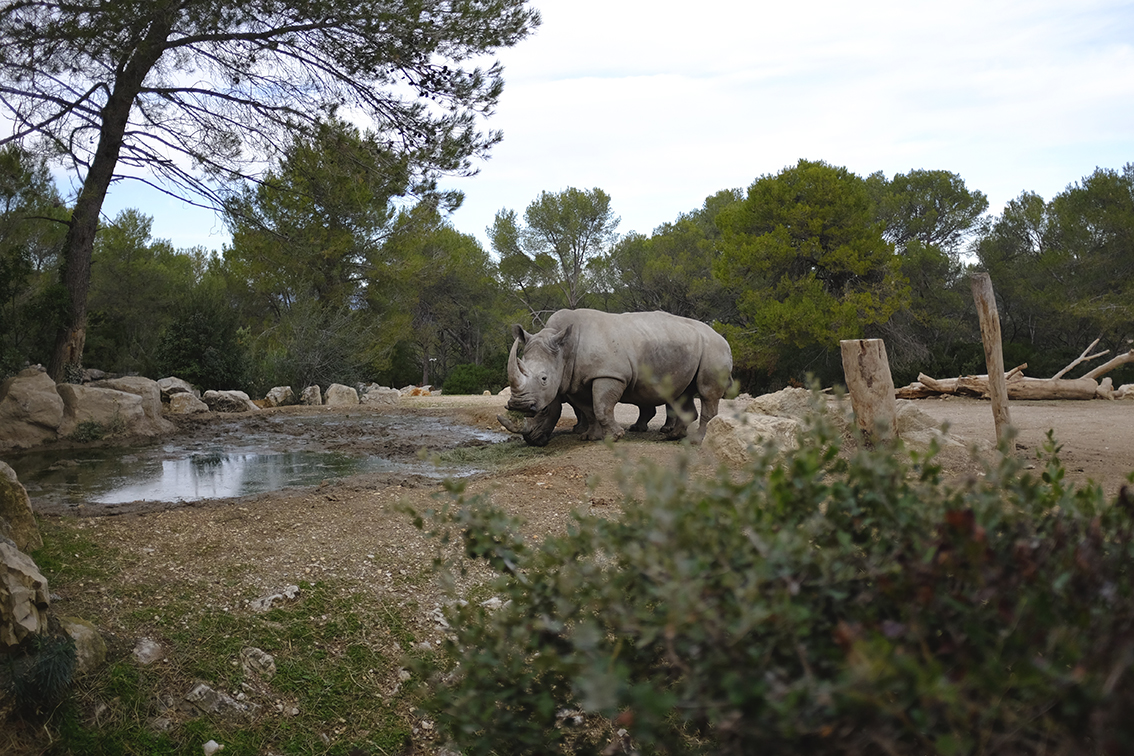 There are a myriad of ways to expose children to the ideas of wildlife protection and here are just a few suggestions:





 , but there are others that are appropriate for different ages that I reviewed below.)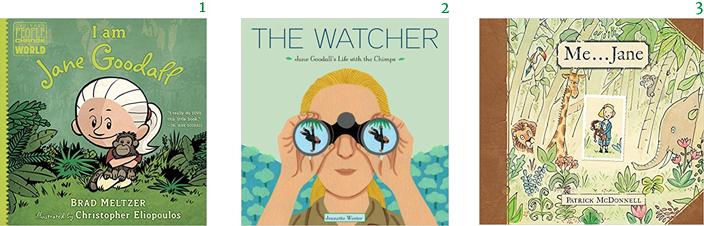

 by Jeanette Winter – This book is for preschoolers and elementary aged-school children. It covers all the highlight’s of Jane’s life and introduces the concepts of wildlife conservation without going too much into details like the above-mentioned book. There is a scene with guns and poachers and I usually do NOT read the part that talks about “killing” chimps. If your child asks what the guns are, you can say they are tools to capture animals. There is really no need to go into details unless the child keeps on pressing for more and more information. With this said, it’s one of Adèle’s favorite books and describing Jane as a “watcher” is very inspiring for young children. It will help your child relate to the character and inspire them to also watch creatures around them.
 by Alison Jay- A girl becomes friends with a bee and they go on a journey together. Along the way they help children realize how they can contribute to conservation.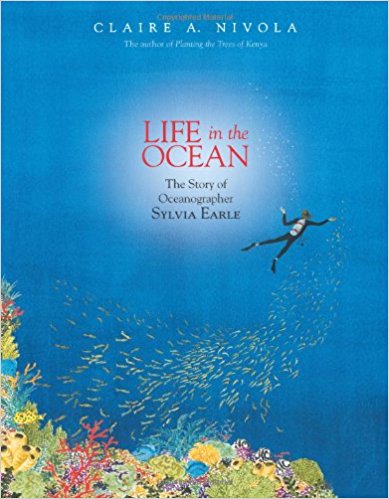
 – I’d also like to recommend this book because a) it has a very strong female role model who followed her childhood passions to explore and protect the oceans and b) it is based on a true person’s journey.


 – Shockproof and also designed specifically for kids. They have the same high resolution as the first set I mentioned above.
 And here is another fun toy Adèle likes. It’s a
  , but as you can see in the photo above, she was even lucky enough to fit a small gecko inside! It has two lenses (top and side) to watch from and is easy for little hands to hold and use.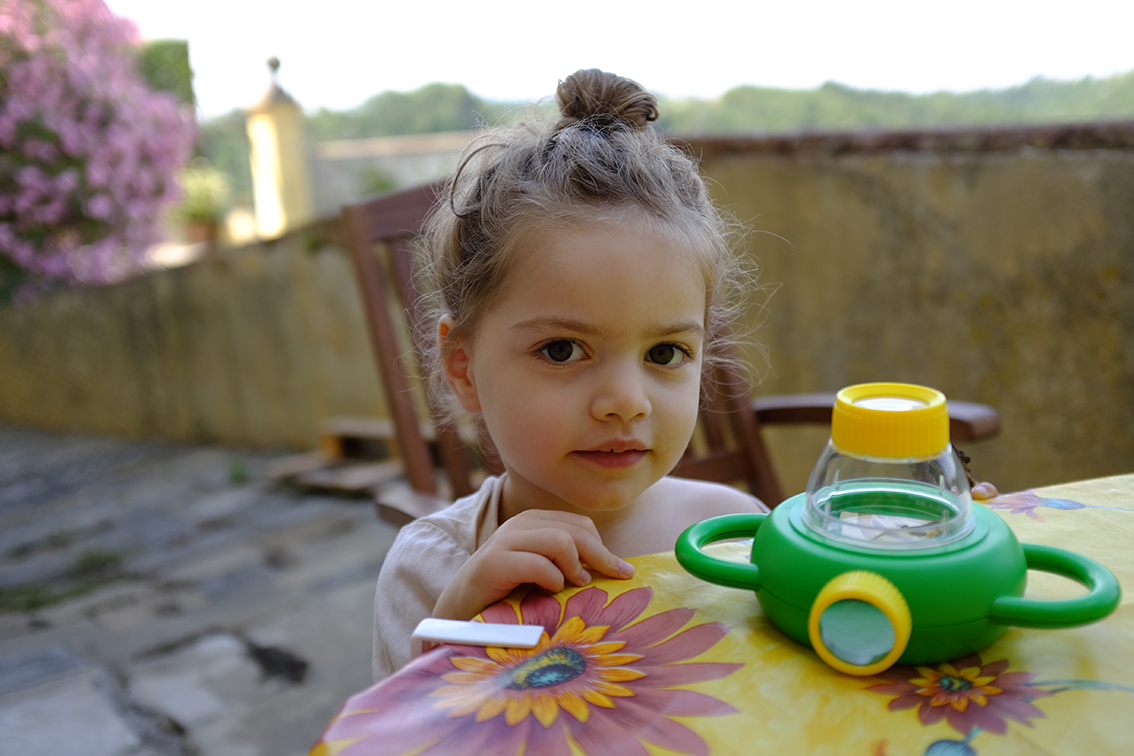


 I think the frog was not very happy being trapped inside for this long. So, we hiked up the mountain to look for a stream. Here is a photo of Fig Frog jumping off the box to find a new home. Follow Adèle’s finger in the photo to find him at the edge of the box, about to leap into the water.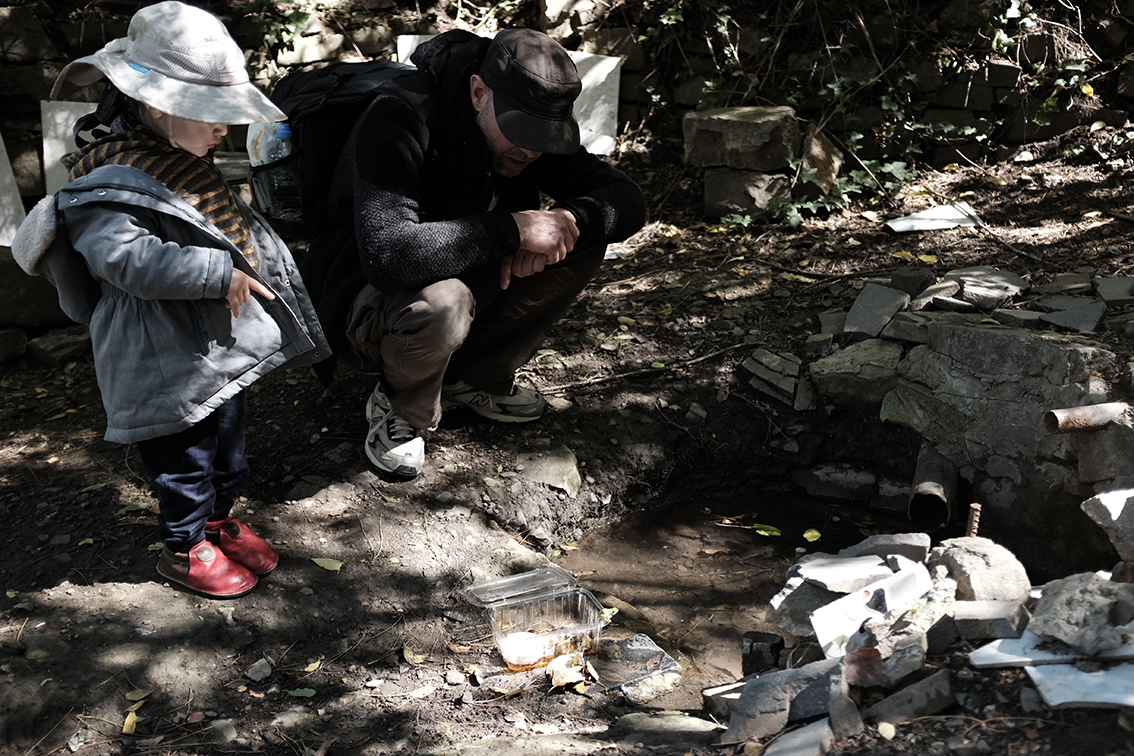




 behind them.

 Whenever possible, we try to buy natural, non-toxic, organic things. When Adèle was a baby, this was even more true as she was putting everything in the mouth. I chose these sounds blocks for her because they are made from environmentally
 Hollow wood with beads inside which make different sounds and are great for stacking and building. These blocks are made from
  6 blocks with different surfaces and sounds. In comparison with other ones, they are not as versatile.
 Like other Wonderworld sound blocks, these are also made from durable,

 8 blocks made from rubberwood with sand inside.
 WHY IS IT IMPORTANT TO ALLOW KIDS TO USE REAL KNIFES?
 . Not only is it fun because it makes waves, it also offers a different way of cutting things (pushing down with both hands/arms). For some kids this is much easier than the conventional back and forth sawing motion. It also allows them to utilize upper body muscles.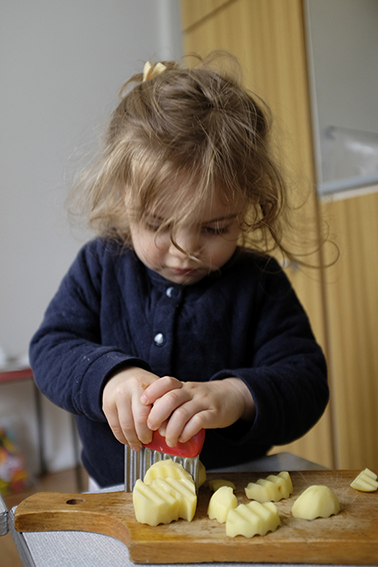
 – These are nylon (plastic), but they are less expensive than comparable stainless steel children’s knives.
 – If you want your child to test out a knife, you can purchase these RISK FREE. They come in three different sizes and are a good value for the price.
 – A real, sharp, stainless steel knife. This is not a “safe” knife and it really does cut.
  – An eco-friendly, safe, wooden knife that even babies can use. In general, however, wood is not hygienic as food particles get inside the pores and mold can also form over time. Therefore, these knives have to be well taken care of and will not last as long as the stainless steel ones.
 set plus
  as well. Both the knife and the peeler have rings which help position the fingers so that the hand does not slip so easily onto the blade. All three items can be found as a complete set (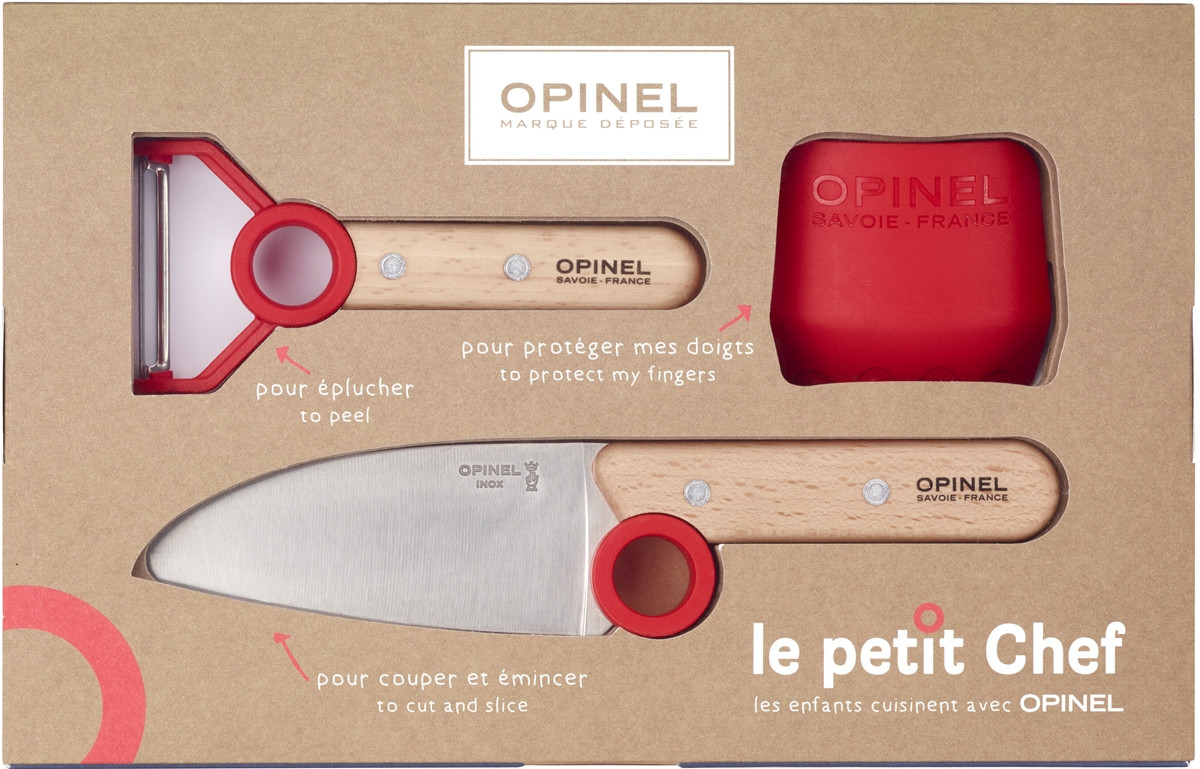


 and
and  are particularly good. I also recommend the videos by Sara Adams, found at
 ’s books (which are Intermediate to Complex in difficulty), working solely from the diagrams.
 ” and my newest, “
 .” Both are for advanced folders. For beginners to intermediate, I recommend my “
 .”
.”


 As mentioned above, I introduced Adèle to origami when she was 2 years old. We were migrating from Australia to Europe and I wanted a light, yet versatile toy for our 24+ hour long journey. The idea was that I’d fold different models for her and we’d use them as toys on the plane. Instead, she started folding (paper, restaurant napkins, clothes, etc.) and has been doing it every day ever since. After a year of daily practice, she was able to fold 3D tulips like this one…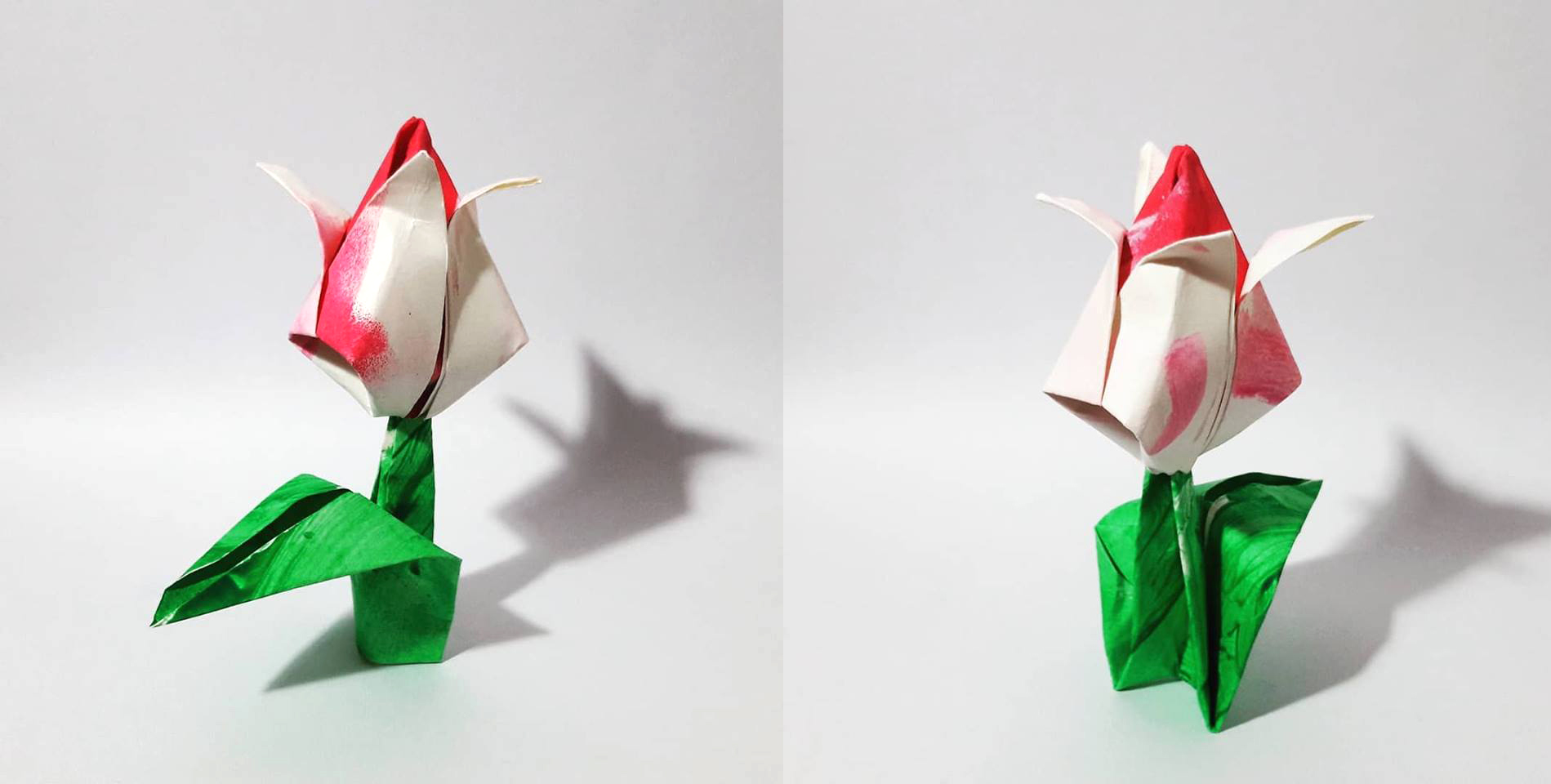


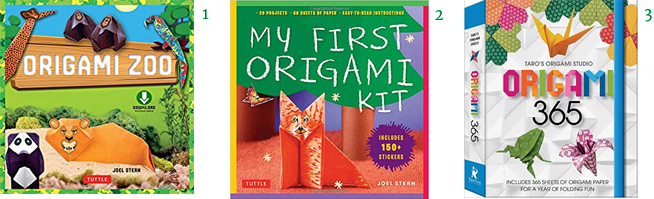
 – This is the very first set that I got for our long flight. It was not easy to fold, so it’s more suitable for intermediate-level folders. It comes with a book which contains beautiful photos and detailed instructions for 15 origami models. 40 papers are included, each printed with patters that relate to specific animals and birds. In addition, there rare almost 100 stickers (animal eyes, noses, etc.) and a fold-out, large map of a zoo on which your child can place their folded animals to play with. Overall, it’s a fun set that your child can enjoy for a long time.
 – Similar to the above-mentioned kit, this one also comes with a book, but contains more papers, more stickers and more projects. The models are a little easier to make than the Origami Zoo kit, but are still more suited for older kits.
 – You can make 12 models with this kit, but it comes with enough paper to make one origami every day of the year. A creative way to encourage origami-making on daily bases.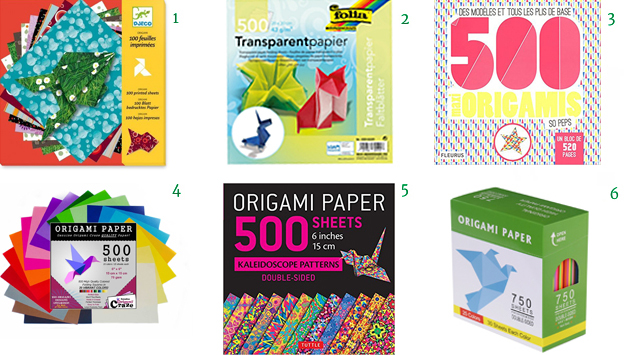
 . This set contains 100 sheets as it comes with interesting patters and a small instructional booklet. After a few weeks of use, we needed A LOT more paper, so for now, we usually get her pre-printed sheets of 500 or more squares.
 –
–  – Tuttle Origami paper: high-quality origami sheets printed with 12 different designs, comes with instructions for 8 projects
 –
–  As something a little different, also check out
  which provides hands-on fun for Kids! It includes 22 cooperative and competitive games and 21 foldable pieces.
 by printing out interesting diagrams you find online. But I prefer to support artist that put so much hard work in making origami accessible to others. So, here are some of my book suggestions for beginner origami books for kids:
 by Dr. Robert J. Lang – This books is out of print, but you can find it used online. The publisher describes it best: “As children’s toys or decorations, the fun and artistic projects in Origami Zoo is a perfect do-it-yourself paper folding crafts book for aspiring artists.”

 There is an intrinsic value present in drawing with kids. But don’t mistake that for drawing for kids. If kids are left to draw what they want and how they want, then creating a regular practice of drawing will allow them an invaluable outlet for self-expression. I often times draw alongside my kids, but never for them. You want them to explore and express without feeling they have to draw the “right” way. Drawing outside, while moving their bodies, allows for creative freedom, all the benefits of physical activity, and a healthy dose of Richard Louv’s highly toted, Vitamin N. Sounds like a win to me.


 Snow, could there be a better natural blank canvas? We’ve used sticked to trace lines down the drive and around the block. Larger sticks work best so they can walk and have them drag along behind them. Simple but so much fun to document space and with long lines. Often in our case one child draws the line while the other plays follow the leader (or line) as we go. Of course dragging feet along works well too and can be quite entertaining for little ones. They love to look back and see that their bodies have created a mark across the land by simply moving!


 You can follow Jessica on her blog at
 Some people might say that we come in contact with so many harmful chemicals on daily basis, why bother with crayons? But the truth is that it’s chemicals in all these little things which accumulate – and if we can limit the exposure by choosing the right products, then we can help our children live healthier lives.

 (Or ask your child to find small hollow toys such as
  . Just make sure it’s something that you could clean easily.)


 .
. instead of beeswax!
 – 12 pack toddler crayons,
  or
or  – These last for what seems like forever. We have the 12 pack and it 3 years they look almost new. It might seem like a big investment, but one pack will last you for years, so in the long run it’s very economical. Not to mention that these are the safest crayons on the marker. They are hand-made from beeswax in New Zealand and smell of honey. The colours work well and are bright enough. None of our crayons are broken nor chipped, so that should say something about the quality. Highly, highly recommended!
 – Made from plant based materials, these crayons are made with soy waxes and are dairy and wheat free.
 – 20 pack – Made with a mixture of beeswax and soy wax
 – 5 pack – These are shaped like rocks and are good for learning the “tripod grip.”
 – 8 pack – USDA certified organic crayons.
 – 32 Pack but also available as a
  and a
and a  – Soy wax crayons will help your child “pinch” in order to draw, encouraging the “tripod grip.” They are a great learning tool for children who have difficulties holding pens/pencils.
 If you are going to have a “crayon day,” then a good way to wrap things up is with a fun book about crayons. Adèle just loves Drew Daywalt award-winning books. These books are written for both kids and adults and have funny subtexts which I really appreciate as a reader. Adèle also enjoys Oliver Jeffers’ child-like illustrations.
 by Drew Daywalt and Oliver Jeffers
 by Drew Daywalt and Oliver Jeffers

 Drum
Drum
 Janod Ukulele Ikea Kids Furniture Raskog Softstar Shoes Nui Organics Nature Baby” data-medium-file=”
 Wee Sing Bible Songs (Wee Sing) CD and Book Edition
 – Another book with classical rhymes and illustrations, but without notes.
 – This book has modern illustrations and each one is done by a different illustrator.
 Janod Hape Moulin Roty Plantoys Ukalele Guitar Banjo Harp string instruments for Kids
 Janod Ukulele” data-medium-file=”


 PlanToy Drum Xylphone Moulin Roty Janod Harmonica Melissa and Dough Hape Piano Music Set EverEarth I’M Toys Musical Toys for Kids


 – I should add here that we have always had a real
  available for Adèle to try from the time she was on her tummy. It was placed on the floor so she could crawl to it as she got older.


 PlanToys Drum Toy
 Adèle has taken a keen interest in my parent’s Soviet record collection. The beautiful thing about record players is that your child can see how music is made. For this reason, they are an excellent object for STEM education. Here is how to to pick one for your child:
 Ion and Crosley Record Player Turntables for Kids
 – As you can see in the photos, this is the one we have. It has a handle and Adèle can easily carry it. The battery is rechargeable (USB) and lasts a long time. Sometimes we connect it to external speakers, but even the built-in ones produce a good quality sound.
 – This one is also a suit-case style, portable record player. It comes with a bluetooth, though, for wireless sound streaming.
 – Made of natural wood, This ION record player can convert your records to digital music. It does not have a handle and the cover is fragile, so I recommend this for older kids.
 CDs are a good choice for a similar learning experience. Another option is a music box. Here are a few to consider:
 Kikkerland Over the Rainbow Crank Music Box


 Childrens Picture Books About Music Boom Bah! by Phil Cummings and Nina Rycroft Toot! Toot!: Guess the Instrument! (What’s That Noise?) by Child’s Play and Cocoretto Zin! Zin! Zin! A Violin by Lloyd Moss and Marjorie Priceman is a Caldecott Honor Muddy: The Story of Blues Legend Muddy Waters by Michael Mahin and Evan Turk I Love Music: My First Sound Book by Marion Billet Mon petit Beethoven Mon petit Chopin Mon petit Mozart Mon petit Bach Mon petit Vivaldi by Severine Cordier Mes premiers airs de Jazz by Aurelie Guillerey T’choupi joue de la musique (French Edition) by Thierry Courtin
 by Child’s Play and Cocoretto has flaps so that toddlers can guess instruments and practice their memory skills.
 by Lloyd Moss and Marjorie Priceman is a Caldecott Honor book! Using rhyme, it introduces young readers to orchestra instruments and can also be used as an atypical counting book! We also appreciate the fact that the dynamic illustrations depict musicians of different races and genders. A must for a kid’s library and a great book to gift to others.
 by Michael Mahin and Evan Turk – A multi-award winning book will inspire creative, rebellious spirits to listen to their inner voice. The refrain of this book is that Muddy “was never good at doing what he was told,” but through struggle and determination he created something unique. The illustrations are made on a black background and “glow” at night. Another excellent book for a child’s library collection.
 by Marion Billet – This book has built-in buttons that make sounds of different instruments on every page.
 by Severine Cordier
 by Severine Cordier
 by Severine Cordier
 by Aurelie Guillerey – This one is similar to the above-mentioned books, but all about Jazz!
 by Thierry Courtin – T’choupi is a character that small kids are very drawn to. In this book T’choupi plays different musical instruments as your child presses the buttons to hear the sounds.

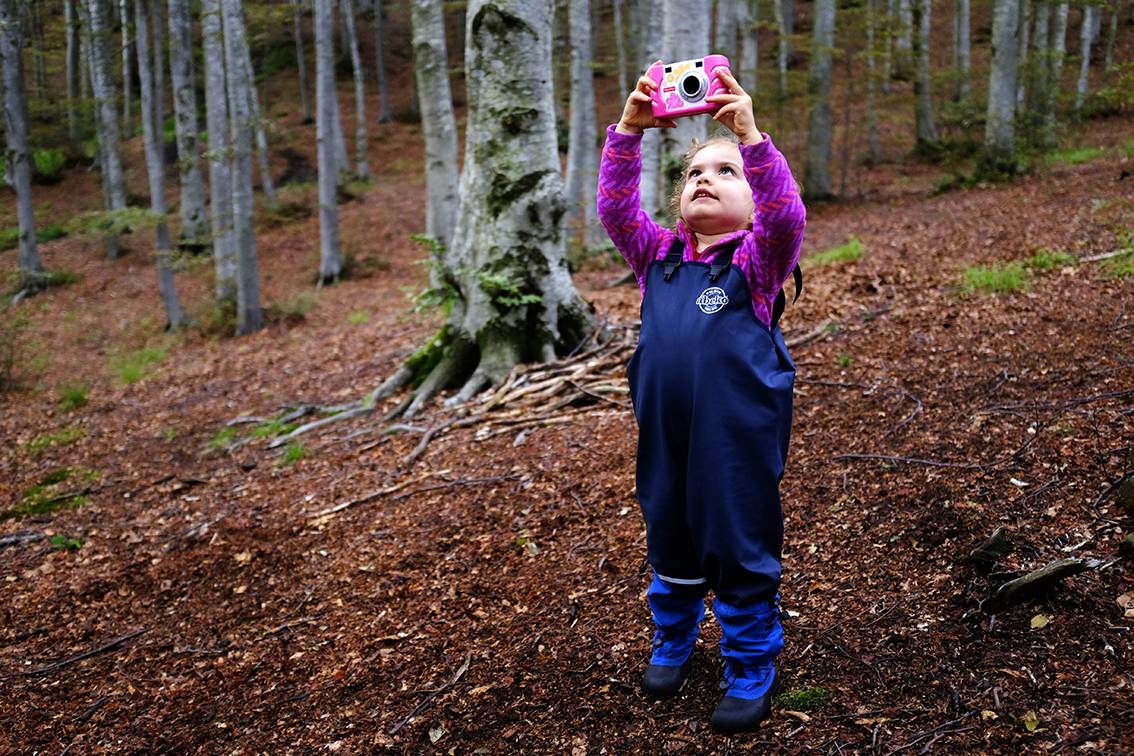
 . Years later, Adèle is still happy to use it. It’s simple. It turns off on its own, thus saves battery life. (In 2 years, we only replaced batteries once). It is easy to hold because it has a dual handle grip. The shutter button is easy to reach and press for little hands. It has a 2-eye view finder which makes it easy for toddlers to look through! The resolution is not great but the photos have this lovely hazy, artistic feel to them. Adèle doesn’t mind at all. This camera has fallen many times (it does not come with a strap for safety reasons), but it works perfectly as it is extremely durable. This camera has a storage capacity of 500 photos and Adèle has not reached the limit after 2 years of use. I was able to download photos on my MAC through a USB connection. It’s simple to use – no shutter speed/aperture to adjust, so perfect as an introductory camera.
 . It has Flash memory for storing up to 500 pictures and a USB Cable for computer connection. For our purposes, the price difference was not worth it, but you can always look for a used one online.
 . This is a very child friendly digital camera. It has good photo quality. It has all the qualities mentioned above, however has many extras like games video, stickers, frames. The good thing is that those extras can be disabled! I am not too fond of the Optimization features (it makes the camera choose the best shot) as I think it’s better for the child to make their own editing decisions. The voice recorder seems superfluous as well. But as a former animation professor, I do like having the stop frame animation function (for older kids) as I can see it being used in many educational ways. Also, it is possible to buy microSDHC for this camera to expand its memory.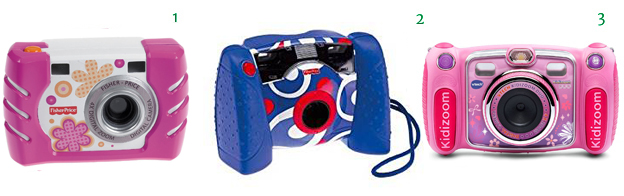
 Backup Site


