
WHY WORDLESS PICTURE BOOKS?
Wordless picture books are a creative addition to any library. These are books which have only a few or no words. Here is why they are important for you and your child:
- They help with oral language development.
- They teach, through the use of illustration, how having one image after another can generate and change meaning.
- They encourage children who struggle with reading.
- You can be creative with the story by changing it every time you read it.
- Wordless picture books promote critical thinking and questioning.
- These books can be read in any language which is perfect for multicultural families. Being so inclusive, they can even be used in the classroom.
- A University of Waterloo study suggests that wordless picture books can increase a toddler’s vocabulary more than traditional ones because, when reading them, parents use more complex language.
- They encourages the reader to use different voices and facial expressions.
- They spark the imagination.
- Wordless picture books bring out creativity in adults!
OUR FAVORITE WORDLESS PICTURE BOOKS:
***Disclaimer: This post contains affiliate links, and if you decide to purchase anything from suggested links or companies, I may receive a commission. Recommended products are either things I love using or think would be helpful for you. Making your purchase using these affiliate links helps keep this site running, so thank you kindly!

- Hug by Jezz Alborough – Only using 3 words, this endearing book focuses on various emotions. Perfect for preschoolers as they learn about their feelings. We found ours at a library and Adèle loved the character so much that we ended up buying this book for her collection. It’s the first book she read on her own. The 3 words are written in larger font and repeated many times, making the book easy to read for a beginner reader.
- Mon lion
(My lion) – Completely word-free, this is a graphic masterpiece. This beautiful story takes place in Africa and illustrates a friendship between a boy and a lion. The story can be read in a multitude of ways and promotes curiosity and imagination.
Tuesday – Another book with only a few words, this one is by the renown David Wiesner whom I was lucky to meet at a SCBWI conference many years ago. He signed Tuesday for me and now Adèle is the one who enjoys reading it. This highly original story with beautiful illustrations deserved the Caldecott Medal. Other award-winning wordless picture books by David Wiesner include Flotsam
, and Mr. Wuffles!
- Dov’è l’elefante (Where is the elephant?) – A simple question encourages the child to find the elephant and his two friends and also serves to raise awareness for the respect for the environment. Inspired by deforestation of the Brazilian rain forest, this simple yet powerful story is not to miss.
Flashlight
by Lizi Boyd – ideal for pre-bed-time bonding (with or without a flashlight).
- Time Flies
by Eric Rohmann – Another Caldecott Medal winner, this book is about dinosaurs and birds.
- Wave by Suzy Lee – A cute book about the beach.
- Journey
by Aaron Becker – A Caldecott Honor Medal winner about a girl who draws a magic door and escapes into a wondrous world. This one is for older kids as some of the subject matter might not suit little one’s mental development.
- Chalk
by Bill Thomson – This one is what my blog is all about – magical chalk making drawings come to life on a rainy day!
 (My lion) – Completely word-free, this is a graphic masterpiece. This beautiful story takes place in Africa and illustrates a friendship between a boy and a lion. The story can be read in a multitude of ways and promotes curiosity and imagination.
 , and
, and 

 by Lizi Boyd – ideal for pre-bed-time bonding (with or without a flashlight).
 by Eric Rohmann – Another Caldecott Medal winner, this book is about dinosaurs and birds.
 by Aaron Becker – A Caldecott Honor Medal winner about a girl who draws a magic door and escapes into a wondrous world. This one is for older kids as some of the subject matter might not suit little one’s mental development.
 by Bill Thomson – This one is what my blog is all about – magical chalk making drawings come to life on a rainy day!
TIPS ON HOW TO READ WORDLESS PICTURE BOOKS
- Describing each image.
- Describe what happens between each page.
- Point out details.
- While looking at the images, change the words you use.
- Create a new story based on the same illustrations.
- Use different facial expressions and voices.
CREATIVE ACTIVITIES INSPIRED BY WORDLESS PICTURE BOOKS
- After reading a wordless picture book, have your child make an artwork and then ask them to tell you about it. Ask them who they drew or what the story is. Ask them what is happening. For example, older children can make 3 or more images with the same character in each.
- Have your child read wordless picture books to their toys or pets.
- Act out the story or scenes from the book.
- Make a simple, mini, wordless picture book from a sheet of paper.
Do YOU have any favorite wordless picture books? I am always looking for new ones, so please let me know if there are any we need to add to the library.


 As a side note, if your child is learning mindfulness from you, that means that they will be spending more time with you – and that creates a connection. And if you are practicing mindfulness with your child, then you get to reap the above-mentioned benefits as well! Also, it’s never too early nor too late to start. The best time to start practicing mindfulness is NOW. ;)
 – a mess-free, meditative art activity. It comes with a brush and needs only water to work. The image disappears as you paint and so it’s also a great way to illustrate impermanence and change. We also have a
  for when on the go. The surface is fragile, however, and should not be scratched or used in a way not intended. For this reason it is most suitable for older children and adults.


 Whenever emotions arise, it is our responsibility to name their feelings and discuss them with the child. Children who are just learning about various emotions don’t actually know what they are experiencing (and that can be extremely scary for little ones!) so it is important to give those feelings names and explain what they are. This will also help you in your own mindfulness practice. 😉
 by Richard Jones and Libby Walden – This book will encourage your child express their emotions and allow opportunities for wonderful conversations. Rhyming makes it easy to memorize and the central illustration of a child is gender neutral. All pages are cut through (around the child) emphasizing the fact that one child has all these different emotions. With a very clever design and rich vocabulary, this book is suitable for kids of all ages. I also want to add a wonderful story about this book. We bought it in Italian, but I had a difficult time translating a few pages for Adèle. So, I contacted the author and asked her to tell me what she wrote on a few pages. Instead, she mailed Adèle the English version of this book as a gift (plus her newest one that I’m going to review in a separate post)! We feel so grateful for these generous gifts, especially because the books have been helping Adèle on daily basis and having an English version was such a beautiful surprise.
 by Jo Witek, Illustrated by Christine Roussey – Just before we moved with Adèle the first time, her best friend gave her this book in order to help deal with all the upcoming emotions. The illusions are simple and playful, making it easy for toddlers and preschoolers to relate to. The heart is die-cut and it is used as a tool to refer to each emotion. So, for example, instead of saying “I feel,” it says “my heart feels…”
 by Kathryn Cave and Nick Maland – In this book dragons represent worries, problems, fears, etc. The use of this metaphor works wonderfully and comes with practical advice. Whenever Adèle has a strong emotion coming, she can describe the type of “dragon” she is having and can use suggestions from this book to help the dragon go away. I found this book at a red bookshop for myself while visiting London before Adèle was even born. I collect well made picture books, and this one really caught my eye.
 by Anna Leanas – Oh, this is such a simple book, and yet so powerful in its simplicity. It only focuses on the few most common emotions and associates each one with a different color. It’s suitable for toddlers and preschoolers. The amazing thing is that because it is so simple, Adèle started to identify her emotions by color very quickly after reading it. And then I came up with the following art activity which works so beautifully to regular her mood. Curious? Here it is: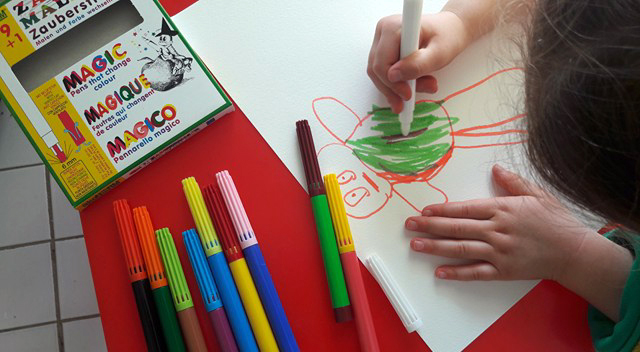
 by Lauren Alderfer, illustrated by Kerry LeeMacLean – I’ve searched for an age appropriate book about mindfulness for Adèle for months and found this one which is perfect for preschoolers and toddlers. It explains the concept of mindfulness in a very easy to understand way. We use the characters and phrases from this book to help Adèle stay in the moment. I have even used it successfully, as a reminder, to help her fall asleep at night!
 by Eline Snel – Designed for older kids and their parents, it’s one of the best introductory mindfulness guides on the market. It comes with a CD with meditations which help with a variety emotions such as anxiety and sadness. It can even be used to help your child fall asleep.
 Do your kids have a mindfulness practice? If so, what is it like?


 is easier).


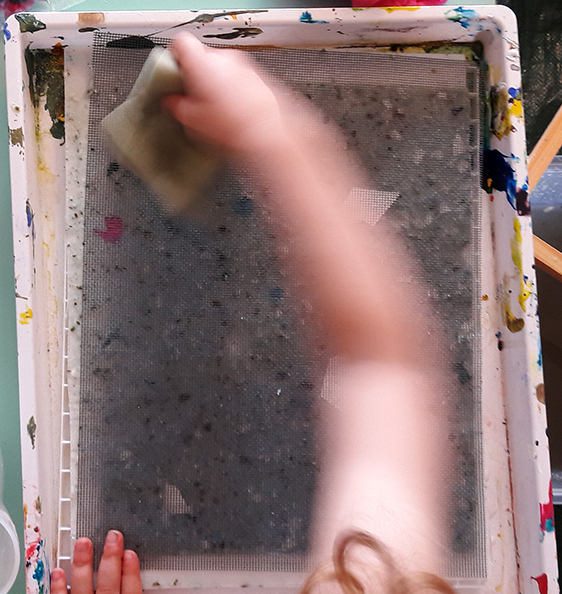

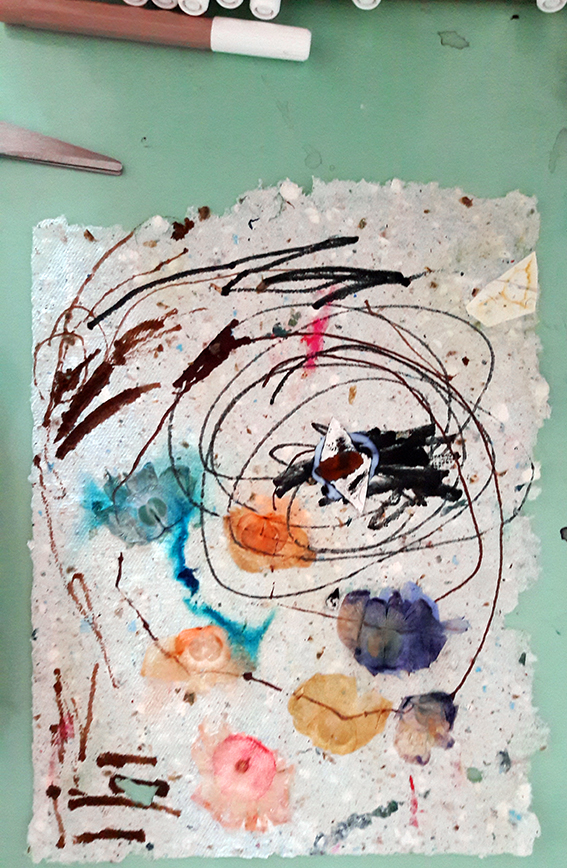
 method for decluttering, when you get to the paper category, use this activity to recyle everything.

 Usually, at around 3-4 months of age, your baby will start teething and putting everything in the mouth. Given the amount of time a baby spends doing this, it is imperative to have eco-friendly, organic objects to chew on. So, when offering teethers, look for ones that don’t leach toxic, harmful chemicals into your baby’s mouth.
 – This is a smaller version of a classic French toy from 1960’s made from natural rubber of the Hevea tree. It has a particular scent which makes it so popular with babies. At first I thought that a giraffe with two rings was very odd, but babies just love them and so did Adèle. It is small enough for tiny hands to grab and has a textured surface which babies find interesting. This teether is also h
 instead. The larger one has two advantages over the smaller one, however. It squeaks so thus appealing to all five senses. My only wish is that it didn’t have a hole into which water can enter. But if it didn’t, then there would be no sound so it’s a trade-off. Either way, you cannot go wrong with one or the either. Or, if you can’t decide, get both as they can be purchased as a
 – Another teether made from sustainably produced natural rubber,
  – Made from a piece of certified non-toxic natural rubber, this hygienic teether has two types of textures for the baby to explore.
 – This is an excellent set inspired by Montessori philosophy. Adèle didn’t like all the wooden teethers in it (the ring was her favorite), but it is a good buy if you want your baby to have a variety of teethers to test. As I mentioned above, it is difficult to know which one the baby will like, so getting as set is an easy way to test more than one. This particular set is made from chemical free natural wood and is polished with an organic wood polish. The wooden peg dolls can be used by older children for imaginary, Waldorf-inspired play. Adèle made gnomes out of hers. ;)
 – This teether is unfinished and sanded smooth. For extra protection, you can cover it with organic olive oil after the baby is 6+ months old.
 – This rattle/teether/grasping toy is made from sustainable wood and finished with a water-based, non-toxic finish. Adèle didn’t play with it much, but it does look original as a decoration.
 – This elephant teether is made from 100% organic, untreated cotton. It doesn’t use any dyes, but is more expensive than a lot of the other teething toys.
 – Another organic teether, this one is filled with sustainable, hypoallergenic corn fiber. Made by Apple Park Organic Toys, this
  is just one of their many teething toys. I find it very cute, but they also make an adorable
  ,
,  among other things.
 – This teether has a double advantage as it is made from two of our favourite materials – organic terrycloth and natural maple wood. A perfect Waldorf-style toy as it is very simple and non-representational.
 – Made from food grade silicone and dyed with food safe colouring, this broccoli-shaped teether can be washed in a dishwasher. They also come in other food shapes like
 and
and  – If your baby needs something cold to chomp on, this set of 5 is also safe to use as all the teethers are made from silicone. Like the above-mentioned set, they come with different textures and shapes.


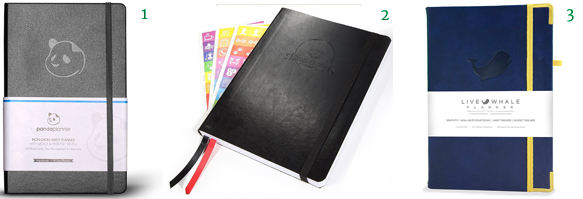
 – FCS Certified eco-friendly, weekly, happiness and productivity planner. You can find it dated or undated and it comes with a one year guarantee!
 – 8.3 x 5.5”, non-dated, beautiful leather bound agenda with 12 budget pages and made with 120 gsm thick paper (which means it can handle markers, pens, highlighters, etc). I love the whale design and the soothing royal blue color of the cover. Periodic inspirational quotes are also a plus.


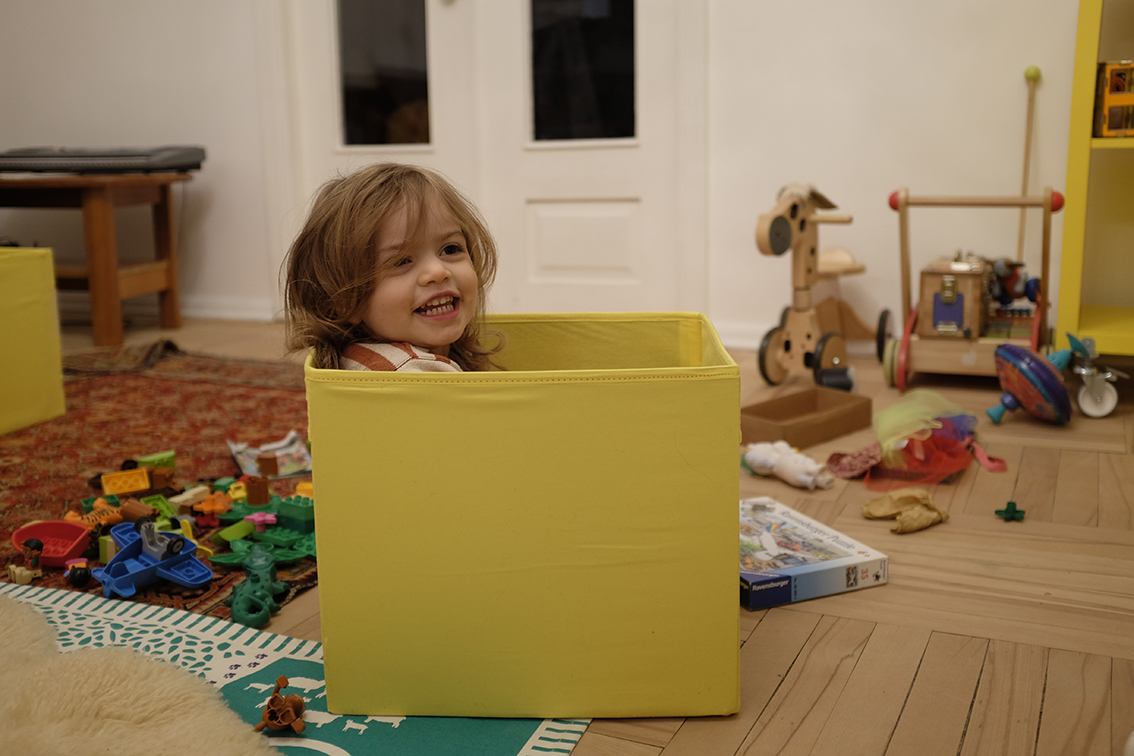 “I call this game fun-in-a-box.” – Dr. Seuss from
  .
.
 by Antoinette Portis. Reading it inspires her to copy what the bunny is doing and to also create her own box games. Read the book together with your child and then give them a box to experiment with on their own.
 While living in Paris, France for two years, I was very lucky to be able to learn printmaking at the Ateliers Beaux-Arts. I wanted Adèle to try it one day, and it happened when one of our picture frames broke. We were left with a piece of plexiglass which needed to be up-cycled or repurposed, so it was the perfect time for printmaking.
 or any other smooth, glossy surface – You can use plexiglass from old frames or an old placemat. Even if the surface is not smooth, it will still work. You can even use a cardboard. The advantage of plexiglass is that it can be wiped clean and used over and over again.
 – Make sure it’s smaller than the plexiglass. You don’t need anything expensive, but make sure that it’s thick enough so that it doesn’t buckle when wet with paint. Technically speaking you could use computer paper, but then the artwork won’t look as good and that might discourage your child from trying the activity again.
 or
or  .
. (if not using
  ).
). or microfibre cloths for wiping off the paint.


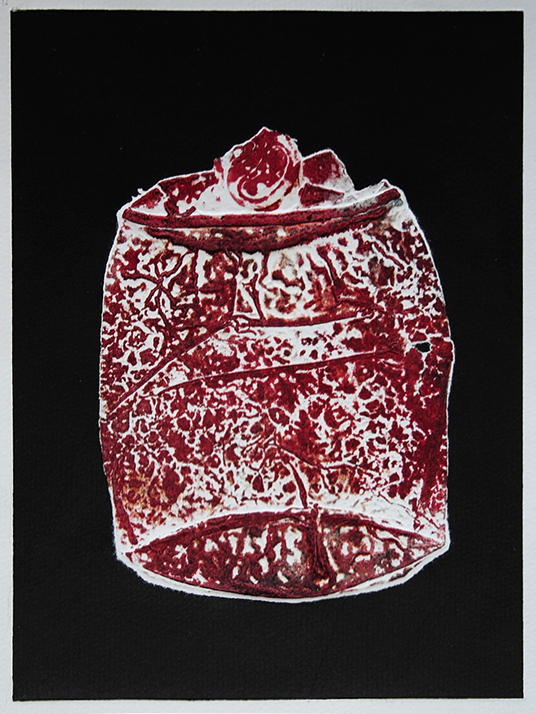 When you go out for walks with your kids, collect things of different textures (plastic, tree bark, nails, rocks, etc.) and then try using this printmaking technique. I am sure you will be pleasantly surprised. 😉 You can also try drawing/making marks on a styrofoam plate (or use these pre-cut
  which we use in our studio).
 to work well, one must press a bit with a pencil to make deep marks. When Adèle used them for the first time when she was two, it was too difficult for her to press hard enough. At three, as she gained more arm and finger strength, she was able to do it well.
 ) over the drawing.
 by Karen Rauch Carter. The advice in this invaluable book has helped us live an adventurous life, find jobs, travel, fix problems and health issues, rescue animals, create, etc. Even living in a castle was made a reality by following Karen’s advice!


 DIGITAL VS. ANALOG PHOTOGRAPHY
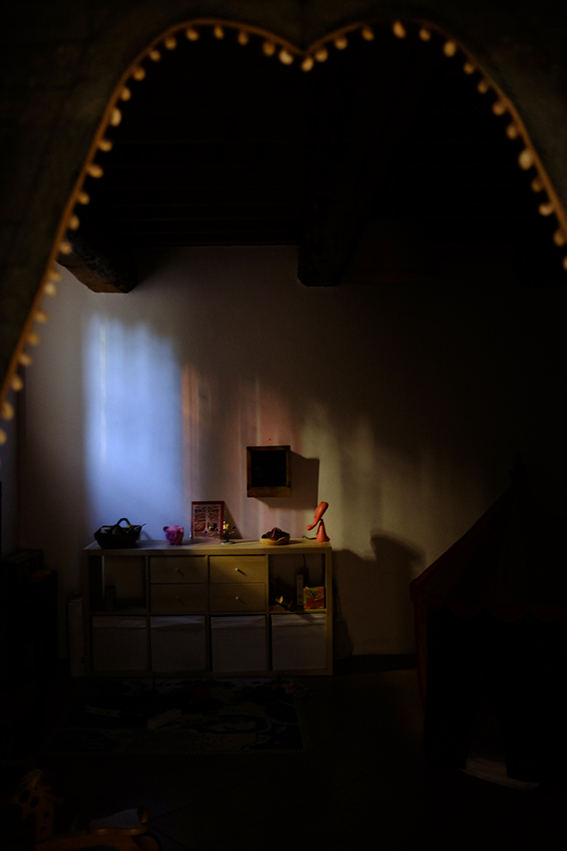 1. CONVERT YOUR ROOM INTO A CAMERA OBSCURA.
 2. MAKE A PINHOLE CAMERA.
 is the earliest type of a camera. It works in the same way as the camera obscure, but uses a dark box instead of an entire room. The idea is to make a hole the size of a pin (in my photography classes we, literally, used pins to make holes) and this is the hole through which the light will travel, making an image. It’s a simple principle of how vision and all cameras work. The light travels through your pupils and the images you see are turned right-side up by your brains. On store-bought cameras, the “hole” is the lens and the image is still created upside-down, just like your eyes do. The difference is that there is a mirror inside the cameras which flips the image right-side up.
 (under adult supervision – I do this part while Adèle watches.)
 (baking paper)

 – If your kids are old enough to work with chemicals, then you can make real pinhole photos with this Pinhole Photography Kit
 – This kit has all the pieces for assembling a plastic pinhole camera. It’s not for small kids and does not come with 35mm film but is more durable than cardboard pinhole models.
 – An eco-friendly DIY pinhole camera made from recycled card. This one is one of the more expensive ones, but it’s very pretty and comes in 4 colours. Both 35mm and medium format film can be used so that’s a definitely plus.
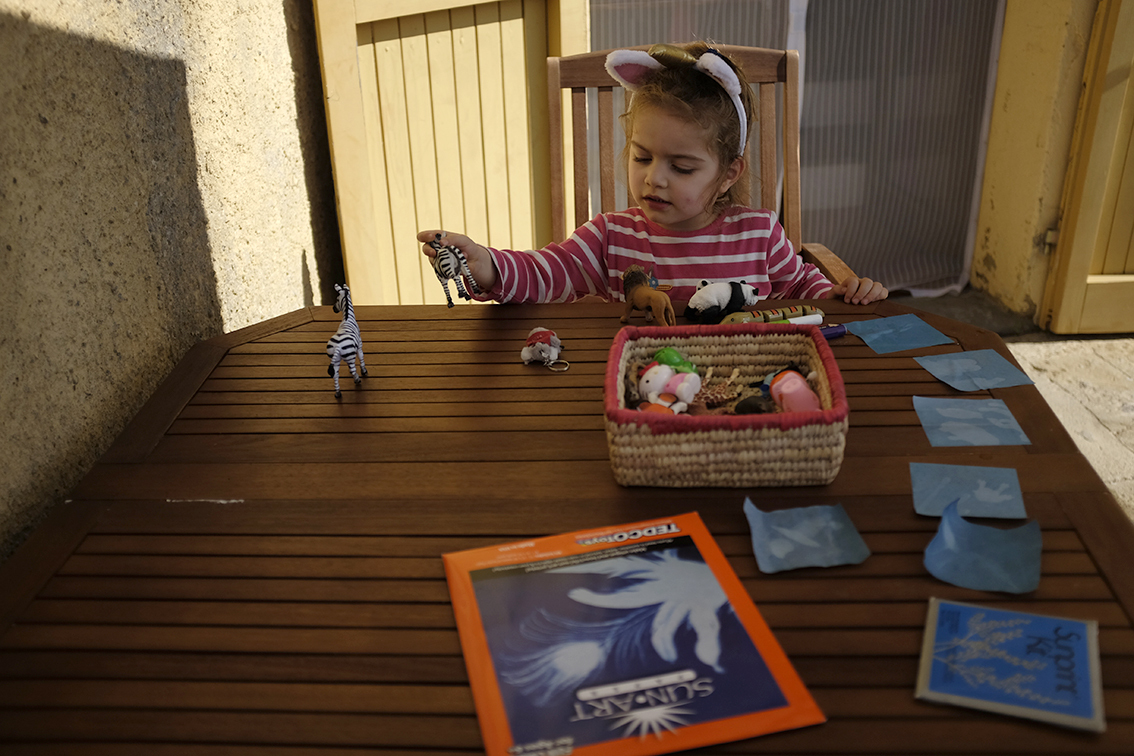 3. MAKE SUN PRINTS.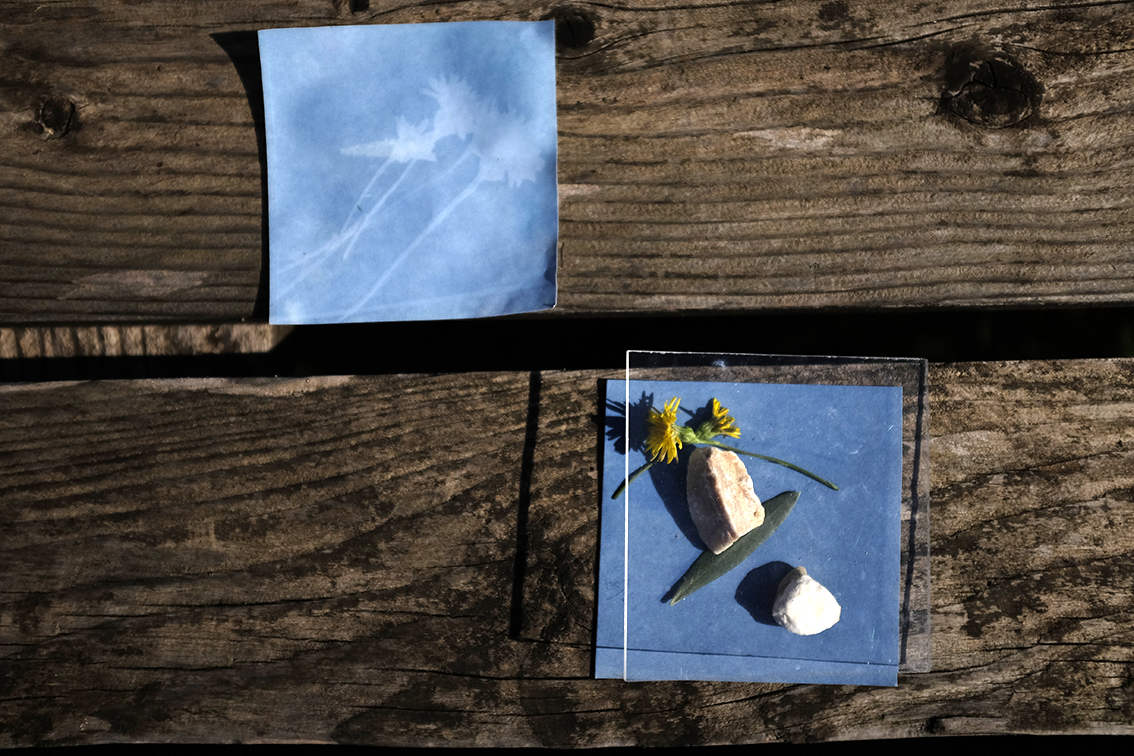


 !
!


 4. INSTANT CAMERA FUN.

 (available in a variety of colours)
 Another way to have tangible prints in your hands is to use portable printers which are so small they can fit into your pocket. The following are my top three picks:
 – I bought an older model of this printer almost 11 years ago. It works perfectly. The film expired in 2009 so I thought it wouldn’t work, but it does! The best part is that it has an adhesive backing so Adèle can use it in her artwork (see below). And with a USB plug, it can print photos from almost any device that allows USB printing.
 – If you want to use your mobile phone or bluetooth technologies, then this is the printer for you. Like other polaroid instant cameras and printers, it uses the same sticky paper.
 Here Adèle is waiting to catch her photos as they print. She likes making blurry photographs, sticking them to canvas boards and painting on top.
 Sometimes Adèle uses sand and rubs photos to change their texture and color. She also likes to watch the chemical reaction which occurs when she applies paint on top of the photos. The color changes as she wipes it with a cloth, paper towel, or wooden fork/knife. Sometimes she also sticks them to dry paintings. Possibilities are limitless.
 – Adèle’s best friend gave her this beautiful book as a gift. It is aimed at older kids, but even at 2 she enjoyed looking at all the photos. The photos chosen for this book (like Henri Cartier-Bresson’s iconic “Man Jumping Over Puddle” or Mary Ellen Mark’s portrait of the circus elephant) are child-friendly and intriguing and invite questions. I didn’t read all the text when Adèle was younger, but simplified the ideas so that she could understand it at her age. Overall, this is our favourite book for introducing kids to photography.
 – This book shows 25 fun, creative photo-related activities kids can do in different settings/situations. Not all activities require an actual camera. The book is written in a friendly language and is easy to follow.
 – This book teaches how to look for special moments to make great photos anywhere and everywhere. It comes with a cutout “viewfinder” which helps kids learn about composition. It is meant for older kids to read by themselves by encouraging them to “solve the mystery of photography” through various games, assignments and challenges.
 Backup Site